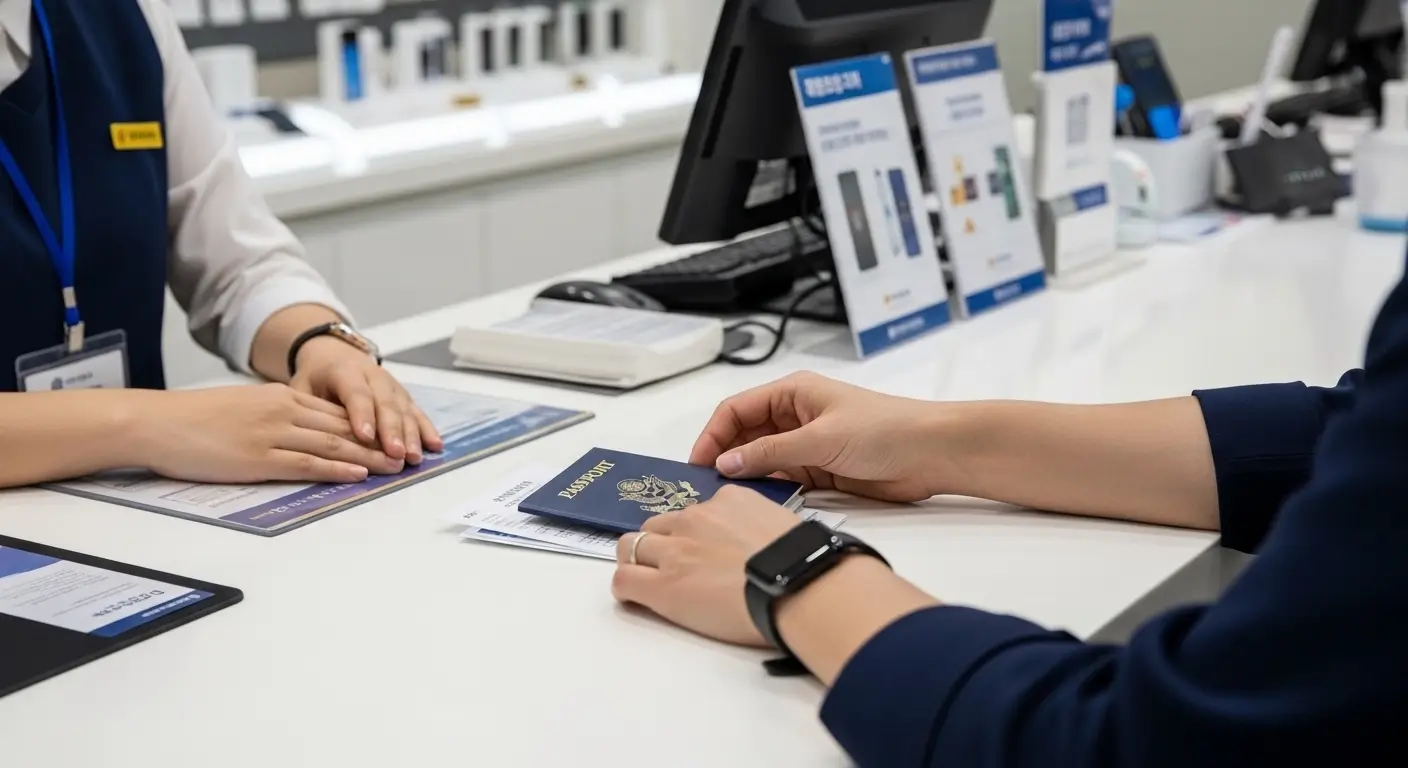
ARC card Korea delay is one of those problems that doesn’t announce itself clearly. Most foreigners arrive assuming the alien registration card (ARC) is mainly an identification document — something to carry instead of a passport. What they don’t expect is that the timing of when the card is issued quietly controls access to banking, mobile plans, internet installation, and health insurance enrollment. By the time the gap becomes obvious, a week or two has already slipped by.
The card itself usually arrives within two to three weeks of your immigration appointment. That window sounds manageable until you realize that several Korean services treat your ARC number as the trigger that activates everything else. You can’t always substitute a passport or a receipt document. Some systems simply wait — and so do your plans.
This guide walks through why the timing matters, what tends to create unexpected gaps during ARC processing, and how to sequence your early applications so you’re not stalled in three places at once.
Why ARC Timing Affects More Than Identification
Most people think of the ARC as a resident ID card — and it is. But in Korea’s administrative systems, the ARC number functions as a linking key across multiple platforms. Once that number is in the system, things connect. Before it’s there, each service typically stalls at its own verification step.
Here’s where the timing problem tends to surface most noticeably:
Bank account activation. Korean banks generally require the ARC number for foreigners opening accounts. Some branches accept passport documentation during an initial visit, but the account often cannot be fully activated — including online banking and wire transfers — until the ARC is confirmed. If you’re waiting on a paycheck, this creates real friction. For a fuller picture of what causes delays here, the guide on opening a bank account in Korea as a foreigner covers the process in detail.
Mobile plan contracts. Postpaid plans — the kind that offer better rates and proper data coverage — require ARC verification at the carrier level. Without an ARC number, many providers will only offer prepaid tourist options. Choosing the wrong option at the start can mean switching later, which involves early termination terms. The guide to choosing a mobile plan in Korea explains what to check before signing anything.
Online identity verification systems. Korea uses a phone-based verification system (called PASS or carrier-linked identity checks) that links to your registered identity — not just your phone number. If your phone number isn’t tied to an ARC, many platforms simply cannot verify you. This affects everything from delivery apps to government portals. The implications are detailed in the article on phone number verification in Korea for foreigners.
Home internet installation. Internet service providers in Korea run credit-style checks linked to your ARC number for contract-based plans. Without it, installation appointments are sometimes delayed, or you’re limited to shorter contract options with higher monthly rates. If you’re setting up an apartment, check the home internet installation guide for what providers actually require before they schedule a visit.
Health insurance enrollment. The National Health Insurance Service (NHIS) enrollment timeline for foreigners is also tied to ARC registration status. Gaps here can mean out-of-pocket costs for any medical visit during the waiting period.
Common Reasons ARC Card Processing Gets Delayed
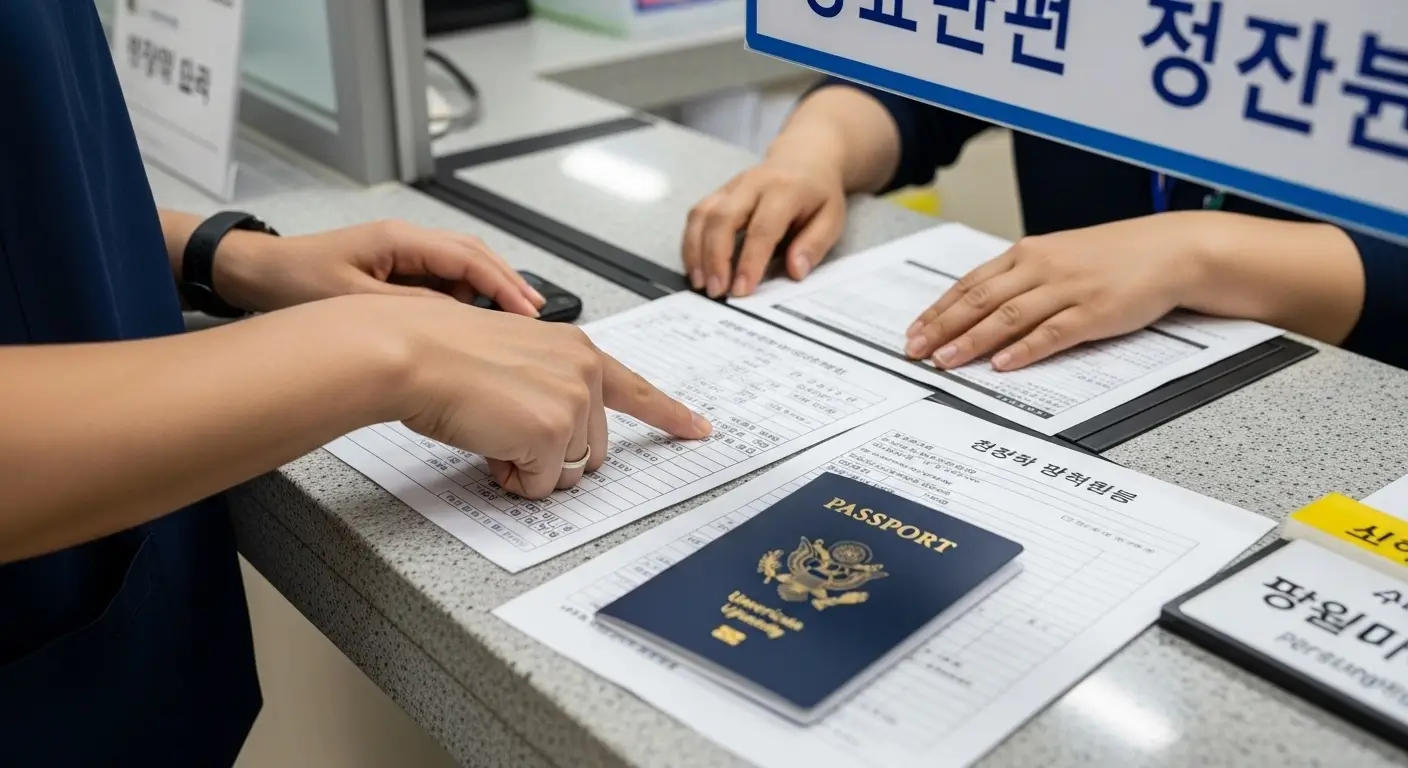
The standard processing window from the immigration office (출입국관리사무소, immigration office) is roughly two to three weeks after your appointment. That’s the baseline. What pushes an ARC card Korea delay beyond that window falls into a few recurring patterns that foreigners often don’t anticipate.
Immigration appointment backlogs. Korea’s immigration offices handle large volumes at certain points in the year — particularly in late February through March, and again in September when new academic and work cycles begin. During peak periods, appointment availability itself can be the first bottleneck. Getting an appointment two or three weeks after arrival means the ARC clock doesn’t even start until then.
Address mismatch or incomplete registration. Your ARC must reflect a valid, registered Korean address. If the address on your application doesn’t match what’s recorded in the housing registry system, the office will typically request a correction. This is one of the more common sources of ARC card Korea delay that foreigners don’t see coming. A mismatched address often traces back to issues at the community center (주민센터) step, which the address registration guide for foreigners covers in practical terms.
Two other situations account for a significant share of extended processing times. Missing or incomplete documents are more common than people expect — the checklist varies by visa type, and bringing everything on the standard list isn’t always enough if your specific situation requires additional forms such as employment confirmation letters or translated paperwork. Separately, peak intake seasons stretch timelines even when your documents are complete: a card that normally takes 14 days may take 21–28 during the March or September surges simply because the office is working through a much larger queue.
Less frequent but worth knowing: the immigration system occasionally flags an application for manual review due to visa type ambiguities or recent entry/exit patterns. These holds are uncommon but can add unexpected time without a clear explanation from the office itself.
How ARC Card Korea Delay Creates a Chain Reaction
A two-week ARC card delay doesn’t just mean two weeks without an ID card. It means two weeks where each of the systems described above is also waiting. And those systems don’t wait independently — they tend to compound.
A realistic scenario: You arrive, find accommodation, and try to set up daily life. Your phone runs out of data on a tourist SIM. You try to sign up for a postpaid plan — denied without ARC. You visit a bank to open an account — account created but not activated. You try to use the bank app — registration blocked. You attempt to set up internet — provider wants ARC for contract. You use a delivery app — identity verification fails.
None of these are permanent problems. They resolve once the card arrives. But during the gap, you’re running on workarounds: convenience store data top-ups, cash transactions, delayed service setups. The friction is manageable but it catches people off guard, especially those who planned everything except the waiting period.
The deeper issue is that foreigners often schedule these service applications in the first week — which is exactly when the ARC is least likely to be available. Phone verification failures in particular tend to surface repeatedly across unrelated platforms, because Korea’s identity verification system is linked throughout most consumer services. Similarly, bank account limitations affect not just cash access but also app-based services that require linked Korean accounts.
What Typically Happens Between Application and Card Issuance
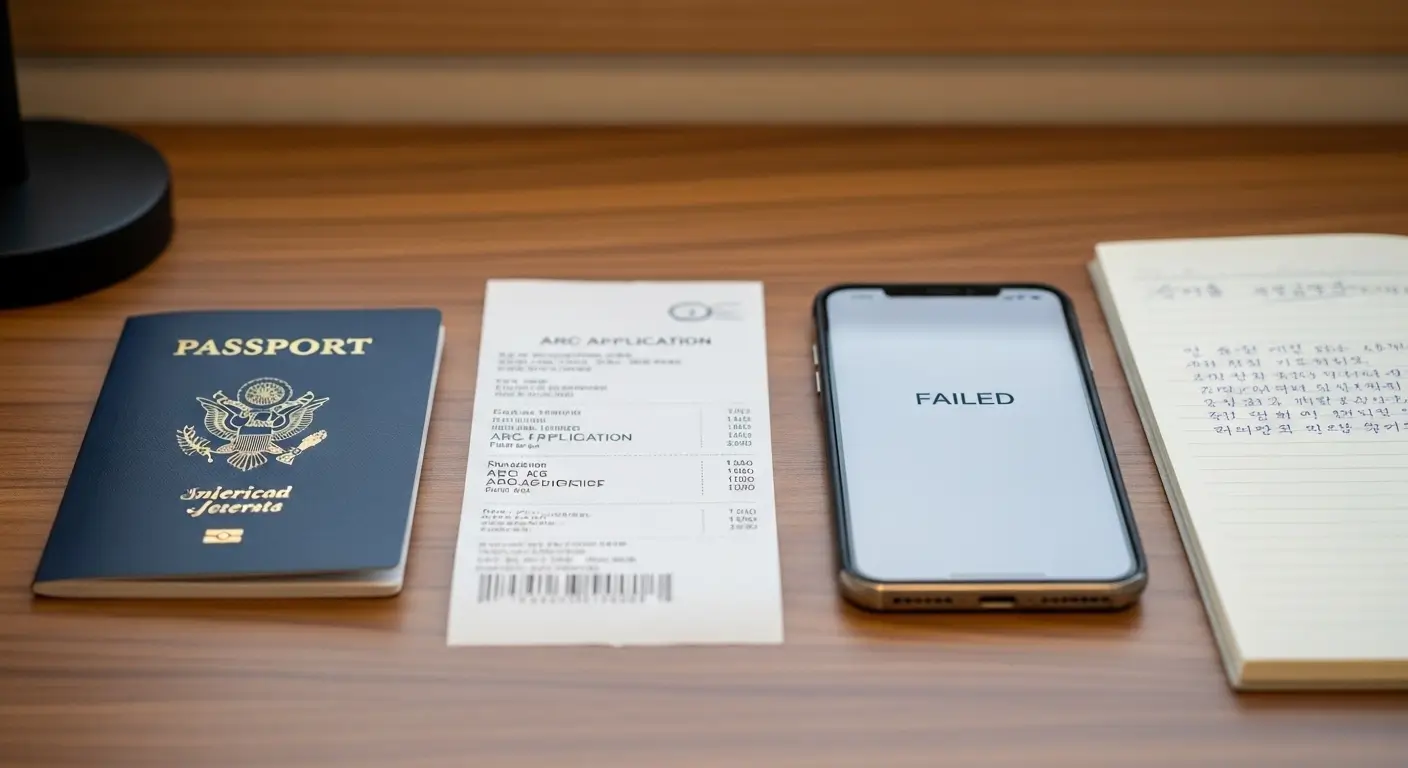
After you submit your ARC application at the immigration office, you receive a receipt document. Knowing what this covers — and what it doesn’t — helps clarify what an ARC card Korea delay actually means in practical terms for your daily setup.
The receipt carries a reference number that some — not all — services will accept as interim proof of your application status.
What the receipt document generally covers: Re-entry to Korea (check your visa conditions), certain government office interactions, and identification for basic in-person processes where the official has discretion to accept it.
What the receipt document often doesn’t cover: Online identity verification systems, mobile carrier ARC-linked signups, bank account activation (in most cases), and insurance enrollment through automated portals. These systems typically require the actual ARC number to be in the database — not just a reference number on a paper receipt.
Your ARC number itself is generally assigned at application and can sometimes be accessed before the physical card arrives. The Hi Korea portal (hikorea.go.kr) allows foreigners to check their registration status online. In many cases, once the number appears as confirmed in the system, services that were blocked will begin accepting it — even without the physical card in hand. This is worth checking periodically rather than waiting for the card to physically arrive.
Status tracking through Hi Korea is generally straightforward: log in with your passport number, select your application, and check the current processing stage. When the status moves to “issuance complete” or equivalent, that’s often when the number becomes usable in external systems.
Before Booking Other Services, It Helps to Check
If you’re planning your first weeks in Korea — or helping someone else do so — a short pre-check before scheduling service applications can save a round of cancelled appointments and re-booking fees.
- ☐ Do you have your ARC number confirmed in the system (not just the receipt document)?
- ☐ Is your Korean address fully registered at the community center (주민센터)?
- ☐ Does the service you’re applying for require the physical card, or just the number?
- ☐ Have you checked the Hi Korea portal for your current registration status?
- ☐ Is your phone number registered under your ARC (not just passport) for verification systems?
- ☐ If applying for a postpaid mobile plan, have you confirmed the carrier’s ARC requirement?
- ☐ For internet installation, have you asked the provider whether a receipt document is accepted?
The short-term versus long-term framing of your stay also plays into this. People on tourist visas, short D-category visas, or exchange student arrangements may have different ARC timelines or eligibility conditions. If your stay length or visa type is still being figured out, the guide on short-term vs long-term stay decisions in Korea is useful context before committing to service contracts that assume stable residence.
Frequently Asked Questions
Can you apply for ARC while staying at short-term accommodation?
In many cases, yes — but the address you provide on the ARC application must be verifiable and properly registered. Short-term accommodations like guesthouses and serviced apartments are sometimes accepted, particularly if the host provides a written confirmation of residence. However, some immigration offices are stricter about this, and a stay at an unregistered address can create complications during processing. It’s generally safer to confirm with the specific immigration office beforehand whether your accommodation type qualifies.
What documents are typically required for ARC application?
The standard requirements include a completed application form, passport with valid visa, one passport-sized photo, proof of residence (lease agreement, accommodation letter, or certificate from your employer or university), and the application fee. Additional documents may be required depending on your visa type — for example, E-2 visa holders typically need health and criminal background checks from their home country. The Hi Korea website maintains updated document lists by visa category.
How does ARC timing directly affect other registrations in Korea?
The ARC number functions as an identity anchor across Korean administrative and commercial systems. Until that number is active in the database, services that require resident-level identity verification — including bank account activation, postpaid mobile contracts, online identity checks, and health insurance portal registration — generally cannot proceed. In Korea, the ARC number is specifically what signals that a foreign resident is registered in the system, and many services are built around that trigger rather than the passport.
Conclusion
ARC card Korea delay is rarely a dramatic problem on its own. The card usually arrives within the expected window, and the immigration process itself is fairly straightforward once you have an appointment. The issue is that the gap between application and issuance quietly holds up several other systems at once — and most people only discover this once they’re already mid-process on multiple applications.
Understanding the sequencing before you arrive — or before you book that first round of service appointments — generally makes the early weeks considerably smoother. Check your ARC status in the Hi Korea portal, confirm your address registration is complete, and where possible, delay ARC-dependent applications until the number is confirmed live in the system. This usually gives you a cleaner setup with fewer wasted trips.
From there, most of the administrative foundation for life in Korea tends to fall into place fairly quickly once the ARC card is in hand.