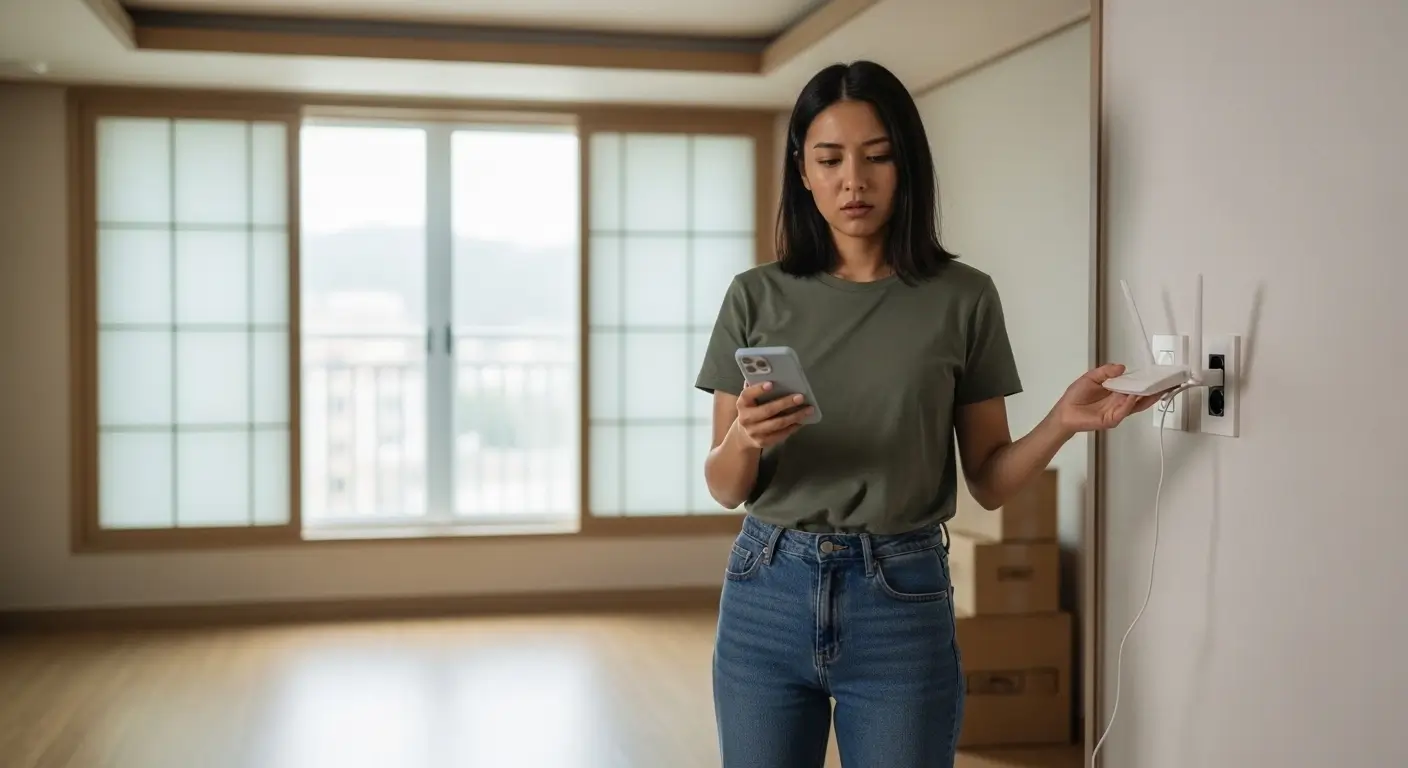
Home internet Korea residents set up does not always activate the day you move in — even when everything else seems ready. Many foreigners only discover the problem when the technician calls to say the line is already registered under another name, or that no appointment slot is available until next week. Utilities might be running, your key works, boxes are still in the hallway, but internet is a separate process that depends on factors most people skip until they actually need it. Some apartments have fiber already waiting at the wall. Others require a technician visit, a contract transfer, or documentation you may not have ready yet.
The gap between expecting internet and having internet tends to catch people on weekends, in buildings with shared wiring contracts, or when the previous tenant’s account was never properly closed. For foreigners in Korea, there is an additional layer: your name, address registration status, and ID documents affect whether a contract can be opened in your name at all.
This guide covers what actually causes delays, how housing type shapes your setup timeline, and what to confirm before signing anything — so the process takes days, not weeks.
Home Internet Korea: Why Setup Is Not Always Automatic
Most foreigners moving into a Korean apartment assume home internet Korea providers connect the same day electricity goes live — you move in, the service transfers, and it is ready. That assumption holds in some newer apartment complexes where a building-wide contract covers all units and the provider simply activates your floor. In those cases, home internet Korea setup is quick. But this is not how every building works, and the gap between assuming and confirming is where most delays begin.
Home internet Korea service is contract-based and tied to a specific account holder. When the previous tenant moved out, their contract may have been cancelled, suspended, or left in a kind of administrative limbo. If it was cancelled properly, you can open a new contract and request installation without complication. If it was suspended or left technically open in the previous tenant’s name, the process gets more complicated — the line can appear occupied in the provider’s system even though no one is actively using it.
Line ownership is another factor that surprises people setting up home internet Korea connections. The three main providers — KT, SK Broadband, and LG U+ — each manage their own physical infrastructure. If your building uses KT lines and you want SK Broadband, there may simply be no way to use that provider in your unit, regardless of what a coverage map shows. This is not a sales restriction; it is a wiring reality. Finding out which provider services your specific building before you commit saves a significant amount of back-and-forth.
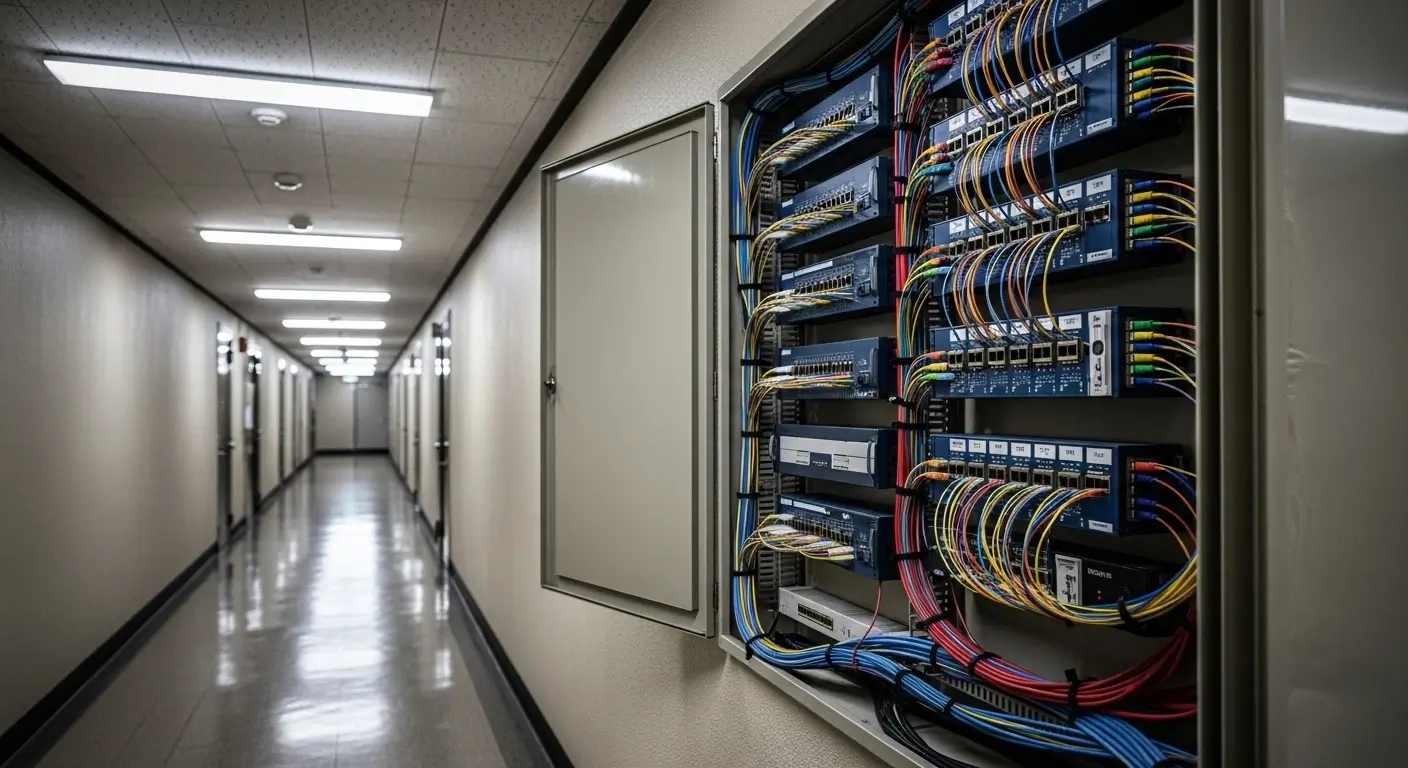
Fiber availability also varies by building age and local infrastructure investment. Newer buildings in Seoul and major cities typically have home internet Korea fiber connections reaching the unit (FTTH). Older buildings in residential neighborhoods may have fiber to the building entrance but older wiring inside — which affects actual speeds and sometimes requires a technician to install a separate configuration before service can begin.
How Address Registration Affects Internet Contracts
Internet contracts in Korea are opened under a person’s legal name and residential address. For Korean nationals, this link is automatic — their ID ties directly to their registered address. For foreigners, the process involves presenting an Alien Registration Card (ARC) and having the address on that card match the installation address. When those two things align, most providers process the application without difficulty.
The complication arises in timing. If you have just moved and your ARC still shows your previous address, some providers will flag the mismatch and decline to proceed until it is corrected. Updating your ARC address requires a visit to the community center (주민센터, a local government office), and the processing time can run one to two weeks after that visit. During that window, opening a new internet contract independently may be refused or delayed by certain carriers.
This situation is more common than people expect, particularly among foreigners who move apartments and then try to set up internet within the first week. The practical result is a gap: you have signed a lease, you have moved in, but the documentation chain has not caught up yet. Knowing this in advance lets you plan around it — either by updating your ARC address earlier than you think necessary, or by arranging a temporary solution with your landlord while the records settle.
Foreigners without an ARC face a harder version of this problem. If you are on a short-term visa and an ARC has not yet been issued, opening a home internet Korea contract independently is generally not possible with the major providers. Some people work around this by having their landlord open the contract, or by relying on the building’s existing shared service if one is in place. Neither option is guaranteed, and both depend on the landlord’s willingness to cooperate.
For a detailed breakdown of how address registration works and why timing affects more than just internet setup, the guide on address registration for foreigners in Korea covers the full process — including what commonly fails at the counter and how to avoid the most predictable timing errors.
Apartment vs Officetel vs Older Buildings
Housing type is one of the clearest predictors of how smoothly home internet Korea installation will go. The patterns are consistent enough that knowing what kind of building you are moving into tells you a great deal about what to expect before you ever contact a provider.
| Housing Type | Internet Pattern | What to Expect |
|---|---|---|
| New apartment complex | Fiber pre-installed | Quick activation, often same-day or next-day |
| Officetel | Mixed wiring, varies by unit | May require technician; provider options can be limited |
| Older villa (빌라) / low-rise | Technician visit required | 2–5 business days typical; fiber may not reach the unit |
| Share house / gosiwon | Master contract under landlord | You use existing WiFi; personal contract usually not possible |
| One-room / studio | Depends on building age | Confirm wiring type with landlord before signing the lease |
Officetels present a specific challenge worth explaining. The building may advertise high-speed internet, but internal wiring in many older officetels mixes telephone-line infrastructure with newer fiber runs. Which one reaches your specific unit depends on when that floor was last renovated — not on what the building as a whole supports. This is worth asking about directly rather than assuming from the rental listing description.
Older villas (빌라, a Korean-style low-rise residential building) and low-rise buildings in quieter residential areas often require a full technician visit even for basic activation. The technician needs to physically trace the line from the building’s distribution point to your unit, which means scheduling an appointment, coordinating building access, and sometimes waiting several days if technician availability in that area is limited.
Share houses and gosiwon (고시원, a type of very compact private room in a shared facility) operate on a different model entirely. The landlord or management company holds a single internet contract for the whole building. You use whatever WiFi they provide — which varies considerably in quality and reliability. Opening your own dedicated contract in these buildings is generally not possible, and internet quality here is something worth checking before you commit to the accommodation. The comparison guide on guesthouse vs one-room monthly costs in Korea covers the practical differences between these housing types in more detail.
Common Reasons Installations Get Delayed
Most home internet Korea installation delays come from a small set of predictable causes. Understanding them before you move in gives you time to prevent them rather than troubleshoot after the fact.
Weekend move-in: Technician scheduling in Korea runs primarily on weekdays. If you move in on a Friday evening or over a long weekend, the earliest a technician can realistically come is the following Monday or Tuesday. Some providers offer limited weekend appointment slots, but these fill quickly and require advance booking — often a week ahead. Planning a weekday move, or booking a technician appointment before move-in day, removes this delay entirely.
Previous tenant’s account not properly closed: This is more common than expected, particularly in buildings where tenants cycle through frequently. If the previous occupant left their contract in suspension rather than cancelling it, the line appears occupied in the provider’s system. Resolving this requires either the previous tenant to formally cancel, or the provider’s customer support team to process an administrative closure — which can take several business days and sometimes requires documentation you do not have easy access to.
Building entry permission: In newer apartment complexes with security management, technicians need explicit permission to enter the building and access wiring closets. If the property management office is not informed in advance, the technician may arrive and be unable to complete the work. This is one of those delays that feels unnecessary in retrospect — coordination between the provider, the management office, and you needs to happen before the appointment day, not on the morning of.
ARC not yet issued: If you are newly arrived in Korea and your ARC is still being processed, opening a contract independently becomes difficult. Most providers require ARC for identity verification, and without it the account cannot be registered in your name. This is a timing problem that affects many people in their first few weeks — the same window when internet access feels most urgent. It often coincides with other administrative hurdles, which is why planning the sequence matters. The guide on setting up utilities in a Korean apartment covers how internet fits alongside electricity, gas, and water setup — none of which automatically includes internet, and each of which has its own timing requirements.
Before Signing an Internet Contract, It Helps to Confirm
Most complications with home internet Korea contracts can be avoided by asking a few specific questions before signing. These are not things providers will necessarily volunteer — you need to ask directly, or confirm through your landlord.
Is fiber already active in your unit? Ask your landlord or the building management whether fiber (광랜 or FTTH) reaches your specific unit, not just the building. The answer affects which providers are available, whether a technician visit will be required, and roughly how long setup will take.
Was the previous tenant’s account properly closed? Ask the landlord directly. If they managed the transition between tenants, they may already know the status. If the previous tenant handled it independently, there is a real chance the account was suspended rather than cancelled. Finding this out before you call a provider saves several back-and-forth conversations.
Which providers actually service your building? The easiest way to confirm is to enter your address on each provider’s website and verify service availability before deciding. Korea’s three main home internet Korea providers — KT, SK Broadband, and LG U+ — all offer address-based coverage checks on their homepages. Checking all three takes about ten minutes and removes the risk of discovering incompatibility after you have already committed to a provider. For a provider-neutral reference, the Ministry of Science and ICT publishes annual broadband coverage statistics by region.
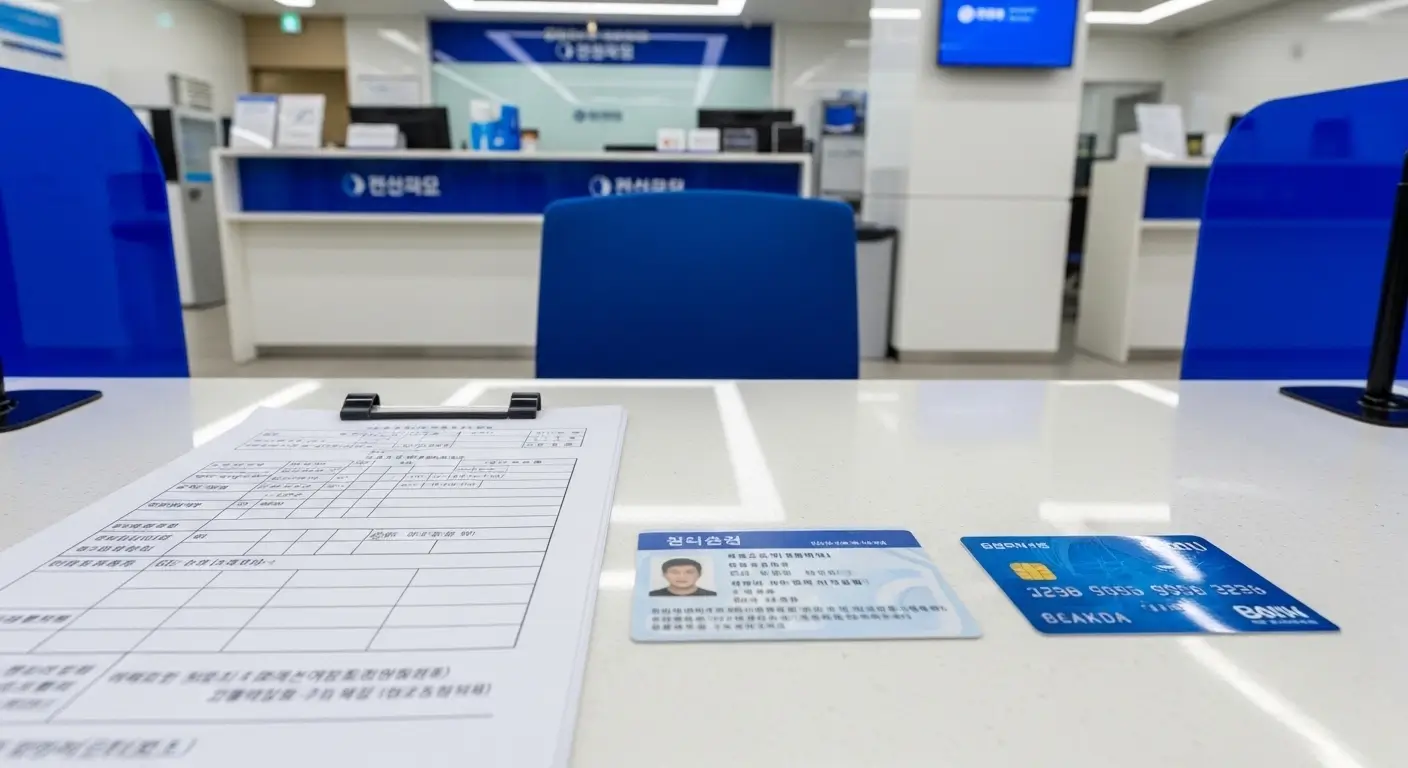
Is your name required on the contract? In buildings where the landlord includes internet as part of the rental package, this question does not apply. But if you are opening your own contract, confirm whether your ARC and registered address are in a state where a contract can actually be opened. If your ARC address has not yet been updated to reflect your current residence, discuss with your landlord whether they can temporarily open the contract or whether the building has an existing shared service you can use in the meantime.
The situation shares some parallels with phone number verification, where documentation requirements can block access to services that seem straightforward on the surface. The guide on phone number verification for foreigners in Korea explains why identity records and registration status affect more services than people initially expect.
Final checklist before installation day:
- Confirm fiber availability in your specific unit — not just the building
- Ask your landlord whether the previous tenant’s account was fully cancelled
- Check provider availability by entering your address on all three provider websites
- Confirm your ARC address matches your current residence address
- Book a technician appointment in advance if moving on a Friday or before a public holiday
- Notify building management to authorize technician access if your building requires it
- Clarify contract name requirements with your chosen provider before the appointment day
Frequently Asked Questions
Can foreigners in short-term housing get home internet in Korea?
Generally, not under their own name. The major home internet Korea providers — KT, SK Broadband, and LG U+ — require an Alien Registration Card (ARC) to open a contract, which means foreigners on short-term visas without ARC cannot apply independently. In share houses, guesthouses, and short-term rentals, the landlord typically holds a master contract and residents use the shared WiFi. If having dedicated internet is a priority for your stay, this is worth confirming with the landlord before signing any rental agreement.
What documents are needed to open a home internet contract in Korea?
The standard requirements are your Alien Registration Card (ARC) and a payment method — a Korean bank account or credit card. Your ARC address should match the installation address. Some providers also ask for your lease agreement as supplementary proof, particularly if your ARC has not yet been updated to reflect your current residence. For context on how address updates work and what documentation is involved, the guide on address registration for foreigners in Korea covers the process from start to finish.
How does ARC status affect internet installation timing?
Directly. Without an ARC, most providers will not open a contract in your name. If your ARC is still being processed — which typically takes two to four weeks after initial application — you will either need to wait, use a mobile data solution temporarily, or work with your landlord to arrange a shared or temporary connection. Once your ARC is issued and your address registration is current, the contract process generally proceeds without issue and installation can be scheduled within a few business days.
Conclusion
Home internet Korea setup is rarely complicated on its own. But timing and housing type shape how smoothly it goes, and a few assumptions about how it works tend to cause the most friction. In most newer apartments, home internet Korea activation is quick. In older buildings, officetels, or situations where the previous tenant’s account was not properly closed, a few extra days are common — and occasionally longer if ARC status or address records are not yet settled.
The steps that prevent most delays are the same ones that are easiest to skip: confirming fiber availability before move-in, checking whether the previous contract is closed, and making sure your ARC address is current before scheduling installation. This usually gives you a working connection within the first week, without needing to renegotiate with providers or reschedule appointments.
From there, internet becomes one fewer thing to manage during what is already a busy transition period.