
KakaoTalk verification foreigners Korea face goes almost entirely unexplained before arrival — and that silence creates real problems faster than most people expect. Within the first few days of settling in, many foreign residents try to access delivery apps, online banking, or reservation platforms, only to discover that every one of them routes through KakaoTalk for identity confirmation. When that step fails, the entire chain breaks.
The frustrating part is that KakaoTalk itself usually installs without issues. It’s the identity confirmation layer — the part that connects a Korean phone number to your account — where foreign users consistently hit a wall. This happens regardless of how long someone has lived in Korea or how carefully they followed the signup steps.
This article explains what’s actually causing the block, which services are affected, and what setup gives foreign residents a working path through Korea’s identity authentication system — depending on their visa type and phone situation.
Why KakaoTalk Verification Works Differently for Foreigners
Korea’s digital services are built around a unified identity confirmation system. When a platform needs to verify who you are, it doesn’t ask for a government ID directly — it asks KakaoTalk to confirm your phone number is registered and active under your name. This system works smoothly for Korean nationals because their phone number, resident registration number, and national ID are all connected from the start.
For foreigners, that connection doesn’t exist automatically. A phone number — even if it’s active on a Korean network — may not be registered in the same way under a verified identity. The telecom registration system in Korea requires that phone contracts be linked to either a Korean Resident Registration Number (주민등록번호) or an Alien Registration Number (외국인등록번호, found on your ARC card). Without this linkage, the identity check sent from KakaoTalk to the carrier returns an unverified result, and the service you’re trying to access blocks the attempt.
This is why many foreigners report that the SMS code arrives correctly, but the system still rejects them at the confirmation step. The SMS is the surface layer — the actual check happens at the carrier database level, and that’s where foreign accounts frequently fail.
Understanding this distinction matters because the solution isn’t to reinstall the app or try a different email. It’s about whether your Korean phone number is properly registered in the national telecom system under your verified foreign identity.
KakaoTalk Verification Foreigners Korea Face: 3 Common Causes
Most foreign users who experience KakaoTalk authentication problems in Korea fall into one of these three situations. They’re worth checking in order, since the cause determines what fix is actually available.
1. Using a Tourist or Short-Term SIM Card
Prepaid tourist SIM cards — the kind sold at Incheon Airport convenience stores and online travel shops — are not registered under a verified personal identity. They’re sold anonymously or under minimal registration, which means the telecom database has no confirmed identity linked to that number. When KakaoTalk sends an identity check request to the carrier for that number, the carrier has nothing to confirm, and the process fails.
This affects a large portion of foreign visitors who arrive expecting their airport SIM to work like a regular phone number. It does work for calls and data — just not for identity-linked authentication systems. Understanding how to choose the right Korean SIM card as a foreigner before arriving can prevent this situation entirely.
2. Phone Contract Registered Under Passport Instead of ARC
Some foreigners sign up for a Korean phone plan using only their passport — which is possible during the period before an Alien Registration Card (ARC) is issued. The problem is that passport-only registration creates a limited account in the carrier’s system. When the ARC is later issued but the phone contract isn’t updated to reflect the ARC number, the identity linkage remains incomplete.
This situation is common among people who arrived, immediately signed a phone plan, then received their ARC weeks later without returning to update the telecom registration. The phone works fine for daily use, but any service that checks ARC-level identity will fail. The same problem affects choosing a mobile plan in Korea — what looks like a simple signup often has identity-linkage requirements that aren’t obvious at the counter.

3. ARC Issued but Not Yet Reflected in the Carrier System
Even when someone returns to update their carrier registration with their ARC number, there’s sometimes a processing delay of several days before that information propagates through the system. During that window, authentication attempts still fail — not because of a mistake, but because the database hasn’t fully synced yet.
This is one of the less obvious reasons that kakaotalk verification for foreigners in Korea seems inconsistent. The setup was done correctly, but timing matters. Waiting 48 to 72 hours after updating carrier registration before attempting another identity check resolves this in most cases.
Services That Stop Working When KakaoTalk Authentication Fails
This is where the problem becomes more than an inconvenience. KakaoTalk isn’t just a messaging app in Korea — it’s embedded into the identity layer of dozens of daily services. When foreign users can’t complete the authentication process, they lose access to a wider set of platforms than most expected.
| Service Category | Examples | What Gets Blocked |
|---|---|---|
| Food Delivery | Baemin, Coupang Eats | Account creation, payment |
| Online Banking | Kakao Bank, Toss | Login, transfers, card issuance |
| Reservations | Naver Booking, Yanolja | Accommodation and dining bookings |
| Government Portals | Government24, Hi Korea | Document requests, online applications |
| Shopping & Payment | Kakao Pay, Naver Pay | Mobile payment setup |
The pattern is consistent: services that require real-name confirmation (실명 확인) in Korea use KakaoTalk as the bridge. For foreigners who haven’t completed the phone registration process properly, these services are effectively unavailable until the underlying phone identity issue is resolved.
Banking access is one of the first places this becomes urgent. The identity chain that blocks KakaoTalk often blocks the bank signup process too — a problem that commonly delays opening a bank account in Korea as a foreigner for reasons that aren’t obvious until you’re already at the counter.
This also connects directly to the broader phone number identity check problems foreigners encounter across Korean services — KakaoTalk is one node in a larger system that depends on properly registered phone identity. And even after an ARC is approved, there’s a related issue: online identity checks in Korea can still reject foreigners for reasons separate from the KakaoTalk layer.
Decision Guide: Which Setup Works for Your Situation
The right path forward for kakaotalk verification as a foreigner in Korea depends on where you currently are in the residency process. There’s no single answer — but there are clear patterns based on visa type and registration status.
| Your Situation | Most Likely Issue | Recommended Path |
|---|---|---|
| Tourist SIM, no ARC | Unregistered number | Limited options; use Wi-Fi based services where possible |
| Waiting for ARC | Passport-only registration | Get ARC first, then update carrier registration in person |
| ARC received, passport plan | ARC not linked to carrier | Visit carrier store with ARC + passport to update registration |
| ARC updated, still failing | System propagation delay | Wait 48–72 hours, retry identity check |
| Long-term resident, E-2 / D-10 | Plan type restrictions | Confirm plan includes real-name confirmation with carrier directly |
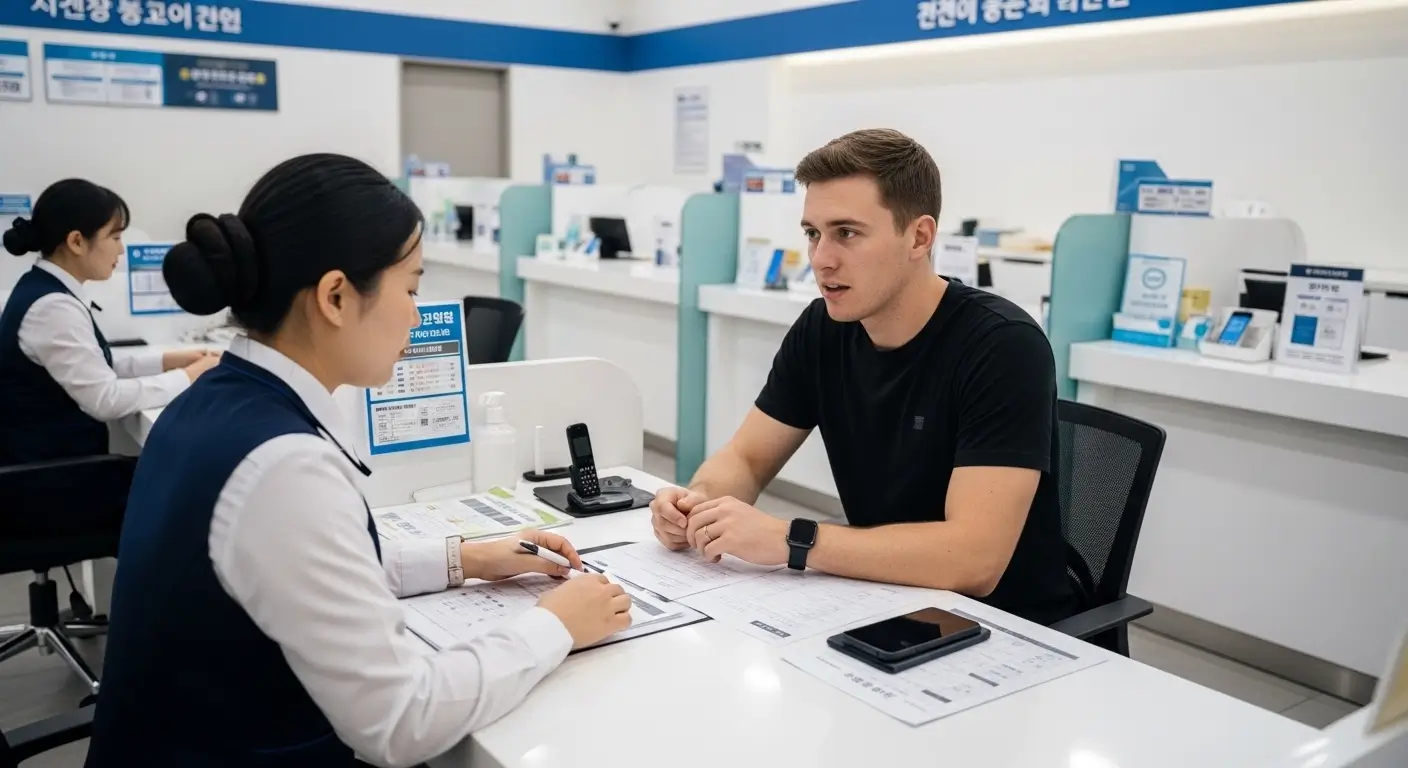
The carrier visit is the critical step that many foreigners skip. It’s possible to update ARC information online through some carriers, but in-person registration at a KT, SK Telecom, or LG U+ store is significantly more reliable — and staff at major urban branches handle foreign registration regularly.
According to the Ministry of Science and ICT (MSIT), all mobile phone contracts in Korea must be registered under verified identity to qualify for real-name-linked services. This applies equally to Korean nationals and registered foreign residents — the difference is that foreigners must complete an additional step to link their ARC number to their existing carrier account.
What to Check Before Relying on KakaoTalk in Korea
Before using KakaoTalk for banking or service signups in Korea, it’s worth confirming each of these points. Missing one tends to create problems at the worst possible moment — usually when you need to pay for something or submit a document request.
- Your Korean phone number is under a postpaid or registered plan — not a tourist prepaid SIM purchased at the airport or online without identity confirmation.
- Your ARC number is linked to your carrier account — not just your passport. This requires a carrier visit after ARC issuance if you signed up before receiving it.
- The ARC update was completed at least 48–72 hours ago — system sync takes time, and attempting authentication immediately after updating often fails even when the registration itself is correct.
- Your KakaoTalk account is registered under the same phone number as your carrier plan — not a foreign number, not a secondary number added later.
- You’ve confirmed with your carrier that your plan supports real-name confirmation — some MVNO (sub-carrier) plans have restrictions that aren’t visible at signup.
If your ARC card application is still pending, the Hi Korea immigration portal allows you to check your ARC issuance status online. Resolving the ARC first is necessary before any carrier registration update will affect KakaoTalk.
For the broader picture of ARC delays and how they affect daily digital life in Korea, the article on why ARC card applications take longer than expected covers what foreigners typically encounter during that waiting period.
Frequently Asked Questions
Can I use KakaoTalk verification in Korea on a short-term stay without an ARC?
In most cases, no. KakaoTalk’s identity-linked authentication depends on a Korean phone number registered under a verified name in the carrier’s system. Short-term visitors using tourist SIM cards don’t meet this requirement. For anyone navigating the decision between short stays and longer commitments, understanding where short-term vs long-term stay decisions in Korea go wrong can clarify which services will actually be accessible based on your situation. Some platforms offer alternative confirmation through a Korean bank account or in-person options, but these are exceptions.
What documents do I need to update my carrier registration for KakaoTalk verification?
You typically need your ARC card (외국인등록증, Alien Registration Card) and your passport — both originals, not copies. Some carriers may also ask for visa documentation. The process is done in person at a carrier branch and usually takes under 30 minutes at the store, though the system sync may take an additional 48–72 hours to fully activate. After that window, kakaotalk verification for foreigners in Korea generally works as expected.
Does KakaoTalk verification get easier after my ARC card is approved?
Yes — ARC issuance is the turning point for most foreigners dealing with authentication problems in Korea. Once your ARC is issued and linked to your carrier account, the process becomes significantly more straightforward. The step most people miss is returning to the carrier store after ARC issuance — the phone plan doesn’t automatically update. After that in-person visit and the system sync period, most KakaoTalk-linked services become accessible within a few days.
Conclusion
KakaoTalk verification problems foreigners in Korea encounter almost always trace back to one specific gap: the phone number isn’t properly connected to a verified identity in the carrier’s system. It’s not a KakaoTalk issue, and it’s not an account problem — it’s a registration linkage issue that most foreigners aren’t warned about before arriving.
The practical path through it is clear once the problem is identified. Get your ARC, visit your carrier branch, update the registration, wait the processing period, and the services that were blocked tend to open in sequence. It takes more time than it should, but it’s a one-time fix rather than an ongoing problem.
From there, most of the digital infrastructure of daily life in Korea becomes accessible. The authentication system is frustrating to navigate at first — but understanding how it connects phone registration, ARC status, and service access makes the sequence considerably less confusing.