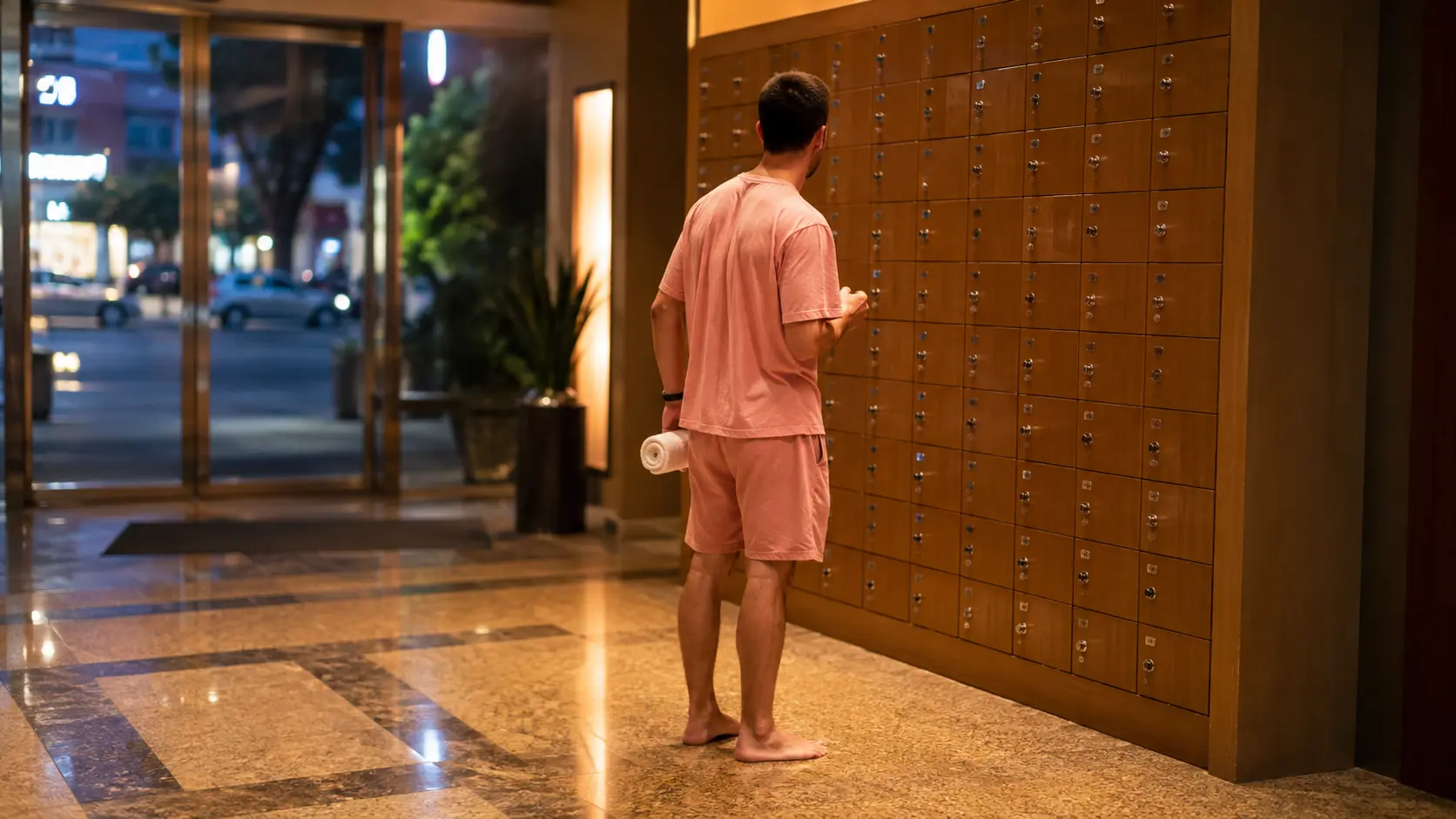
The counter sits at chest height, there is a queue forming behind you, and somewhere to your left about forty pairs of shoes are already tucked into numbered wooden slots. You are still wearing yours. That is usually how a jjimjilbang korea visit begins for a first-timer — one step behind everyone else, holding a card, wearing the wrong thing in the wrong place.
Nothing dramatic happens next. Someone points at the shoe lockers, you back up, and the queue waits. It is a small thing. But that same pattern repeats about four more times inside — at the locker room, at the washing stools, at the uniform pile, at the exit gate — and by the third correction most people stop enjoying the place they paid to enjoy.
The building is not complicated. The order is. Shoes, desk, locker, wash, soak, dress, sweat, eat, settle up — and every single step depends on the one before it. Get the sequence right and the whole thing costs about the same as two coffees and runs for twelve hours.
Why the order matters more than the rules
Most guides hand you a list of etiquette points. Wash before you soak, don’t stare, keep your voice down. All true, all secondary. The etiquette is easy to pick up by watching one ajumma for ninety seconds.
What actually goes wrong is sequencing. A jjimjilbang korea residents use every week is built as a chain of zones, and each zone has an entry condition set by the one before it. You cannot pay properly until your shoes are off, because the shoe key is what you hand over at the desk. You cannot enter the pools until you have washed sitting down. You cannot walk onto the mixed sauna floor until you are wearing the facility’s shirt and shorts. Miss a link and you get stopped — politely, but stopped.
There’s a second reason to care about the order. Almost nothing here is standardised by law. Opening hours, re-entry policy, child rules, how long your entry fee actually buys — each business sets its own, so the sequence is the only part that stays reliable from Seoul to Gyeongju.
Step 1 — Your shoes come off before you pay
Shoe lockers sit before the counter in almost every jjimjilbang korea has, not after it. You open a slot, put your shoes in, take the small key, and only then approach the desk. In most places you hand that shoe key over as part of check-in.
Entry runs roughly ₩10,000 to ₩20,000 for a standard visit in 2026, with neighbourhood spots at the low end and polished wellness complexes charging considerably more for a time-limited pass. Foreign Visa and Mastercard work at most large facilities in Seoul, though smaller ones outside the tourist belt can still be awkward with overseas cards — the same friction that shows up when paying in Korea as a foreigner anywhere else.
You get back a wristband key, a folded uniform, and one or two small towels. That is the whole kit. Nothing else needs to come from home.
Step 2 — The wristband is your wallet
This is the part that surprises people, and it surprises them at the worst possible moment — with a bowl of noodles in front of them and no cash on their body, because their clothes are three floors down in a locker.
The band on your wrist opens your locker and functions as a running tab. Food, drinks, a scrub, a massage chair, extra hours — the staff scan the band, nothing is exchanged, and you settle everything in one payment at the exit gate. Which means two things worth remembering. Losing the band is expensive; replacement fees in the ₩10,000–₩20,000 range are common. And you genuinely cannot walk out until the tab is cleared, so don’t plan around a quick escape.
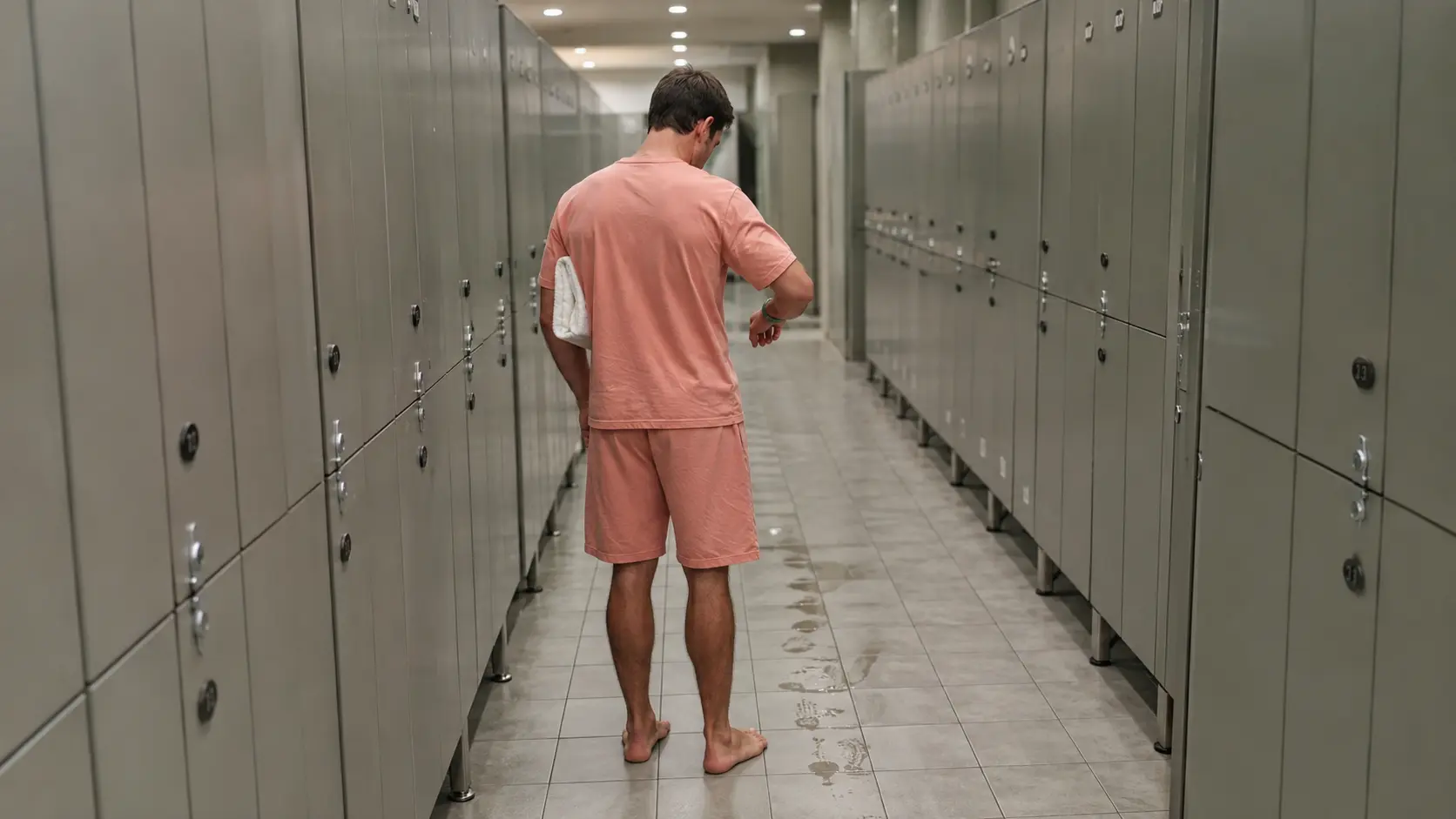
One more detail that catches people out: at many facilities, leaving the building ends your visit. Step outside for a phone call or a cigarette and coming back may mean paying again. Ask at the desk if you think you’ll need air.
Step 3 — The bath floor runs on one rule
The bathing area (목욕탕) is separated by gender and nobody wears anything. Not a swimsuit, not a towel wrapped around the waist, not shorts. This is the single point most foreigners have already read about and still hesitate over, and the honest version is that the hesitation lasts about five minutes.
Your phone stays in the locker. Cameras in that room are a serious matter, not a social one, so leave it upstairs even if you were only planning to check the time.
Before any pool, you sit at a low washing station and clean yourself properly with soap and shampoo — seated, not standing, and thoroughly. Then work upward in temperature rather than diving into the hottest tub first. Warm pool, hot pool, cold plunge, repeat. If you want the full experience, the scrub (세신) is booked separately and usually runs from about ₩25,000, and it is more vigorous than the word “scrub” suggests in English.
In any jjimjilbang korea has to offer, this floor is the oldest part of the tradition. It also closes for cleaning at some point overnight at 24-hour venues, which matters if you were planning a 3 a.m. soak.
Step 4 — Uniform on, then the sauna floors
The uniform is the line between the two halves of a jjimjilbang korea layout. Dry off, put on the shirt and shorts you were handed at the desk, and go up. From here the building is mixed-gender and everybody is wearing the same colour, which does more for the atmosphere than it sounds like it should. Hierarchy dissolves a little when a lawyer and a delivery driver are both in identical cotton shorts eating an egg.
The heated rooms sit at different temperatures and are usually themed — salt, charcoal, jade, hot stone, plus one ice room to cool down in. There is no correct rotation. Ten minutes in a hot room, a few minutes in the cold one, a stretch on the warm floor, repeat until your brain goes quiet.
Then there’s the food, which is half the reason locals come. Sweet rice drink (식혜) served ice-cold in an absurdly large cup. Eggs baked slowly in the sauna heat (맥반석 계란), cracked against your own forehead by tradition. Seaweed soup, ramyeon, patbingsu. It all goes on the wristband.
Step 5 — Staying the night changes things
Sleeping over is ordinary in any jjimjilbang korea keeps open around the clock. People do it after missing the last train, after a long shift, or simply because ₩15,000 beats a hotel. You take a mat and a wooden block pillow, find a spot in the sleeping room, and that’s it.
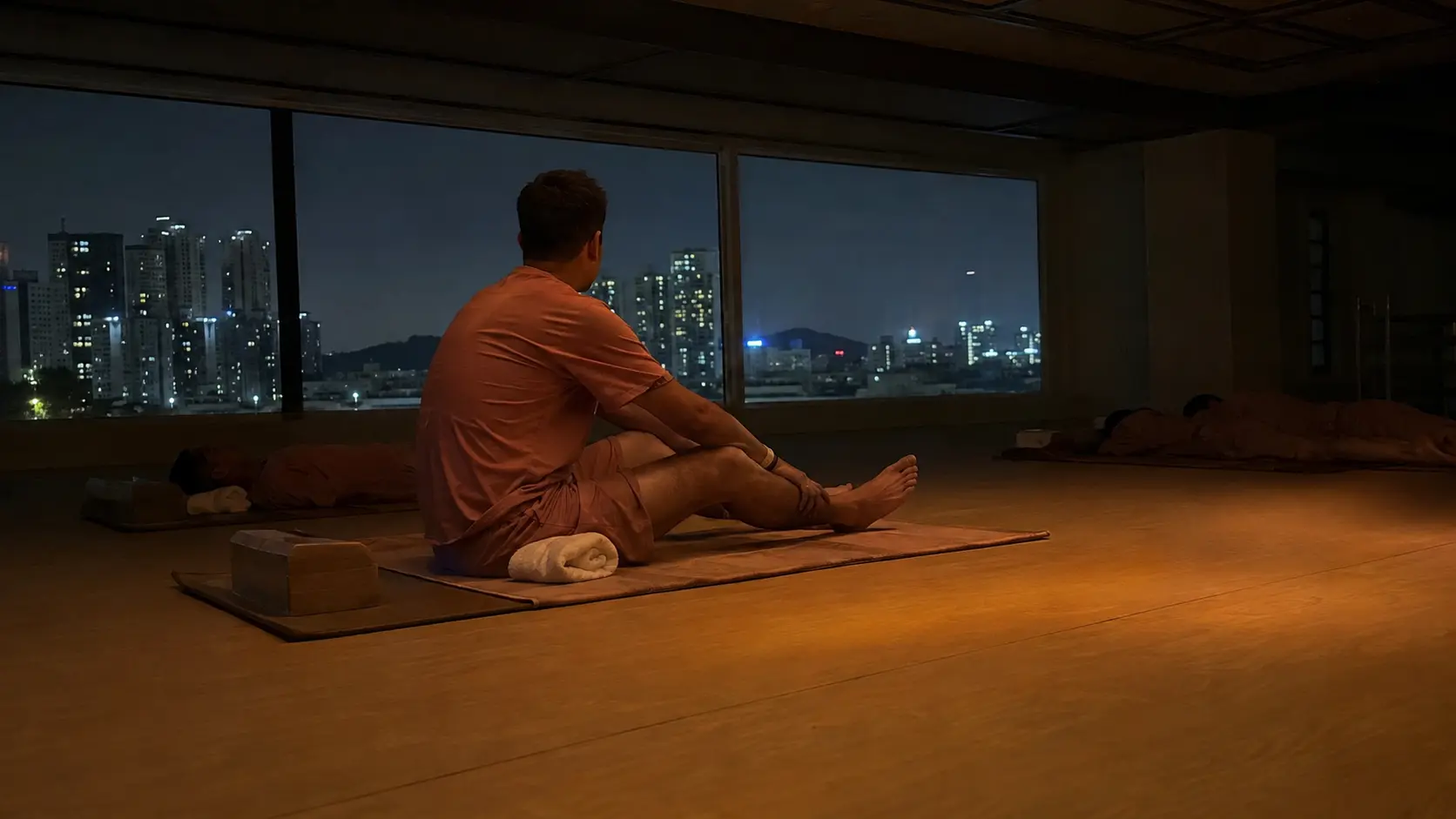
Two conditions attach to that. First, the entry fee at many places buys a set block — often around twelve hours — and hours beyond it are added to your tab at an hourly rate. Second, if anyone in your group is under 19, the rules tighten sharply: 24-hour bathhouse businesses restrict entry between 10 p.m. and 5 a.m. for young people who aren’t accompanied by a guardian, under the enforcement rules of the Public Health Control Act. A written parental consent form is an accepted alternative at many venues, but that’s a conversation to have at the desk before you pay, not at midnight.
Alcohol is a flat no. Not sold, not brought in.
Where the jjimjilbang korea sequence usually breaks
Four failures account for most of the bad first visits, and none of them involve etiquette.
Assuming the price is the price. The number on the door is admission only. A scrub, three snacks, and four extra hours can double it, and you won’t see the total until the exit gate. Decide your ceiling on the way in.
Treating the bath floor as optional. Some visitors skip straight to the sauna floors in the uniform, which is allowed but means paying full price for half the building.
Turning up with a tattoo and no plan is the third. Policies vary genuinely, not theoretically — large facilities in tourist districts are typically relaxed about it now, while some older neighbourhood bathhouses still post notices. If yours is large and visible, a two-minute check of recent Naver Map reviews for the specific venue saves an uncomfortable exchange at the counter.
And the fourth: assuming any of this is nationally uniform. It isn’t. Hours, re-entry, children’s access, what the fee includes — all set by the business. This shows up constantly in expat forums, usually as someone insisting a rule is universal because it applied at one place in Hongdae. If a detail matters to your plan, ask at the desk in the first thirty seconds, or call the multilingual 1330 Korea Travel Helpline and have them check the venue for you.
Questions that come up most
Do I really have to be naked?
In the gender-separated bathing area, yes — swimwear isn’t permitted in the shared pools. On the sauna and lounge floors above, everyone wears the provided uniform. If the wet floor is a hard no for you, the upper floors alone still work, though you’re paying full admission for part of the facility.
How much should I budget in total?
Admission of roughly ₩10,000–₩20,000, plus whatever goes on the wristband. A realistic first visit with a drink, a snack, and a scrub lands somewhere in the ₩35,000–₩50,000 range. Without the scrub, well under half that.
Can I sleep here instead of booking a room?
At 24-hour venues, yes, and plenty of people do. It’s a floor mat in a shared room rather than a bed, and the lighting never fully goes down. For anything longer than one night, compare it against the options in our guide to temporary housing in Korea for foreigners before committing.
Is English spoken at the desk?
Sometimes, at the larger jjimjilbang korea visitors find near tourist districts. Often not. Holding up one finger and saying “찜질방” handles check-in, and the rest of the building is learned by watching. Nobody expects you to speak.
What should I bring with me?
Almost nothing. Towels, uniform and locker come with admission. Some people bring their own toiletries and a hair tie; everything else is sold inside, the same way it is at a Korean convenience store, charged to the band rather than paid at a till.
Quick check before you walk in
- Shoes off and into a shoe locker before the counter
- Card ready — confirm overseas cards are accepted if you’re outside a major district
- Ask whether the fee covers 12 hours or the full night, and what happens after
- Ask whether leaving the building ends the visit
- If anyone in the group is under 19 and you’re staying past 10 p.m., ask about the guardian rule first
- Phone, valuables and clothes into the locker; wristband stays on your wrist
- Wash seated and thoroughly before any pool
- Set a spending ceiling before the tab starts running
One thing worth knowing if you’re going on a weekend: Saturday evenings and public holidays are both busier and, at some venues, pricier. A weekday afternoon is a different building entirely.
What this comes down to
A jjimjilbang korea newcomers find intimidating is really just a sequence of rooms with conditions attached, and the conditions are physical rather than cultural. Shoes off, then pay. Wash, then soak. Dress, then sweat. Settle, then leave.
Learn that chain once and the awkwardness disappears, which leaves you with the actual thing: a hot floor, a cold plunge, a cup of sweet rice drink at two in the morning, and the strange social flatness of a room where everyone is wearing the same shorts. It’s one of the few places in the country where being a foreigner stops mattering after about ten minutes.
Same logic, incidentally, as the one that makes a Korean laundromat feel impossible for a week and obvious forever after.
Eric Youn lived abroad for over 15 years and writes practical Korea living guides based on firsthand experience.