Many foreigners only realize how complex the Korean address system is when something stops working. A delivery fails, a bank form is rejected, or an online service asks for an address that doesn’t seem to fit. These issues usually come from how addresses are structured and used differently in Korea, rather than from missing information. If you’ve recently arrived or you’re still planning your move, understanding the Korean address system for foreigners early on can save you from a surprising number of everyday headaches.
This isn’t just about knowing your street name. It’s about understanding why Korea uses two parallel address formats, how to enter them correctly on Korean forms, and what happens when you get it wrong. Most of the problems people face are preventable — once you know what to look for.
Table of Contents
Why Korea Has Two Address Systems
Common Mistakes Foreigners Make With Korean Addresses
What Actually Matters When Using Addresses in Korea
Which Format to Use and When
How to Enter Your Korean Address on Forms
The Safer Approach for Foreigners
Quick Checklist Before Submitting Any Address
Once You Understand the Pattern, It Gets Easier
Why Korea Has Two Address Systems
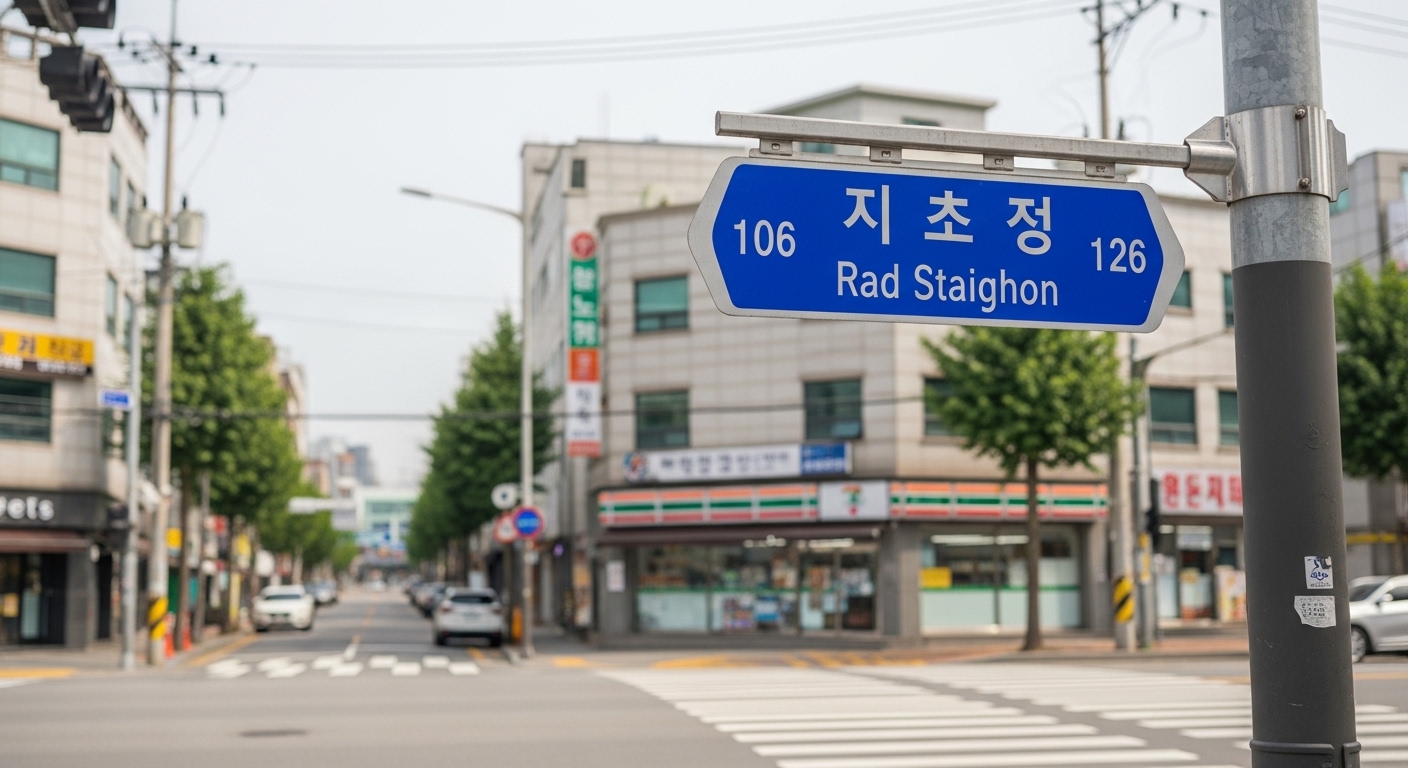
Korea officially uses two address formats, and this is where most confusion begins. The newer system, called the road-name address (도로명주소), was fully adopted in 2014. It works similarly to Western addresses — a street name followed by a building number. Before that, Korea used a lot-number address (지번주소), which identifies locations based on land parcel numbers rather than streets.
Here’s the problem: both systems are still in use. Government offices, banks, and delivery services generally prefer the road-name format. But older buildings, some real estate contracts, and even certain navigation apps still reference the lot-number system. For foreigners trying to navigate Korean addresses, this dual system is the single biggest source of confusion.
Think of it this way: it’s like having two phone numbers that both reach the same person, but different services ask for different ones — and they don’t always tell you which one they want.
Common Mistakes Foreigners Make With Korean Addresses
Most foreigners run into trouble not because they don’t know their address, but because they use it in the wrong context or the wrong format. Here are the patterns that come up again and again.
Using the lot-number address on official forms
When opening a bank account as a foreigner in Korea or registering at a government office, the road-name address is almost always what’s expected. People who copy the address from their lease agreement sometimes submit the lot-number version without realizing it. The form may accept it without error — but processing can be delayed, or the registration may need to be corrected later.
Translating addresses manually into English
This causes more problems than most people expect. Korean addresses follow a specific order — from largest area to smallest — which is the reverse of Western conventions. When foreigners try to rearrange or translate their address into English themselves, the result often doesn’t match what Korean systems expect. International shipping, visa applications, and some online verifications can fail because of this.
Ignoring the detailed address line
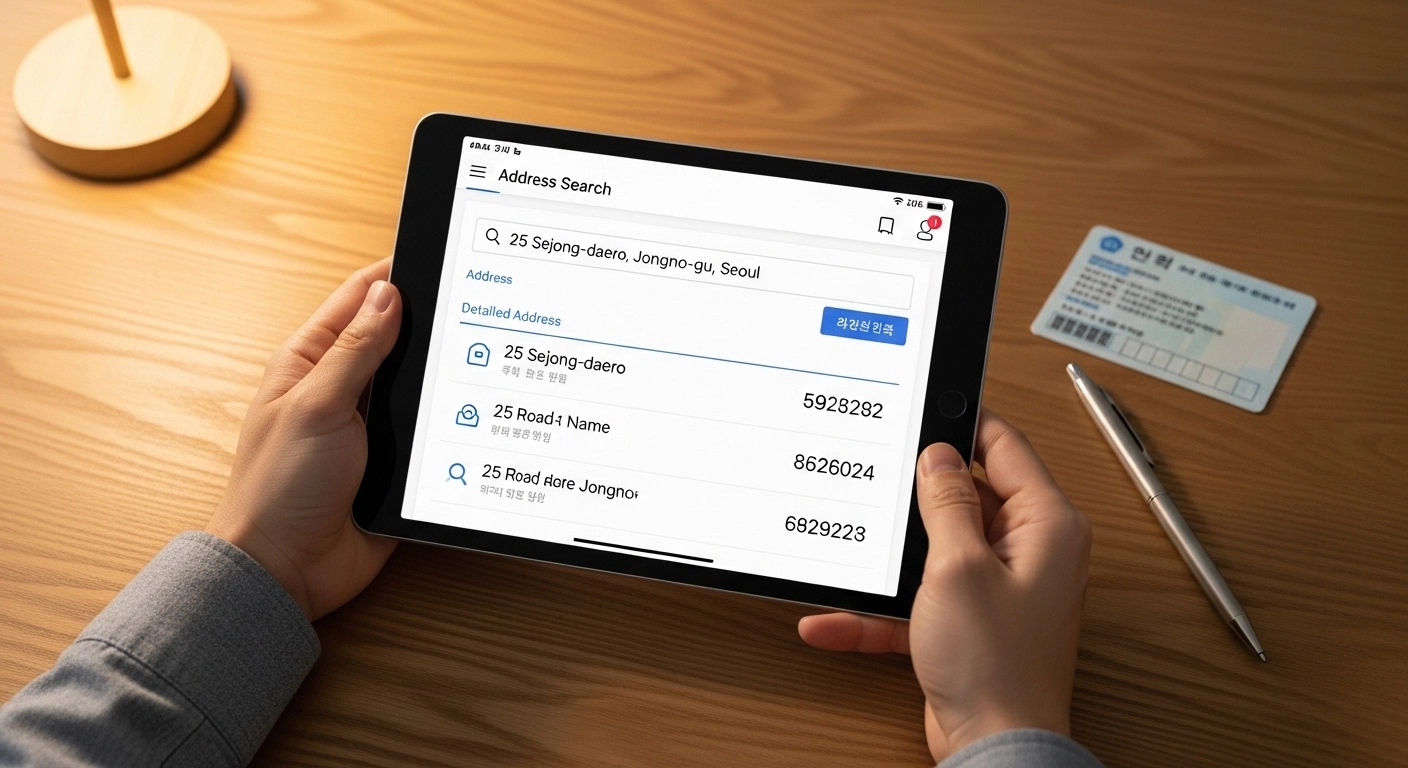
Korean address forms typically have two fields: the main address and the detailed address (상세주소). The second field is where you enter your apartment number, floor, or unit. Many foreigners leave it blank or merge everything into one line. This is where delivery drivers get lost, mail stops arriving, and phone number verification services sometimes reject your input.
Assuming the postal code alone is enough
Korean postal codes (우편번호) are five digits, and they cover relatively small areas. But unlike in some countries, a postal code alone isn’t precise enough to pinpoint a building. People sometimes enter only the postal code on delivery forms, expecting the rest to auto-fill. In many Korean systems, it doesn’t — and your package ends up in limbo.
What Actually Matters When Using Korean Addresses
Once you understand the structure, the Korean address system for foreigners becomes much less intimidating. Here’s what locals take for granted that newcomers usually don’t know.
The order matters. A Korean address reads from the broadest area to the most specific: province or city → district (구) → neighborhood (동) → street name → building number. If you reverse this order — as Western formats do — Korean systems often can’t parse it correctly.
The building number isn’t the same as an apartment number. The number that appears in the road-name address refers to the building on the street. Your actual unit, floor, and room number go in the detailed address field. Mixing these up is one of the most common errors.
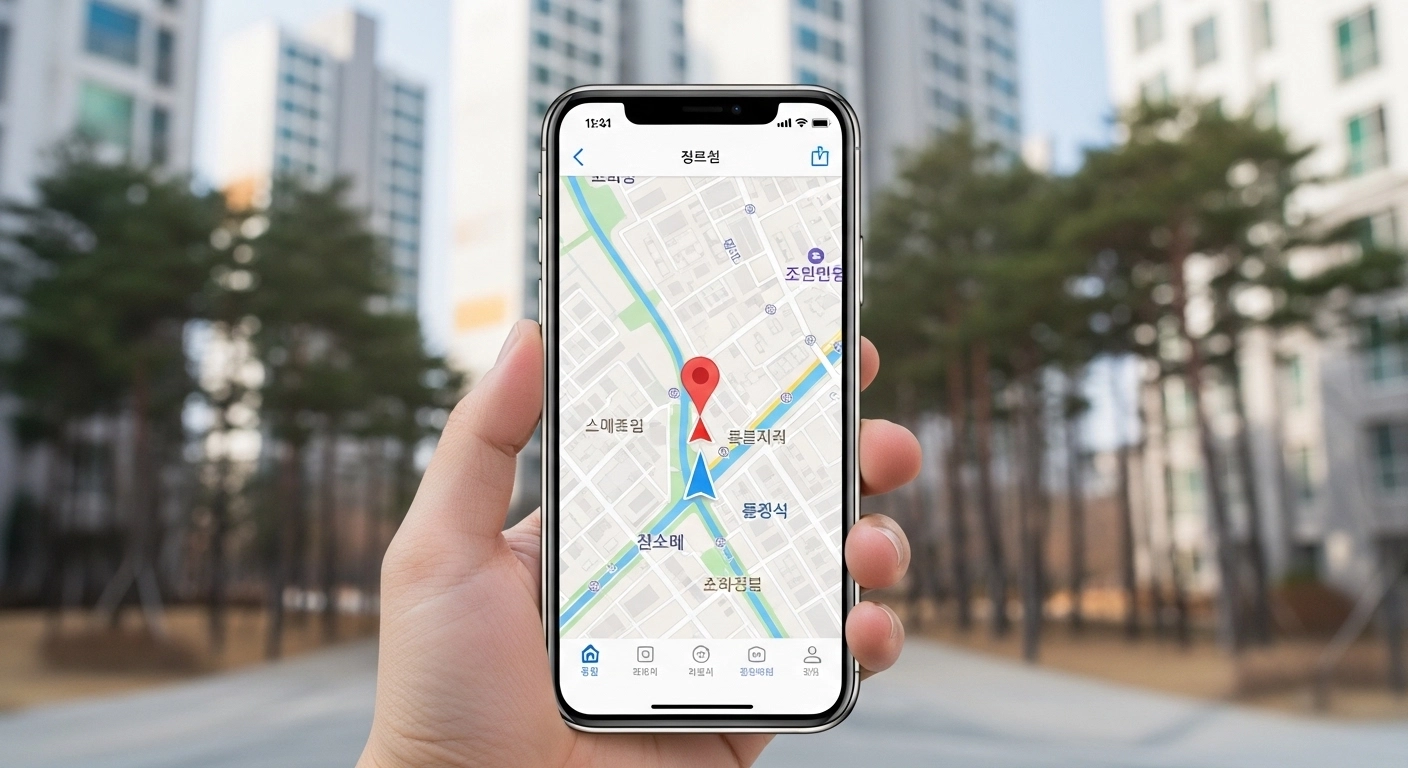
Naver Map and Kakao Map are more reliable than Google Maps for Korean addresses. Google Maps works for general navigation, but its Korean address data isn’t always complete or current. If you need to confirm your exact road-name address, searching on Naver Map tends to give more accurate and up-to-date results.
There’s also a government tool worth knowing about. The Juso.go.kr website is the official Korean address search system. You can input either format and get the corresponding address in the other system. For foreigners still figuring out which version of their address to use, this is the most dependable reference.
Which Format to Use and When
This is where the decision gets practical. Rather than memorizing rules, it helps to think about what you’re trying to do.
If you’re registering at immigration, a bank, or a government office, use the road-name address. In most cases, this is the only format these systems accept smoothly. If you’re unsure which address you have, check your Alien Registration Card — the address printed there is always the road-name version.
If you’re ordering food or a delivery, the road-name address works in most apps. But some older local delivery services still search by neighborhood name (동). If a driver calls and can’t find you, giving your building’s lot-number or nearby landmark usually resolves it faster than repeating the road name.
If you’re signing a lease or dealing with real estate, the lot-number address is still commonly used in contracts. This doesn’t mean you should memorize it — but you should know that the address on your lease may look different from the one you use for everything else. Both point to the same place.
If you’re filling in international forms or sending mail abroad, use the English road-name address. Korea Post provides an official English address search that generates the internationally standardized format. Using this avoids the mistakes that come from manual translation.
For everyday life — receiving packages, setting up a Korean SIM card, or signing up for a mobile plan — the road-name address handles almost everything.
How to Enter Your Korean Address on Forms
Korean websites and apps usually have an address search button (주소 검색) that opens a pop-up. You type your street name or building name, and the system finds the standardized address for you. This is actually easier than typing it manually — and it avoids formatting errors.
The tricky part is what comes next. After the system fills in your main address, you’ll see a second field for the detailed address. This is where most foreigners hesitate.
Here’s how to handle it: enter your building name (if it’s an apartment complex), then your dong (동, meaning building number within the complex), then your unit number. For example: ○○아파트 101동 502호. If you live in a villa or officetel, the format is usually just the floor and room number: 3층 301호.
If you’re navigating a form that’s entirely in Korean, having a few essential Korean phrases ready can make the process much smoother. The key terms to recognize are 주소 (address), 상세주소 (detailed address), and 우편번호 (postal code).
The Safer Approach for Foreigners
If you want one clear direction: memorize your road-name address in Korean, save both the Korean and English versions in your phone’s notes, and always use the address search function on Korean forms rather than typing manually.
This approach works for the vast majority of daily situations — deliveries, government registration, banking, utility setup, and online services. It also minimizes the risk of typos or formatting mismatches that can cause delays.
This might not cover every edge case. If you’re dealing with older landlords, traditional markets that use lot-number systems, or very rural areas where road-name addresses were adopted later, you may need to look up the lot-number version as well. But for most foreigners living in Seoul, Busan, or other major cities, the road-name address is the safer default.
One practical habit that helps: when you move into a new place, take a photo of any official mail or document that shows your full road-name address. This gives you a reliable reference you can pull up whenever a form, a delivery driver, or a bank teller asks for your address.
Quick Checklist Before Submitting Any Address
✔ Am I using the road-name address, not the lot-number version?
✔ Did I fill in the detailed address field separately (floor, unit, dong)?
✔ Did I use the form’s address search function instead of typing manually?
✔ Is the postal code included and correct (five digits)?
✔ For international forms, am I using the official English address format?
✔ Do I have both the Korean and English versions saved in my phone?
Once You Understand the Pattern, It Gets Easier
The Korean address system can feel unnecessarily complicated when you first encounter it. Two formats, unfamiliar field names, and forms that don’t always explain what they’re asking for — it’s understandable why foreigners get stuck.
But once you have your road-name address saved, know when to use the detailed address field, and get comfortable with the address search pop-up on Korean sites, most of the friction disappears. From there, things tend to get simpler — deliveries arrive, forms go through, and the system starts to feel less like a puzzle and more like a routine.
Take a few minutes to confirm your address on Juso.go.kr, save both versions in your phone, and you’ll have one less thing to worry about as you settle into life in Korea.