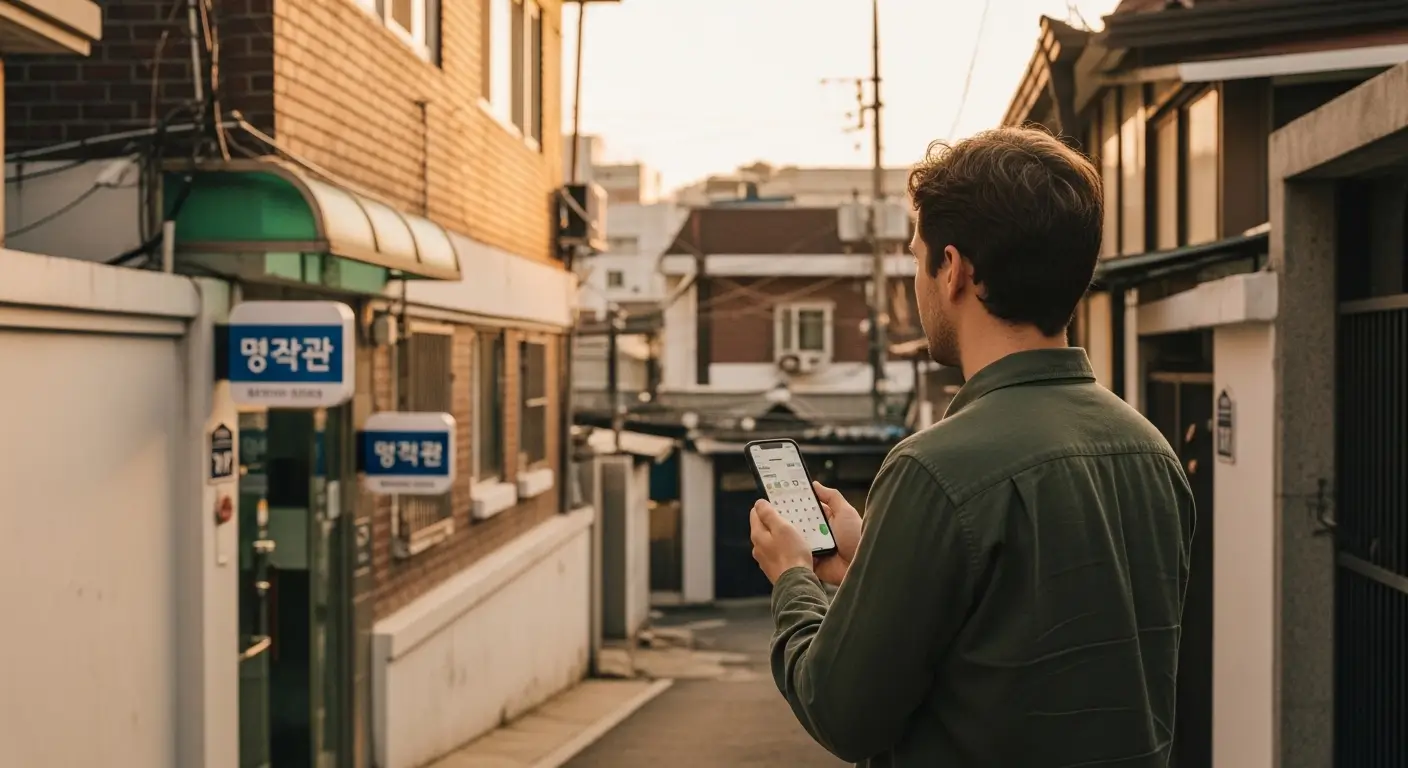
By the time most foreigners start seriously comparing a guesthouse vs one room Korea cost, they’ve already been surprised by at least one number. Maybe the guesthouse seemed cheap until the third month’s bill looked exactly the same. Or maybe a one-room listing showed ₩400,000 a month — and then mentioned a ₩5,000,000 deposit in smaller text below. The real cost of housing in Korea rarely matches what appears on the surface, and that gap tends to hit foreigners harder than anyone else.
What makes this comparison tricky isn’t the rent itself — it’s everything else wrapped around it. Deposits, utilities, maintenance fees, contract terms, and even whether your housing allows official address registration can shift the actual monthly cost by hundreds of thousands of won. If you’re deciding between these two options, the price tag alone won’t tell you much. The structure behind that price is what matters.
This guide breaks down how costs are actually built in each housing type, where miscalculations happen most often, and which factors shift the equation depending on how long you plan to stay.
Why This Comparison Is Often Misunderstood
Most foreigners compare guesthouses and one-rooms the way they’d compare hotel rates back home — by looking at the posted monthly number and picking the lower one. That approach misses nearly everything that actually determines your cost.
In Korea, housing type doesn’t just affect how much you pay each month. It determines whether you’ll need a large upfront deposit, whether utilities are bundled or billed separately, whether your contract locks you in for a year, and whether you can even register your address — which in turn affects your ability to open a bank account or pass phone number verification.
The confusion usually isn’t about intelligence or research effort. It comes from the fact that the Korean rental system operates on assumptions that feel invisible if you haven’t lived here before. A guesthouse that looks expensive per month might cost less overall for a two-month stay. A one-room that looks affordable might require ₩10,000,000 in deposit money before you even move in. Without understanding the structure behind each option, the numbers alone can actually steer you in the wrong direction. That’s why any honest guesthouse vs one room Korea cost comparison needs to look beyond the posted rent.
How Guesthouse Costs Are Structured
Monthly Fee and What It Includes
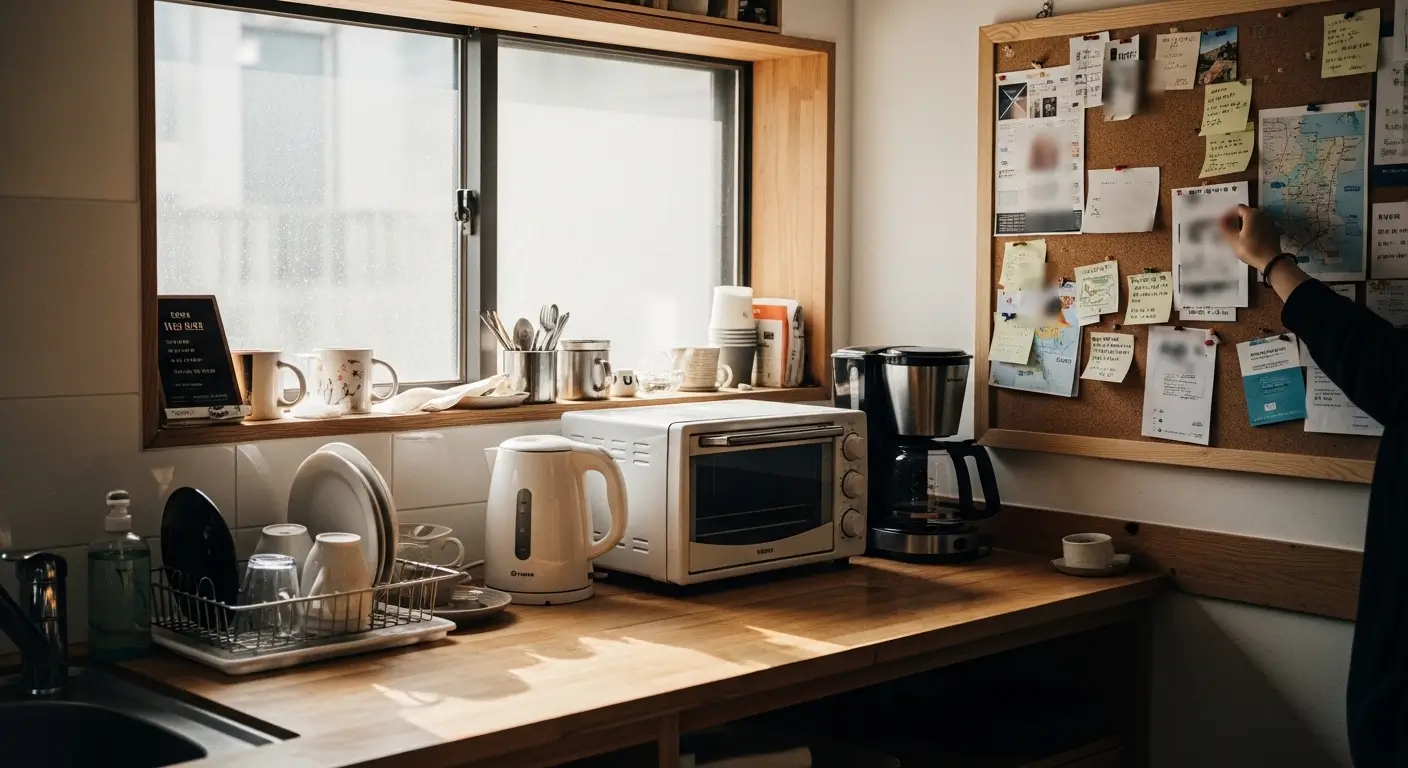
Guesthouses in Korea typically charge a single monthly fee — often between ₩500,000 and ₩900,000 depending on location and room type. That number usually covers the room, Wi-Fi, basic furnishing, and sometimes a shared kitchen or laundry access. Some places include utilities in the price, others don’t, and the only way to know is to ask directly before signing anything.
Cleaning fees are another variable. Some guesthouses handle common area cleaning but charge extra for room cleaning. Others include periodic room cleaning but limit the frequency. These small differences add up if you’re staying for more than a month or two.
Deposit and Contract Terms
One of the biggest draws of a guesthouse is the low barrier to entry. Deposits are typically small — ₩100,000 to ₩300,000 — or sometimes waived entirely for shorter stays. Contracts tend to be flexible, allowing monthly renewals or even week-to-week arrangements. This flexibility is particularly useful if your stay length is still uncertain.
Hidden Limitations
The convenience of a guesthouse comes with trade-offs that aren’t always obvious upfront. Privacy is limited — shared walls, shared bathrooms in some places, and communal spaces mean you’re rarely fully on your own. More importantly for administrative purposes, not all guesthouses support official address registration (전입신고), which can delay or block steps like getting your Alien Registration Card processed or setting up Korean financial services.
How One-Room Costs Are Structured
Deposit (Key Money) and Monthly Rent
One-rooms (원룸) operate on a fundamentally different model. The monthly rent often looks lower than a guesthouse — sometimes ₩350,000 to ₩600,000 — but there’s a deposit (보증금) attached that can range from ₩1,000,000 to ₩10,000,000 or more. This deposit is refundable at the end of your lease, but it’s money you need to have available upfront, and getting it back isn’t always straightforward.
The relationship between deposit and rent is important to understand. In general, a higher deposit reduces the monthly rent. Some landlords offer a “반전세” structure where a very large deposit significantly lowers the monthly payment. This system works well for people who have savings available, but it creates a significant cash flow burden for those who don’t.
Utilities and Maintenance Fees
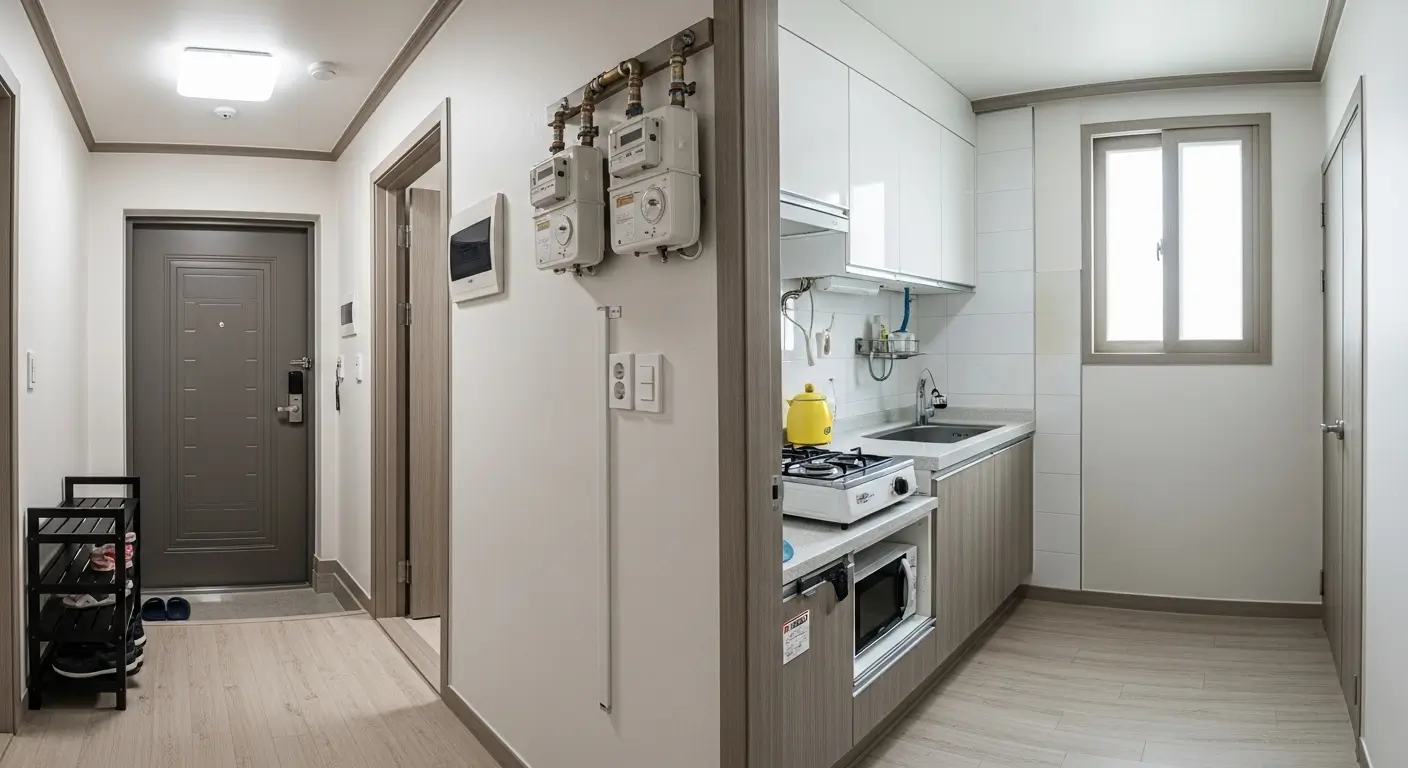
Unlike most guesthouses, one-rooms bill utilities separately. Electricity, gas, water, and internet are typically your responsibility, and these vary dramatically by season. Winter heating costs alone can add ₩100,000–₩200,000 per month depending on how well-insulated your building is. Summer electricity for air conditioning adds a similar bump.
On top of that, most buildings charge a maintenance fee (관리비) that covers building upkeep, shared area electricity, and sometimes water or internet. This fee ranges from ₩30,000 to ₩100,000 monthly. Some listings advertise rent without mentioning this fee, which can make the one-room look cheaper than it actually is.
Contract Length and Renewal
Standard one-room leases run for one year, sometimes two. Breaking a lease early usually means forfeiting part of your deposit or finding a replacement tenant yourself. Renewal terms vary by landlord — some allow month-to-month after the initial period, while others expect a full new contract. If your plans in Korea are flexible or uncertain, this rigidity can become a costly constraint.
Where the Guesthouse vs One Room Korea Cost Gets Miscalculated
The most common errors aren’t about choosing the “wrong” option. They’re about comparing numbers that aren’t measuring the same thing. Here’s where the math tends to break down.
First, many people don’t treat the deposit as a cost — but it is a cost in terms of opportunity and access. That ₩5,000,000 sitting with your landlord can’t be used for anything else during your stay. And if there’s a dispute at move-out, you might not get it all back on the timeline you expect.
Second, seasonal utility swings catch people off guard. A one-room that costs ₩450,000 in rent plus ₩50,000 in utilities during autumn can suddenly cost ₩450,000 plus ₩200,000 in January. That winter spike rarely appears in the listing, and it can make the guesthouse’s flat monthly fee look much more competitive in retrospect.
Third, the maintenance fee question. Some one-room listings include it in the advertised rent, others don’t. When comparing a guesthouse at ₩700,000 per month (all-inclusive) against a one-room at ₩400,000 per month, you need to check whether the one-room also has ₩70,000 in maintenance plus ₩100,000–₩200,000 in utilities. The gap narrows faster than most people expect.
| Cost Category | Guesthouse (Typical) | One-Room (Typical) |
|---|---|---|
| Monthly Rent | ₩500,000–₩900,000 | ₩350,000–₩600,000 |
| Deposit | ₩0–₩300,000 | ₩1,000,000–₩10,000,000+ |
| Utilities | Often included | ₩50,000–₩200,000/month |
| Maintenance Fee | Usually included | ₩30,000–₩100,000/month |
| Contract Flexibility | Monthly or weekly | 1-year minimum typical |
| Address Registration | Not always possible | Generally supported |
How Length of Stay Changes the Cost Equation
Duration is probably the single biggest factor in any guesthouse vs one room Korea cost comparison. The math shifts dramatically depending on whether you’re staying for weeks, months, or a full year. The math shifts dramatically depending on whether you’re staying for weeks, months, or a full year.
1–2 months: A guesthouse almost always makes more financial sense at this length. The low or nonexistent deposit means your total out-of-pocket stays close to the monthly rate. A one-room, by contrast, would require you to tie up millions of won in deposit for a stay that barely justifies the paperwork. If you’re exploring Korea for this duration, the flexibility alone is worth the higher monthly fee. For more on navigating early decisions like this, the guide on temporary housing options in Korea covers what to check before booking.
3–6 months: This is the range where the comparison gets genuinely complicated. The guesthouse’s flat monthly rate starts adding up — ₩700,000 per month over five months is ₩3,500,000, with nothing to show for it at the end. A one-room at ₩450,000 per month over the same period is ₩2,250,000 in rent, plus maybe ₩500,000 in utilities and fees — roughly ₩2,750,000, with most or all of the deposit returned afterward. But finding a landlord willing to do a six-month lease can be difficult, and you may pay a premium for the shorter term.
1 year or more: For stays of a full year, the one-room is generally the more economical choice. The deposit is recovered at lease-end, making the effective monthly cost significantly lower. You also gain access to official address registration, which unlocks a range of services from banking to choosing a proper mobile plan. The longer the stay, the more the guesthouse’s convenience premium compounds into a real cost disadvantage.
Address Registration and Administrative Impact
This is the part of the cost comparison that doesn’t appear in any price column, but it can affect your daily life more than the rent itself.
Official address registration (전입신고) is required for many administrative steps in Korea. According to the Hi Korea immigration portal, this process is tied to your Alien Registration Card, and it also affects opening certain bank accounts, signing up for a postpaid phone plan, and even receiving government mail. One-rooms with a standard lease generally allow this without issue. Guesthouses, depending on their registration type and the operator’s willingness, may not.
If your guesthouse doesn’t support address registration, you may find yourself stuck in a cycle: you can’t register your address, so you can’t complete your ARC process on time, so you can’t open a bank account, so you can’t get a proper Korean SIM card, and suddenly a chain of administrative tasks is delayed by weeks. Understanding how the Korean address system works can help you ask the right questions before you book.
This isn’t a cost you can measure in won per month, but it’s one of the more significant hidden factors in this decision — particularly if you plan to stay long enough to need banking, phone contracts, or government services.
Questions to Consider Before Deciding
Rather than offering a blanket recommendation on guesthouse vs one room Korea cost, it’s more useful to work through a few questions that tend to clarify which direction makes sense for your specific situation.
How long will you actually stay? If you’re not sure yet, defaulting to a guesthouse for the first month or two gives you time to explore neighborhoods without being locked in. If you already know you’ll be here for at least a year — for work, school, or a long-term visa — the one-room’s lower effective monthly cost is hard to beat.
Can you manage a large deposit? Having ₩5,000,000 to ₩10,000,000 available doesn’t just mean having it in the bank. It means being comfortable with that money being inaccessible for the entire lease period. If that’s not realistic, the guesthouse’s low-deposit model removes a major financial barrier.
Do you need official address registration? If your visa status requires it, or if you’ll need to open a bank account and sign up for services that require phone verification, this question alone might push the decision toward a one-room. Checking this before signing a guesthouse agreement can save you from having to move again within weeks.
Are utilities included? Some guesthouses include everything; some one-rooms have surprisingly low utility loads (especially newer buildings with better insulation). Don’t assume — ask. And for one-rooms, try to get a sense of what previous tenants paid during winter and summer months. One approach is to bring a few practical Korean phrases when visiting offices or speaking with landlords, which tends to smooth out these conversations.
Final Checklist Before You Commit
Before signing anything, run through these quick verification points:
- Have you confirmed whether utilities are included or billed separately?
- Do you know the exact deposit amount and the conditions for getting it back?
- Have you asked whether official address registration (전입신고) is possible at this location?
- Is the contract length aligned with your actual planned stay?
- Have you factored in seasonal utility costs — especially winter heating and summer cooling?
- Do you understand what the maintenance fee (관리비) covers and how much it is?
- If you need to leave early, do you know what the penalties or conditions are?
If you can answer all of these clearly, you’re in a much stronger position than most foreigners are when they sign their first Korean housing agreement.
When you look at guesthouse vs one room Korea cost as a whole picture, the difference is rarely about comfort alone. It usually comes down to how costs accumulate over time, how your stay is structured, and what administrative steps your housing needs to support. Neither option is inherently better — but one of them is almost certainly a better fit for your specific situation, timeline, and budget.
Once you’ve settled the housing question, the rest of your setup — from banking to transportation — tends to fall into place more smoothly. If you’re still working through those early decisions, the guide on short-term vs long-term stay planning connects many of these pieces together. From there, each step gets a little more predictable.