
T-money card Korea foreigners pick up at Incheon Airport is almost always the first purchase they make — grabbed from a convenience store kiosk before the taxi queue even comes into view. It looks simple. Tap, beep, board. And for that first subway ride into the city, it works exactly as advertised.
The gaps appear later. A bus route in a smaller city won’t register the tap. The top-up machine at the station only accepts Korean debit cards. Intercity travel runs on a completely separate ticketing system. And if you assumed the card you walked out with covers all of Korean public transit, you’ll figure out the limits at the worst possible moment — standing at a turnstile with a line behind you.
This guide is not about what T-money is. That part takes thirty seconds to explain. It’s about the setup decisions most foreigners skip, the coverage gaps that come without a warning label, and the specific situations where the default tourist setup stops being enough. If you’re arriving soon or already feel like you’ve been guessing your way through the transit system, this is worth reading before your next trip out.
Why T-money Matters More Than It Looks
Korea’s transit system is deeply integrated. The subway, city buses, intercity buses, and even some convenience store purchases all run through the same contactless payment infrastructure. T-money (티머니) is the dominant card on that network — accepted on virtually every bus and subway line across Seoul, Busan, Daegu, Incheon, and dozens of smaller cities.
What makes this confusing for foreigners is that the card itself has no setup process at the point of purchase. You hand over ₩4,000 at a GS25 or CU counter, add some credit, and it functions immediately. There’s no registration, no name attached, no account. That simplicity is genuinely useful — but it also means no one explains the limits to you.
The limits matter. Getting from the airport into the city on day one usually works fine with a basic T-money card. But once you start navigating daily life — commuting across zones, traveling to nearby cities, trying to pay at a parking lot or a rental bike station — the gaps in the default card become real friction. Understanding what the T-money card Korea foreigners rely on actually covers — and what it does not — is one of the first practical things to sort out after arrival.
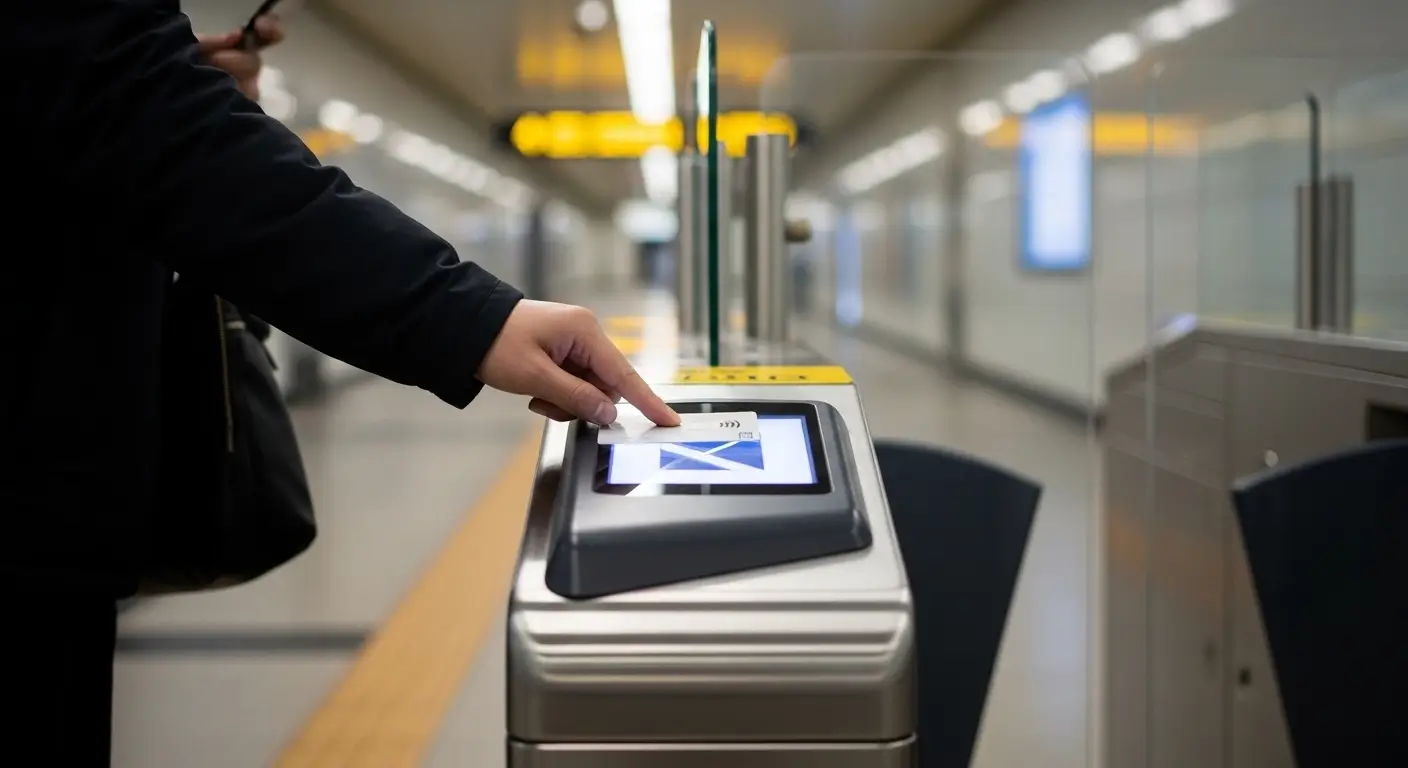
T-money Card Korea Foreigners: 5 Mistakes That Catch People Off Guard
Most of these mistakes don’t involve the card itself. They involve assumptions about what the card is supposed to do — assumptions that feel reasonable until they’re wrong.
Assuming it covers intercity travel. T-money works on local city buses and subways. It does not work for intercity express buses (고속버스) or KTX high-speed trains. If you’re planning a trip to Gyeongju, Jeonju, or Busan on an intercity service, you’ll need a separate ticket purchased through Korail, the intercity bus terminal app, or a travel agency counter. This surprises a lot of people who expect the single tap-and-go system to scale up.
Waiting until the card is empty to top up. Topping up sounds trivial, but the kiosks inside subway stations only accept Korean-issued debit cards or cash. Foreign credit and debit cards are not accepted at most transit top-up machines. If you arrive at a station with ₩200 on your card and no cash, you’re stuck. The fix is to top up regularly at convenience stores (GS25, CU, 7-Eleven), where cash is always accepted and the process takes about fifteen seconds.
Getting a tourist card when planning to stay long-term. There are several T-money variants — basic anonymous cards, cards tied to a Korean bank account, and app-based versions. Foreigners who plan to stay for months and eventually open a Korean bank account often find it worth switching to an account-linked version. Opening a bank account as a foreigner in Korea takes some preparation, but once you have one, managing transit balance becomes much easier.
Not checking regional coverage before traveling outside Seoul. T-money is accepted in most major Korean cities, but coverage in rural areas and small provincial towns is inconsistent. Some local bus routes in less urban areas still require exact cash. The official T-money website lists regional acceptance, but the most reliable approach is to carry ₩10,000–₩20,000 in cash when traveling outside major cities.
Expecting transfer discounts to work automatically without understanding the rules. T-money offers transfer discounts (환승 할인) between buses and subways, but the discount only applies if you transfer within a specific time window — typically thirty minutes within Seoul. If you miss that window, you pay full fare again. Many foreigners don’t realize a trip that felt like a single journey cost double because of a gap between connections.
What Actually Matters When Setting Up Your T-money Card
Most guides stop at “get a T-money card at the airport.” That’s correct but incomplete. The T-money card Korea foreigners pick up on day one is functional — but setting it up correctly for your situation is a different question. What actually matters is matching the card type to your stay and building the right top-up habit from the start.
Card type vs. stay duration. If you’re in Korea for fewer than three months, the basic anonymous T-money card sold at convenience stores is the practical choice. No registration needed, works immediately, and can be refunded at the T-money service center when you leave (a process worth knowing about if you have a significant balance remaining). If you’re staying longer and setting up residency, a card linked to your Korean bank account gives you remote top-up capability through mobile apps, which removes the cash dependency entirely.
App-based T-money options. The T-money Pay app allows some foreigners to use a digital version of the card directly from their smartphone. However, full functionality requires a Korean phone number and, in many cases, a Korean bank account. Phone verification in Korea blocks many foreign numbers, which is why the physical card remains the more reliable option for most new arrivals.
Starting balance. ₩20,000–₩30,000 on arrival is a reasonable starting amount if you’re entering Seoul and planning to use transit for the first few days. A single subway ride within Seoul runs ₩1,400–₩1,600, and a bus is similar. If you’re staying for an extended period, top-up frequency matters more than starting balance — building the habit of refilling at the convenience store during your regular shopping trips is more reliable than waiting until you’re at the gate.
T-money Card Types: Which One Fits Your Situation
There are more variants of the T-money card Korea foreigners encounter than most people realize when they first arrive. The one at the convenience store counter is the simplest — but understanding the others is worth a few minutes.
| Card Type | Best For | Top-Up Method | Refundable? |
|---|---|---|---|
| Basic T-money (anonymous) | Short-term, under 90 days | Cash at convenience store | Yes, at T-money center |
| Bank-linked T-money | Long-term residents with Korean bank account | Auto-charge via app | Yes, via bank |
| Cashbee card | Alternative to T-money, same network | Cash / card at convenience store | Yes |
| Digital T-money (app) | Residents with Korean phone + bank | App-based, card linked | Yes |
Cashbee is worth knowing about. It’s a competing transit card that operates on the same infrastructure as T-money — every bus or subway that accepts T-money accepts Cashbee. If T-money cards are sold out at a kiosk (which happens during peak travel periods around holidays), Cashbee works as a direct substitute.
Topping Up Your T-money Card in Korea
This is where many foreigners lose time unnecessarily. The T-money card Korea foreigners carry works exactly as promised — the friction comes from not knowing which top-up methods actually accept foreign payment. The options are clear once you know them.
Convenience stores (편의점) — most reliable. GS25, CU, 7-Eleven, and Emart24 all accept cash top-ups for T-money cards. Hand the card to the cashier, state the amount (₩5,000, ₩10,000, ₩20,000), pay cash. Done in ten seconds. This is the method that works for everyone, regardless of what bank account or phone number you have.
Subway station kiosks — cash only for most foreigners. The top-up machines inside subway stations accept cash and Korean-issued bank cards. Foreign Visa and Mastercard are not accepted for transit top-up at these machines in most stations. Using them with foreign cards will almost always fail.
T-money app — requires Korean number. The app-based top-up through T-money Pay requires a Korean mobile number for account creation. If you’re still working through selecting a Korean mobile plan, the app option isn’t accessible yet. Stick with convenience store top-ups until your Korean phone number and bank account are sorted.
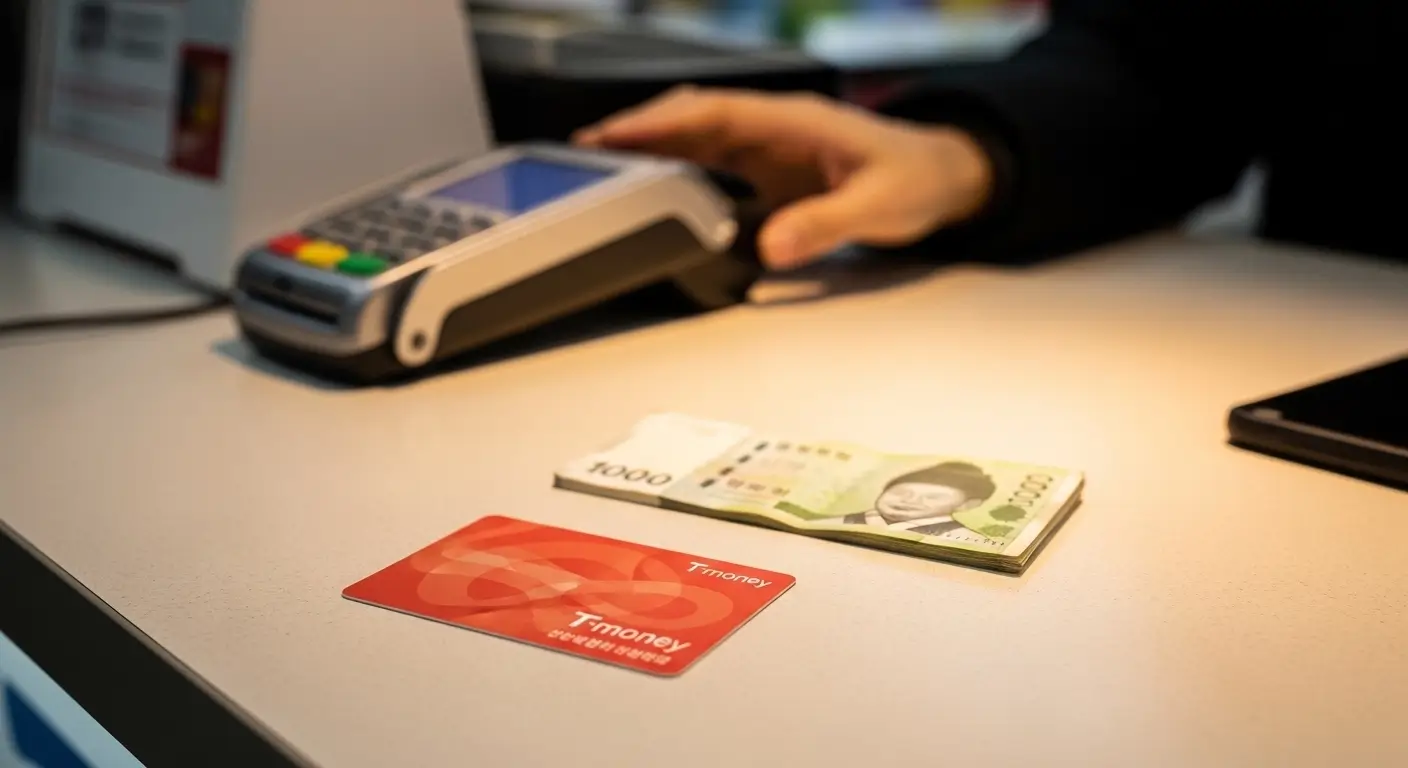
Decision Guide by Visa Type and Stay Length
The T-money card Korea foreigners set up for a two-week trip looks different from what makes sense for someone settling in for a year. Here’s a way to think through which configuration fits your situation.
If you’re on a tourist visa (under 90 days): The basic anonymous T-money card is all you need. Pick one up at the airport or any convenience store near your accommodation. Keep ₩10,000–₩20,000 on it at all times by topping up whenever you stop at a convenience store. If you’re staying in short-term housing in Korea like a guesthouse or serviced apartment, there’s almost certainly a GS25 or CU within two minutes of your door.
If you’re on a D or E visa and planning to stay six months or more: Start with the basic card for your first few weeks. Once your ARC card is processed and you have a Korean bank account, consider upgrading to a bank-linked T-money card or enabling the app-based version. The auto-charge feature removes the manual top-up dependency, which becomes worth it once you’re commuting daily.
If you’re moving between cities frequently: The basic T-money card works across all major Korean cities for local transit. Seoul Metro and most other metropolitan subway systems accept T-money universally. But for travel between cities, you’ll need to use the Korail app, intercity bus terminals, or platforms like SRT separately — T-money does not bridge that gap regardless of how much balance you have loaded.
Final Checklist Before You Rely on T-money
Run through these before your first day of independent transit. The T-money card Korea foreigners use daily is reliable — but only if this groundwork is in place:
- ✅ Card purchased and loaded with at least ₩15,000 — enough for several trips without stress about balance
- ✅ Top-up method confirmed — you know which convenience store is near your accommodation and have ₩20,000–₩30,000 cash on hand for top-ups
- ✅ Intercity travel plan checked — if you’re leaving the city by express bus or KTX, you’ve booked the ticket separately through the correct channel
- ✅ Transfer discount window noted — you know that the discount only applies when transferring within thirty minutes (in Seoul’s integrated fare system)
- ✅ Regional travel cash backup ready — if you’re heading outside major cities, you have enough cash in case T-money isn’t accepted on local routes
- ✅ Long-term upgrade path identified — if you’re staying more than three months, you know the steps to link your card to a Korean bank account once one is open
- ✅ Address registration status confirmed — if you’re a long-term resident, your address registration in Korea is complete, which is sometimes required for certain app-based transit account setups
Frequently Asked Questions
Can the T-money card Korea foreigners buy work without a Korean bank account or phone number?
Yes. The standard anonymous T-money card works without any registration, bank account, or phone number. You simply purchase it at a convenience store for ₩4,000 and load cash onto it. This is the version most foreigners should start with. App-based versions and auto-charge features do require a Korean phone number and bank account, but those are optional upgrades, not requirements. If you’re still working through setting up your Korean SIM card or bank account, the physical card works independently of both.
What happens to the balance on my T-money card when I leave Korea?
Balances of ₩20,000 or more can be refunded at T-money customer service centers, typically located inside major subway stations and at some convenience stores with the T-money logo. A small handling fee applies. For smaller balances, many foreigners simply use the card fully before departure or give it to someone staying behind — the card has no expiry and the balance doesn’t disappear. If you’re planning to return to Korea, holding onto it is practical.
Is T-money accepted at Korean convenience stores for purchases, not just transit?
Yes. T-money can be used as a payment method at CU, GS25, 7-Eleven, Emart24, and most other convenience store chains across Korea. It can also be used at some vending machines, rental bikes (like Seoul Bike / 따릉이), and select parking facilities. This means the same card you use for your commute can handle small daily purchases, which is genuinely convenient once you’re used to it. That said, it’s not a replacement for a Korean debit card for larger purchases — for anything beyond convenience stores and transit, you’ll want a proper payment method sorted, which connects back to getting your utilities and regular bills set up in Korea.
Conclusion
The T-money card Korea foreigners carry is deceptively simple on the surface — and that simplicity is mostly genuine. For daily city transit, it works well with almost no setup. The mistakes people run into aren’t technical failures; they’re assumption failures. Assuming it covers intercity travel. Assuming foreign cards work at station top-up machines. Assuming the default tourist card is the right long-term fit.
Getting those details right before your first full day out removes friction that’s entirely avoidable. If you’re on a longer visa and eventually open a bank account, the account-linked version of the T-money card Korea foreigners upgrade to makes daily commuting much simpler. But even the basic card handles everything you need if you maintain the top-up habit.
If you’re still working through the broader logistics of arriving and setting up in Korea — phones, housing, banking, registration — the transit piece is one of the faster things to get right. Sort it early and it becomes invisible, the way good infrastructure should be.