
Paying in Korea as a foreigner starts simply enough — airports accept international cards, hotels rarely decline them, and the first few days feel manageable. Then daily life begins. A convenience store terminal flashes an error. A delivery app refuses to save the card. An online checkout freezes at the payment screen with no explanation.
These are not random glitches. Korea’s payment infrastructure was built primarily for domestic cardholders, and the identity verification layers woven into most Korean payment systems — both in-person and online — were not designed with foreign-issued cards in mind. Understanding where the gaps appear, and why, helps most foreign residents avoid several weeks of unnecessary frustration.
If you are also working through a phone plan that needs to connect with Korean payment apps, the guide to choosing a mobile plan in Korea covers what to verify before signing anything.
Where Foreign Cards Usually Work — and Where They Don’t
Acceptance rates for international cards in Korea are not uniform. They shift considerably depending on the type of merchant, the payment terminal model installed, and whether any form of identity verification is built into the transaction flow.
Places Where International Cards Are Commonly Accepted
Large supermarkets — including 이마트 (Emart) and 코스트코 (Costco) — along with hotels, duty-free shops, airport facilities, and well-established international franchise restaurants typically handle Visa and Mastercard without issue. These merchants invest in terminals configured for international transactions, and staff are generally familiar with foreign card processing.
Places Where Foreign Cards Often Get Declined
Smaller merchants are where the experience changes. Local restaurants, neighbourhood shops, and unmanned kiosks frequently use terminals configured only for domestic cards. Convenience stores like CU and GS25 produce inconsistent results — the same card may work at one branch and fail at another within the same chain, depending on terminal settings.
Taxis also vary. Newer cabs tend to have updated terminals that process foreign cards; older vehicles may only accept domestic cards or cash. For anyone heading directly into transportation after landing, the airport transportation guide for Korea foreigners outlines which options are more predictable before a Korean payment method is in place.
Online Services That Almost Never Accept Foreign Cards
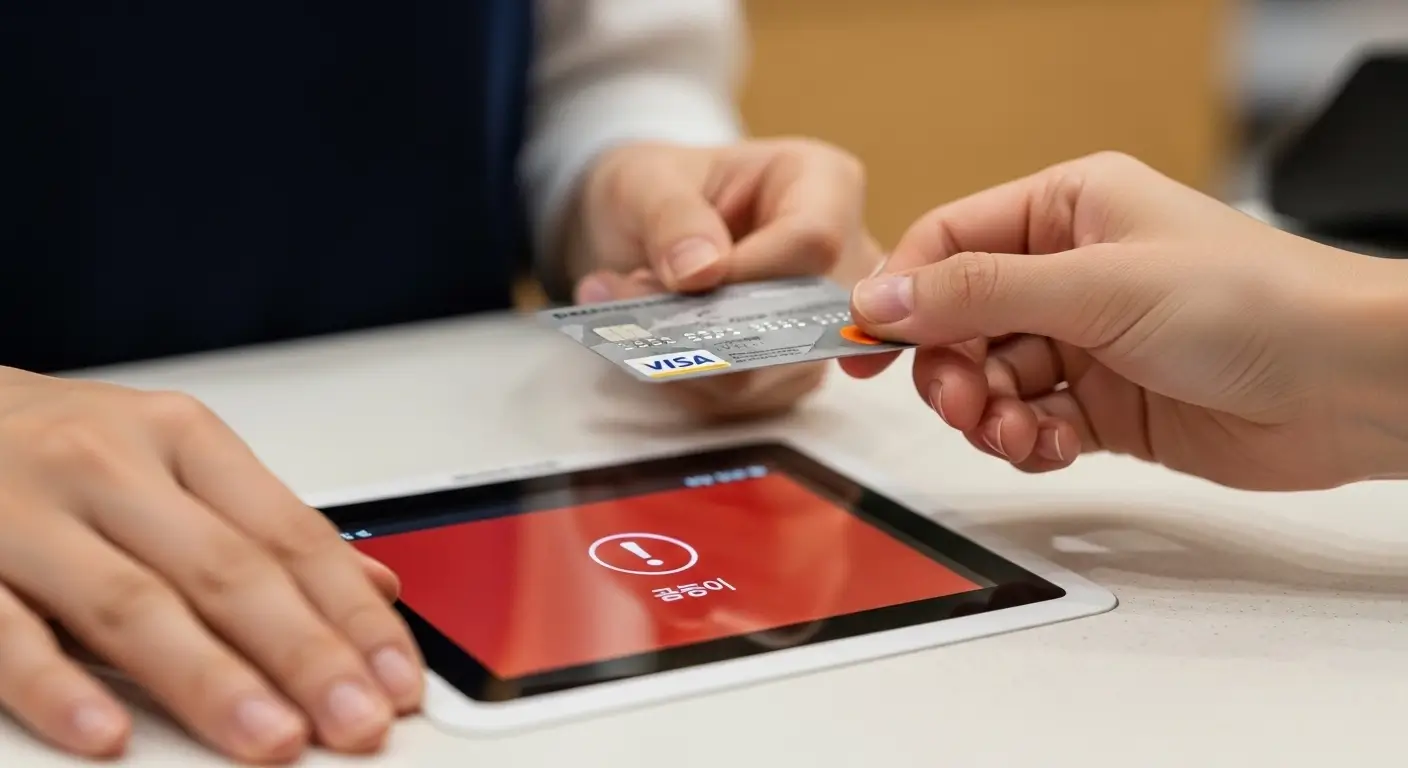
This is where paying in Korea as a foreigner becomes most disruptive. Delivery apps, Korean e-commerce platforms, public service payment pages, and most subscription services require a payment method linked to a Korean-issued card or a verified Korean identity. Even a perfectly valid Visa or Mastercard number fails at the checkout stage — not during card entry, but at the identity verification step that follows it.
In Korea, foreign-issued cards are generally accepted at international chain stores and hotels, but are frequently declined at local shops, unmanned kiosks, delivery apps, and most Korean online platforms.
Why Korean Payment Systems Reject International Cards
The reason paying in Korea as a foreigner runs into friction is structural, not accidental. Korea’s payment infrastructure was designed around domestic cardholders, and the verification layers added on top require credentials that foreign-issued cards cannot supply.
Korean Payment Gateways Are Built for Domestic Cards
Korea’s online payment infrastructure relies on domestic payment gateway providers — known as PG사 — including KG이니시스, NHN KCP, and Toss Payments. These gateways route the majority of Korean e-commerce and subscription transactions. Accepting foreign-issued cards requires a separate configuration that many smaller merchants do not enable, either due to cost or administrative complexity.
The Financial Services Commission of Korea governs the regulatory framework within which these payment service providers operate. The gap between domestic and foreign card configurations sits within that structure and requires deliberate action by merchants to bridge.
Identity Verification Blocks That Foreign Cards Cannot Pass
Most Korean online payment flows include a mandatory identity verification step — 본인인증 — either before or immediately after card entry. This step typically requires a Korean phone number for SMS authentication, or a bank-linked digital certificate. Foreign phone numbers often cannot receive the verification SMS in a format Korean systems accept, and foreign cards have no connection to the domestic banking certificate infrastructure.
The card itself is rarely the problem. The failure happens at the step that follows. This pattern connects to broader verification challenges covered in the phone number verification guide for foreigners in Korea.
Card Network Compatibility Issues
Visa and Mastercard have the broadest acceptance in Korea. American Express and Discover are accepted at a smaller number of locations. UnionPay acceptance has grown but remains concentrated near areas with high Chinese tourist traffic. Even within Visa and Mastercard, whether a transaction completes depends on the specific terminal model at each merchant — IC chip, magnetic stripe, and NFC contactless modes are handled differently depending on the equipment installed.
What Payment Methods Foreign Residents Actually Use in Korea
The experience of paying in Korea as a foreigner tends to follow a predictable pattern — international cards cover the first phase, then gradually get replaced by Korean-issued alternatives as residency settles in. How long this transition takes depends on visa type and ARC processing speed, but the destination is usually the same.
Korean Bank Debit Card — The Most Reliable Option
Opening a Korean bank account and using the issued debit card resolves most payment problems in one step. A Korean-issued debit card works at almost all in-person terminals, registers on delivery apps, and links to Kakao Pay and Naver Pay for app-based payments. The bank account guide for foreigners in Korea explains what documents are typically required and which banks tend to be more accessible to new residents.
Kakao Pay and Naver Pay — Once Verification Is Complete
Once a Korean bank account and phone number are in place, Kakao Pay and Naver Pay become practical everyday tools. QR payments, online checkouts, and in-app purchases all become accessible. Foreign residents sometimes encounter errors during initial registration — particularly around the identity verification tied to their foreigner registration number. The KakaoTalk verification guide for foreigners in Korea explains where that process tends to stall and what typically helps.
T-money and Transportation Cards — A Separate System
Transportation payments in Korea run on a system entirely separate from regular card payments. T-money cards are topped up with cash at convenience stores or subway kiosks and work across buses, subways, and most taxis — no identity verification required. For foreign residents who have not yet opened a Korean bank account, the T-money card is often one of the first useful tools to acquire. The T-money card guide for Korea foreigners covers what is commonly missed during the first week.
Cash — Still Necessary in Some Situations
Traditional markets, some smaller restaurants, coin-operated laundry facilities, and certain unmanned parking lots still require cash. International cards can withdraw Korean won at ATMs, though fees vary — convenience store ATMs and bank ATMs charge differently, typically between ₩2,000 and ₩5,000 per withdrawal depending on the issuing bank’s agreement. Keeping ₩50,000–₩100,000 available as a buffer during the first few weeks is a practical baseline most foreign residents settle on.
Online Shopping and Delivery Apps — The Biggest Payment Gap for Foreigners
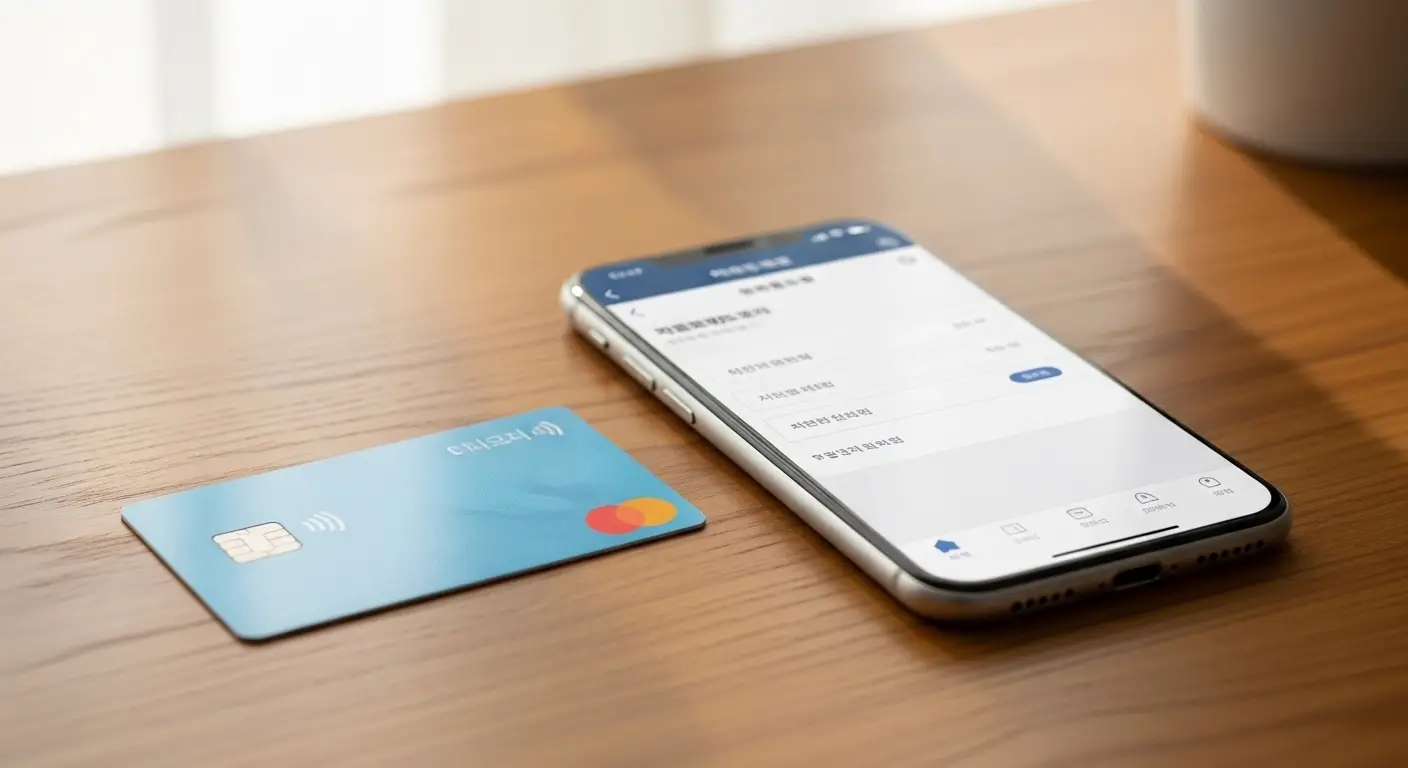
For many people navigating the daily realities of paying in Korea as a foreigner, delivery apps and online shopping platforms represent the most disruptive limitation — particularly during the first weeks before a Korean bank account is open.
Why Coupang and Baemin Reject Foreign Cards
Coupang and Baemin (배달의민족) both route transactions through Korean payment gateways that require identity verification before completing a purchase. When a foreign card is entered, the system reaches a verification checkpoint requiring a Korean phone number or certificate-based authentication. The transaction stops there — typically with a generic “결제 수단을 확인해주세요 (please check your payment method)” message that provides no further explanation.
The online verification guide for foreign residents in Korea explains how these failures connect to ARC status and what typically needs to be in place before these platforms become accessible.
Workarounds That Some Foreign Residents Report
Some residents have found that registering a Korean bank debit card — rather than an international card — allows delivery app payment to complete. Others report that routing through Kakao Pay or Naver Pay after linking a Korean bank account makes checkout accessible on platforms that otherwise block foreign card entry. These workarounds are not guaranteed and may change as platform policies update, but they reflect the practical paths residents have found workable.
Securing a Korean phone number early is part of what makes these options accessible. The paths available depending on visa type and ARC status are outlined in the guide to getting a Korean phone number without an ARC.
Paying in Korea as a Foreigner: What to Prepare Before You Rely on Cards
The gap between arriving with only a foreign card and having a fully functional Korean payment setup typically runs two to four weeks — longer if ARC processing is delayed. Preparing in advance shortens how disruptive that window is.
- Check whether your home bank has disabled foreign transaction fees — some cards charge 2–3% per transaction abroad, which adds up quickly during the transition period.
- Confirm that your card’s network (Visa or Mastercard) is enabled for ATM withdrawals in Korea — not all international debit cards work at Korean ATMs even when the network logo is present on the machine.
- Open a Korean bank account as soon as your ARC allows — this single step unlocks the majority of payment options. The bank account guide for foreigners in Korea covers which banks tend to be more accessible for new residents.
- Secure a Korean phone number early — it is required for most payment app registrations and identity verification steps that unlock everyday services.
- Pick up a T-money card on or shortly after arrival to cover transportation without needing any Korean bank card.
- Keep ₩50,000–₩100,000 in cash during the first weeks for merchants and situations where no card is accepted.
- For delivery apps and online shopping, wait until a Korean debit card is registered before attempting to save a payment method — foreign card entry will likely fail at the verification step.
The Bank of Korea’s payment systems overview provides additional context on how the domestic infrastructure is structured — which explains why many of these gaps exist at a systemic rather than individual level.
Frequently Asked Questions
Can I use a foreign credit card at Korean convenience stores?
Results vary by location. Some CU and GS25 branches accept Visa and Mastercard without issue, while others at the same chain decline the same card — it depends on the terminal model installed at that specific branch. Carrying a small amount of cash or a topped-up T-money card as backup covers the situations where a foreign card unexpectedly fails.
Why does my international card get rejected on Korean delivery apps?
Most Korean delivery apps route transactions through domestic payment gateways that require either a Korean-issued card or identity verification linked to a Korean phone number. Foreign cards typically fail at the verification step — not during card entry. The online verification guide for Korea foreigners explains how this connects to ARC status and what tends to unlock platform access.
What is the most reliable way to pay in Korea as a foreign resident?
Opening a Korean bank account and using the issued debit card is generally the most reliable approach for daily transactions. This single step enables in-person payments at almost all merchants, allows delivery app registration, and makes it possible to link Kakao Pay and Naver Pay — covering most payment situations that arise during everyday life in Korea.
Conclusion
Paying in Korea as a foreigner rarely fails because the card itself is invalid. The issue is almost always a system that requires Korean-issued credentials to complete a transaction — credentials that take a few weeks to establish after arrival.
The turning point for most foreign residents comes after opening a Korean bank account and getting a local phone number in place. Until then, knowing which merchants reliably accept international cards — and keeping some cash available for the gaps — prevents most daily friction.
Payment, phone verification, and banking in Korea are more connected than they first appear. Each piece depends on the others, and understanding how they fit together prevents many of the problems foreign residents encounter during their first months here.