
Choosing a Korean SIM card for foreigners isn’t complicated—but getting the right one at the right time is where most people run into trouble. The pattern shows up in expat forums every spring and every autumn, when new arrivals land in waves, and it’s almost always the same.
The counter itself also changed in 2026. Phone activation in Korea now runs under tighter identity checks, and the number you walk away with can handle calls and texts perfectly while still failing the verification step most Korean apps depend on. What worked for a friend who arrived last year may not match what happens today. So the question with any Korean SIM card for foreigners isn’t really data or price. It’s whether the number can prove who you are. Below, the options are sorted by how long you’re staying, whether you have an ARC yet, and what each one actually unlocks.
Why Getting a Korean SIM Card Catches Foreigners Off Guard
Korea’s mobile networks are excellent. Fast, reliable, coverage basically everywhere. That part isn’t the issue.
The issue is that most foreigners make this decision at the worst possible moment. You’ve just landed. You’re exhausted. You need to figure out how to get to your accommodation. And right there in the arrivals hall, someone’s offering you a SIM card that seems fine.
So you take it.
Three months later, you’re still on that tourist plan, paying way more than you need to, and your number doesn’t work properly with half the Korean apps you’re trying to use. Changing it means updating your bank, your delivery apps, KakaoTalk, your building’s intercom system—everything.
It’s a common story: someone puts off switching for months because the hassle feels overwhelming, and by then the temporary number is registered on dozens of services.
This isn’t a disaster. It’s just friction that could’ve been avoided.
Where the First Choice Usually Goes Wrong
Taking Whatever the Airport Offers
Airport SIM counters exist for tourists who need something immediately and will be gone in a week. The pricing reflects that—it’s a convenience premium, not a long-term value.
For a short trip, honestly, it’s fine. Grab it and don’t overthink.
But if you’re moving here, that airport SIM becomes a placeholder you’ll eventually need to replace. The problem isn’t the cost of the first month. It’s that you’ll build your digital life around a number that was never meant to be permanent.
Assuming Cheap Means Smart
Budget carriers and international eSIMs can work perfectly well. Some people use them for years without issues.
But there’s a catch that only surfaces later, and it usually isn’t the carrier brand. Whether Korean banking apps and identity checks accept your number depends mostly on the document the line was opened with. A budget line registered to your ARC generally works like any resident number; a data-only eSIM, or a line opened on a passport alone, often doesn’t pass. Why phone number verification fails for many foreigners shows where that check breaks.
The frustration isn’t the plan itself. It’s finding out at the worst moment—like when you’re standing in a bank trying to finish setting up an account and nothing’s working.
Not Knowing the Tourist vs. Resident Divide
Korea separates phone plans into two worlds. Tourist plans don’t require an Alien Registration Card. Resident plans do.
This sounds like paperwork trivia, but it matters. Resident plans cost less per month, include more data, and give you a number that Korean systems treat as legitimate. Tourist plans are designed to be temporary, and some services quietly treat them that way.
A lot of people stay on tourist-style plans for months simply because nobody told them there was another option once their ARC arrived.
Thinking eSIM Is Automatically Better
eSIM is convenient—no physical card, instant activation, easy switching. On paper, it’s the obvious modern choice.
In Korea, reality is messier. All three major carriers now sell tourist eSIMs, some with a 010 number, but that number isn’t necessarily one Korean apps will accept. KT’s own eSIM terms state that its tourist eSIM doesn’t support personal authentication. Carrier eSIMs are typically limited to one per passport, and some can be installed only once, so deleting the profile can mean buying a new plan. Phones bought outside Korea may also be carrier-locked; dialing *#06# shows an EID line if the phone supports eSIM at all.
eSIM can absolutely work. Just don’t assume it will until you’ve checked. If data is all you need, the WiFi and data comparison for foreigners covers pocket WiFi and data-only eSIMs.
Underestimating Customer Support
Eventually something goes wrong. Your plan doesn’t renew. You get locked out of something. There’s a charge you don’t understand.
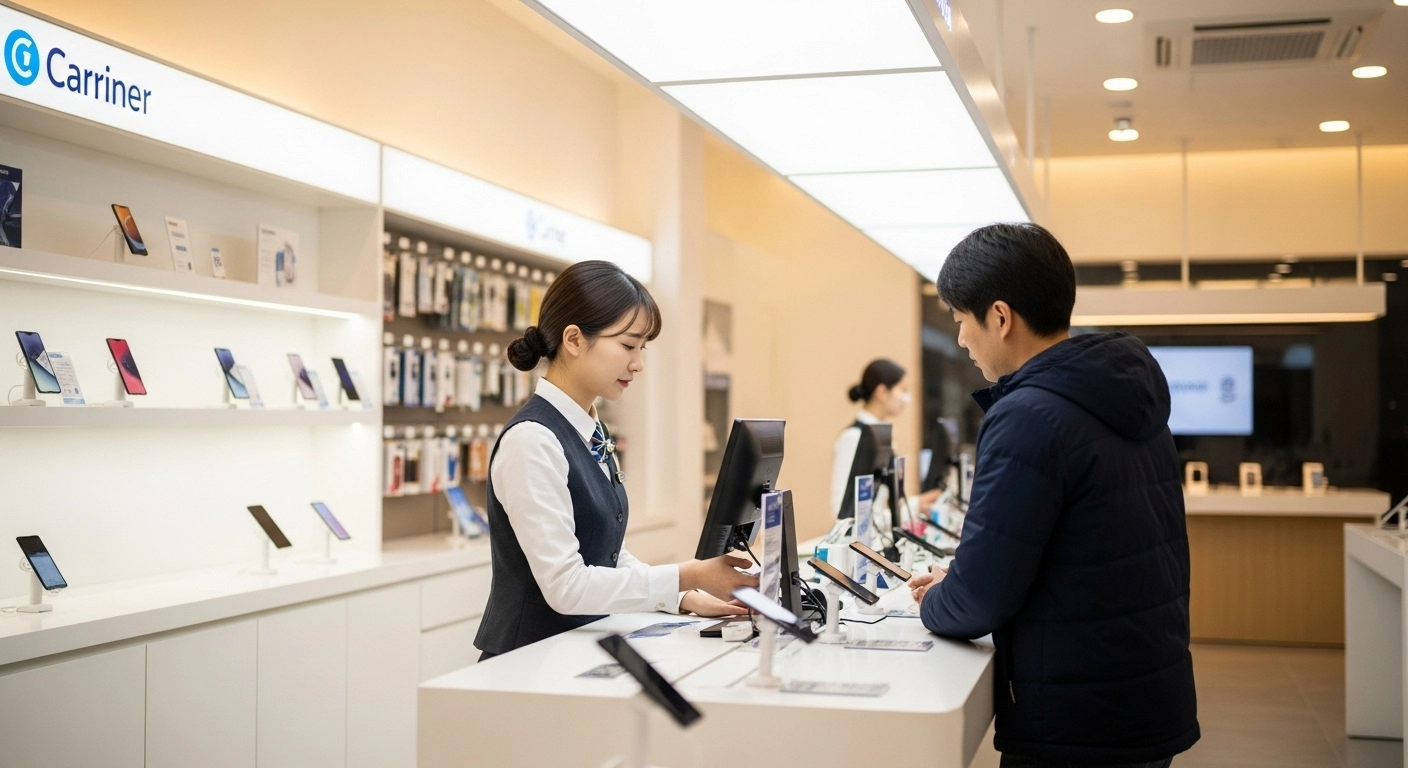
With the big three carriers—SKT, KT, LG U+—you can walk into a store basically anywhere and get help. Many locations have staff who speak some English. For budget carriers or international eSIM providers, support often means email threads or chat windows with long wait times, sometimes only in Korean.
This doesn’t matter until it does.
What Actually Matters When Choosing a Korean SIM Card
Honestly, three things. That’s it.
How long are you staying? Under a month, tourist options are fine—don’t overthink it. Over three months, you should probably plan to switch once you’re settled. The break point is somewhere around 90 days, where the cost difference starts adding up and you’ll need your number for more serious things.
Do you have an ARC yet? No ARC means prepaid tourist plans or international eSIMs only. Once you have one, proper postpaid plans become available. Getting your ARC should trigger a mental note: time to reconsider the phone situation. Until then, expect some services to reject a Korean phone number without an ARC.
What will you use the number for? Just calls and maps? Almost anything works. Banking, government services, apartment contracts? You’ll want a number registered to your ARC. Whether it comes from a major carrier or a budget MVNO matters less than the document behind it.
Matching Your Situation
Every Korean SIM card for foreigners falls into one of these rows. Find yours and read across. The last column is where most regrets come from: a number that makes calls is not always a number Korean apps accept as proof of who you are.
| Your situation | What usually fits | What to bring | Korean identity verification (PASS, banking apps) |
|---|---|---|---|
| Short trip, under 30 days, no need for a Korean number | Data-only travel eSIM or roaming from home; order before you land | An unlocked, eSIM-capable phone | No — there’s no Korean number to verify |
| Up to about 90 days, need to call or receive texts in Korea | Carrier tourist prepaid SIM or eSIM with a 010 number (SKT, KT, LG U+) | The same passport you entered Korea with | Usually no — calls and texts work, many apps still refuse the number |
| Long-term visa, ARC not issued yet | Passport-registered prepaid line as a bridge | Passport, entry record, Korean address if you have one | Limited until the line is moved to your ARC |
| ARC in hand, staying six months or longer | Postpaid plan at SKT, KT or LG U+, or a budget MVNO (알뜰폰) plan | ARC, passport, Korean bank account or card for billing | Yes, once the line is in your name and registered to your ARC |
| Digital nomad or remote worker, here temporarily | Travel eSIM for data, plus a cheap Korean prepaid as a second line if you sign a lease or need local texts | Dual-SIM phone, passport | Expect friction for banking and contracts without an ARC |
Prices and data allowances change too often to list here, so check the carrier’s current price list on the day you buy. At a carrier store, foreigners are sometimes asked for a small deposit on postpaid plans; staff will usually walk you through the options. For what to compare before you sign, see choosing a mobile plan in Korea.
The Practical Path Forward
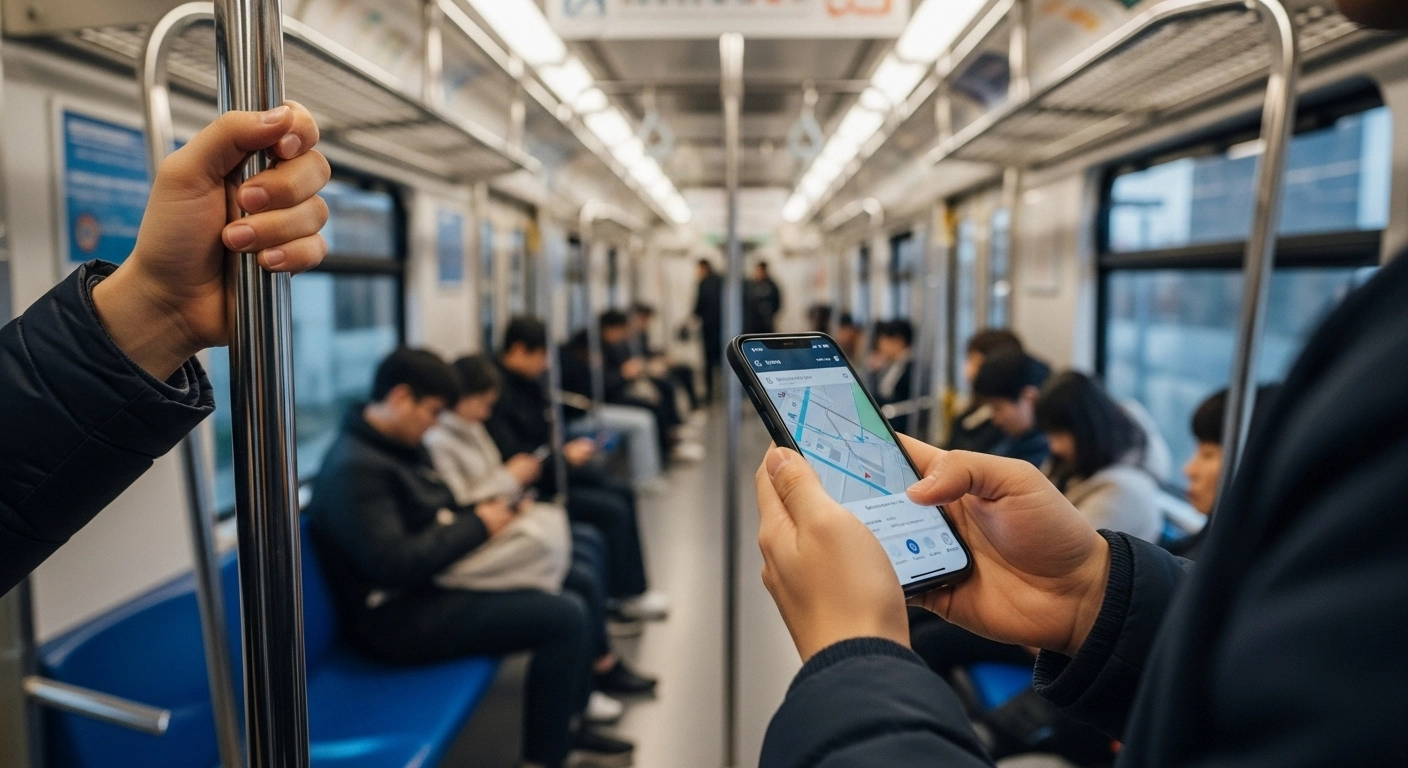
For most foreigners getting a Korean SIM card, the safer approach looks something like this:
Get something temporary when you arrive. Don’t try to optimize this first choice—it’s a bridge, not a destination. A short-term SIM or eSIM that gets you connected immediately is enough.
Once your ARC shows up—often several weeks after applying, and longer in busy seasons (here’s why it can take longer than expected)—that’s your cue to sort out something permanent. Ask first whether your current number can be moved into your name, so you don’t have to update every app. Then visit a carrier store or an MVNO counter, set up a plan, and move on with your life.
This approach sidesteps most of the common problems. You’re not overpaying for tourist rates long-term. You get a number that actually works with Korean services. And when something eventually goes wrong, you can walk into a store and talk to someone.
This doesn’t fit everyone. If you’re here for under a month, you don’t need a permanent setup. If you won’t be getting an ARC, tourist options might be your only options—and that’s okay. If you specifically need dual-SIM flexibility for keeping an international number active, that changes the calculation too.
Korean SIM Card for Foreigners: What Changed at the Counter in 2026
Korea spent 2026 tightening phone activation to fight burner phones used in voice-phishing scams, and anyone opening a line this year runs into the result.
From July 6, 2026, face authentication became part of phone activation across SKT, KT, LG U+ and the budget MVNO providers, in store and online. The scan compares the applicant with the ID photo, and alternatives such as a mobile ID exist for people who decline or fail it. That system is built around Korean ID holders.
For foreigners, the government announced a different track: stronger authenticity checks on passports and foreign IDs, rolled out in stages through the second half of 2026, and a stricter one-person, one-line approach to opening numbers. In practice:
- Expect the ID check to take longer than older guides describe, possibly with a camera step.
- Don’t plan on opening several lines under one passport.
- Use the exact passport you entered Korea with. A mismatch is one of the most common reasons a counter refuses.
The details are still being phased in, so treat this as the direction rather than a fixed checklist. Official notices are published by the Ministry of Science and ICT, and the counter applies whatever is current on the day.
How This Compares to Getting a SIM in the Philippines
When I got a local SIM in the Philippines, the process was simple: go to the carrier’s branch, fill out an application form, pay for the SIM card, and the number that came with the card was ready to use. Paperwork first, then done.
Korea feels just as quick at the start. A tourist line at the airport can be running before you reach the bus stop. The difference shows up later. Activation is the easy part here; the hard part is that the number may not be accepted as proof of identity by the apps that run daily life.
That’s the gap worth planning around. Anyone coming from a country where “a working number” is the finish line can reasonably assume the job is done. In Korea it often isn’t, and the fix—a line registered to your ARC—can only come after the ARC itself.
Six Phrases for the Phone Counter
Airport roaming centers usually have English-speaking staff. Neighborhood phone shops and MVNO counters often don’t. These cover the three moments where things tend to stall. Showing the Korean on your screen works better than reading it aloud.
When you only have a passport:
- “I only have a passport. Can I open a prepaid line?” — 여권만 있는데 선불 개통 가능한가요? (Yeogwonman inneunde seonbul gaetong ganeunghangayo?)
- “My alien registration card is still being issued.” — 외국인등록증은 아직 발급 중이에요.
When checking eSIM support:
- “Can I use an eSIM on this phone?” — 이 폰에서 eSIM 쓸 수 있나요? (I poneseo i-sim sseul su innayo?)
- “Can I keep my home SIM in the phone too?” — 기존 유심도 같이 쓸 수 있나요? (Gijon yusimdo gachi sseul su innayo?)
When asking about identity verification:
- “Can this number be used for identity verification?” — 이 번호로 본인인증이 되나요? (I beonhoro bonin-injeungi doenayo?)
- “After I get my ARC, can I move this number into my name?” — 등록증 나오면 이 번호 그대로 명의 변경 되나요? (Deungnokjeung naomyeon i beonho geudaero myeongui byeongyeong doenayo?)
Questions That Come Up Most
Can I get a Korean phone number with only a passport?
Generally yes, through a carrier’s tourist prepaid line or a passport-registered prepaid plan. What a passport alone usually won’t get you is a number that passes Korean identity verification for banking and many apps.
Will my Korean number keep working after I leave?
Tourist prepaid lines typically end with their period. Postpaid contracts don’t end on their own—they need to be cancelled, and leaving with an active contract can mean final bills or penalties. The guide to Korean phone cancellation before you fly covers the timing.
Is an MVNO number worse for verification than a big-three number?
Not by itself. What matters is the document the line is registered to. An MVNO line opened with your ARC generally behaves like any other resident number; a passport-only line from any carrier often won’t pass.
Wrapping Up
Getting a Korean SIM card for foreigners doesn’t need to be solved perfectly on day one. Nobody does it perfectly.
The mistake is trying to find the optimal answer while exhausted in an airport, not knowing what your life here will actually look like. That’s how people end up stuck with something that doesn’t fit.
Give yourself permission to start simple. Get connected with something temporary. Once you’ve settled in a bit—ARC in hand, bank account open, some sense of how things work—then set up something permanent.
After that, your phone just works. Verifications go through. Daily life gets smoother. And you stop thinking about SIM cards entirely.
Which, honestly, is the whole point.
Sources checked October 1, 2026: Ministry of Science and ICT (phone activation identity rules), KT Roaming eSIM purchase terms, HiKorea (alien registration), MVNO Hub (budget plan comparison). Plans and requirements change; confirm with the carrier before you buy.
Last reviewed: October 2026
1 thought on “Korean SIM Card for Foreigners: How to Choose Without Costly Mistakes”
Comments are closed.