
The moving truck isn’t the hard part. In most countries, moving house is about boxes and a rented van. Moving house in Korea is mostly about money changing hands in the right order, on one crowded morning, while two landlords, a moving crew, and a building manager all want something from you at the same time.
I’m Korean, I’m in my sixties, and I’ve moved more times than I’d like to admit. I’ve also stood in apartment parking lots with foreign friends on their moving day, watching the same thing happen. The furniture goes on the truck by 9 a.m. The deposit, the one that took a year of savings, hasn’t arrived by noon. And the keys are already gone.
That’s the trap. Not a scam, usually. Just a sequence nobody explained. Below is how the move actually runs, stage by stage: two to three weeks before, the day itself, and the 15 days after, when a quiet legal deadline starts counting.
Why Moving Day Feels Like Three Deadlines at Once
Here is what most people don’t see coming. When you’re moving house in Korea, three payments usually land on the same day.
Your old landlord returns your deposit. You pay the balance (잔금, jangeum) of the deposit on the new place. And the movers want paying when the last box comes off the truck. If the first payment is late, the second one can’t happen, and suddenly you’re sitting in a truck cab with nowhere to unload.
Why would the deposit be late? Because many Korean landlords don’t keep your deposit sitting in a bank. It’s often tied up. The money to repay you frequently comes from the next tenant’s deposit, which arrives that same morning. So your refund depends on a stranger’s bank transfer. Most of the time it works. When it doesn’t, the person holding the keys is the one with leverage.
There’s a calendar issue too. Koreans still book moves around son eomneun nal (손 없는 날), traditional “spirit-free” days that fall on lunar dates ending in 9 and 0. Movers raise prices on those days, and on Fridays and the last weekend of the month. If your date is flexible, a weekday that isn’t one of them is usually cheaper and easier to book. If you want the background on how the deposit itself works, start with how apartment deposits work for foreigners.
Two to Three Weeks Before: Date First, Truck Second
Confirm the move-out date with your landlord in writing. A KakaoTalk message is fine, as long as it states the date and that the deposit will be returned that day. Do this before you book anything else. Most trouble with moving house in Korea starts with a date nobody pinned down. A moving company can change its schedule. A landlord who “thought you meant next month” is much harder to fix.
Then pick the kind of move. Korea has three, and the names matter when you ask for quotes.
- Yongdal (용달): a small 1-ton truck and a driver. You pack everything. Fine for a one-room with a few boxes.
- Ban-pojang (반포장): the crew packs furniture and heavy items, you pack the small stuff.
- Pojang-isa (포장이사): full service. They pack, move, and unpack. Common for families.
Quote apps like Zimssa (짐싸) or Da-isa (다이사) let several companies bid on your move, but the screens are in Korean. A Korean coworker can fill one in with you in ten minutes. Get at least two quotes. Ask whether a ladder truck (사다리차) is included if you live above the third floor, because that’s where surprise charges tend to show up.

Large furniture you’re not taking can’t go out with the regular trash. You buy a bulky-waste sticker from your district office website or the community center and attach it before collection. Leave a sofa in the hallway without one and it can come out of your deposit. The rules sit alongside the ones in our recycling guide.
Two more calls in this window. Your city gas company needs a visit booked for the new place, since gas isn’t switched on automatically there. And internet relocation usually needs a week’s notice; here’s why installations get delayed.
Moving Day: The Order That Protects Your Money
If you keep one page about moving house in Korea, keep this one. I’d tape it to the fridge.
Start early with your phone camera. Photograph the electricity, gas, and water meters. Walk through the empty rooms and record the walls and floors. If a dispute about damage comes up later, dated photos settle most of it.
Next, the building’s management office (관리사무소). Ask for a mid-month settlement of your maintenance fee up to today, so the landlord can deduct the exact figure instead of guessing. In an apartment complex, ask for one more thing: a payment certificate for janggi suseon chungdanggeum (장기수선충당금), the long-term repair reserve.
Almost nobody tells foreigners about this. That reserve is legally the owner’s cost, but it’s billed to whoever lives there, inside the monthly fee. When you move out, the owner is required to pay it back. Over a two-year lease it can add up to a few hundred thousand won. One catch: if your contract has a special clause saying the tenant bears it, that can change things, so read your contract’s 특약 section first. If you’ve never decoded the fee itself, here’s what each line means.
Now the order that matters:
- The landlord checks the empty unit.
- You agree on deductions: maintenance settlement, utilities, any damage.
- The deposit, minus deductions, plus the repair reserve, lands in your account. Open your banking app and see it. Not a screenshot from them. Your app.
- Then you hand over the keys or delete your fingerprint from the door lock.
Keys last. That’s the whole idea.
And if the money doesn’t come? Don’t panic, but don’t drift either. In Korea, a tenant’s legal protection over a deposit is tied to living at, and being registered at, that address. Move your registration elsewhere before you’re paid, and that protection can weaken. There’s a court procedure called a lease registration order (임차권등기명령) that keeps it in place after you leave. Rules and timing depend on your contract, so call the Korea Legal Aid Corporation at 132 or check klac.or.kr before you move your registration.
The First 15 Days After Moving House in Korea
You’ve unpacked. You’re tired. The clock started the day you moved in.
If you hold an ARC, you have 15 days from the move-in date to report your new residence (체류지 변경신고). For a registered foreigner, this report does the job a Korean’s 전입신고 does. You can file at the community center (주민센터) for your new address, at the immigration office, or online through HiKorea.
A few details the official pages bury. File online and your new address isn’t printed on the back of your ARC; you’d have to visit immigration later if you want it there. Miss the 15 days and online filing closes, so you’ll be standing in line at immigration. Late reports carry fines that rise with the delay, starting around ₩100,000 and reaching up to ₩1,000,000 for very late filings. Small mistake, real cost. It’s also the step people forget most after moving house in Korea.
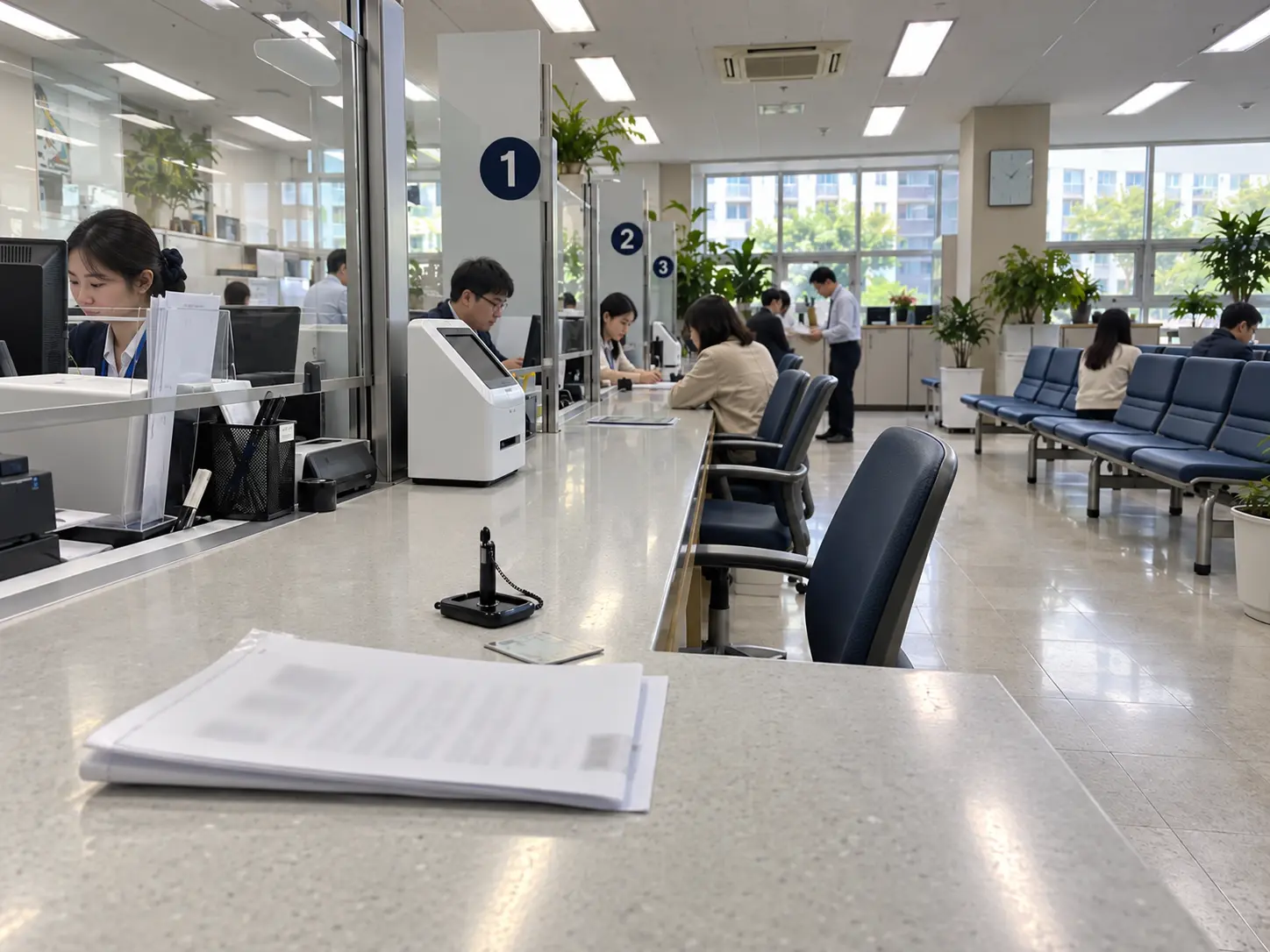
While you’re at the counter, bring the new lease and ask for a fixed date stamp (확정일자) on it. That stamp, together with your residence report, is what puts your new deposit in line for protection. One visit. Two jobs done.
Then the chain. Your address lives in more places than you think:
- Your bank, usually changeable in the app once your ARC address updates
- Your mobile carrier and any card companies
- Your employer’s HR, for tax and insurance paperwork
- Delivery apps and Coupang, where the old address stays as the default
- Utilities at the new place, if they aren’t covered by the building (here’s what doesn’t start automatically)
Delivery apps are the sneaky one. Weeks later, a parcel goes to your old door because that address was saved as default. If you want the full counter process, it overlaps with your first address registration.
Questions People Ask Me Before Their First Korean Move
Can my landlord keep part of my deposit for cleaning?
Only for damage beyond normal wear, or costs you agreed to in the contract. Faded wallpaper after two years is generally normal wear. A broken door lock isn’t. This is where those move-out photos earn their keep.
What if my landlord says the deposit will come “in a few days”?
It happens more than you’d think when moving house in Korea, usually because the next tenant hasn’t paid. Get the promised date and amount in writing, and think hard before handing over the keys. If the delay drags on, talk to legal aid at 132 before you move your registration.
Do I need a Korean speaker when moving house in Korea?
It helps, but it’s not essential. The settlement at the management office is mostly numbers on a slip. A translation app covers the rest. Where a Korean speaker really helps is booking the movers two weeks earlier.
Does my health insurance address change automatically?
In many cases the address linked to your ARC updates other public records over time. Don’t rely on that for mail you can’t afford to miss. Check your details in the NHIS app or call 1577-1000 a few weeks after the move.
Is the repair reserve refund available in officetels and villas?
It depends on the building. The rule mainly covers apartment complexes required to build up that fund. In smaller buildings, you might not see the item on your bill at all. Look for 장기수선충당금 on your fee statement. If it’s not there, there’s nothing to claim.
What to Have Ready at Each Stage
Here is moving house in Korea, shrunk to four lines.
Two to three weeks before: move-out date confirmed with the landlord in writing, at least two moving quotes, bulky-waste stickers ordered, gas and internet appointments booked for the new place.
The day before: management office told you’re leaving, repair reserve certificate requested, your bank account number sent to the landlord.
Moving day: meter photos, room photos, maintenance settlement slip, deposit confirmed in your own banking app, then keys.
Within 15 days: residence report filed, fixed date stamp on the new lease, address updated with your bank, carrier, employer, and delivery apps.
Once the move itself is behind you, it’s worth checking the rest of your setup, especially if this is your first place in Korea, since a new address tends to shake loose things you thought were finished.
Where This Leaves You
Moving house in Korea comes down to one habit: let the money move before you do. The truck, the boxes, the stickers on the old sofa, those are logistics. The deposit and the 15-day report are the two things that cost real money when they go wrong.
So confirm the date in writing. Watch your own banking app, not someone else’s screen. Hand over the keys last. And put the community center visit on your calendar the day you move in, not the day you remember.
You’ll probably move again before you leave Korea. Most people do. The second time, it’s just a busy morning.