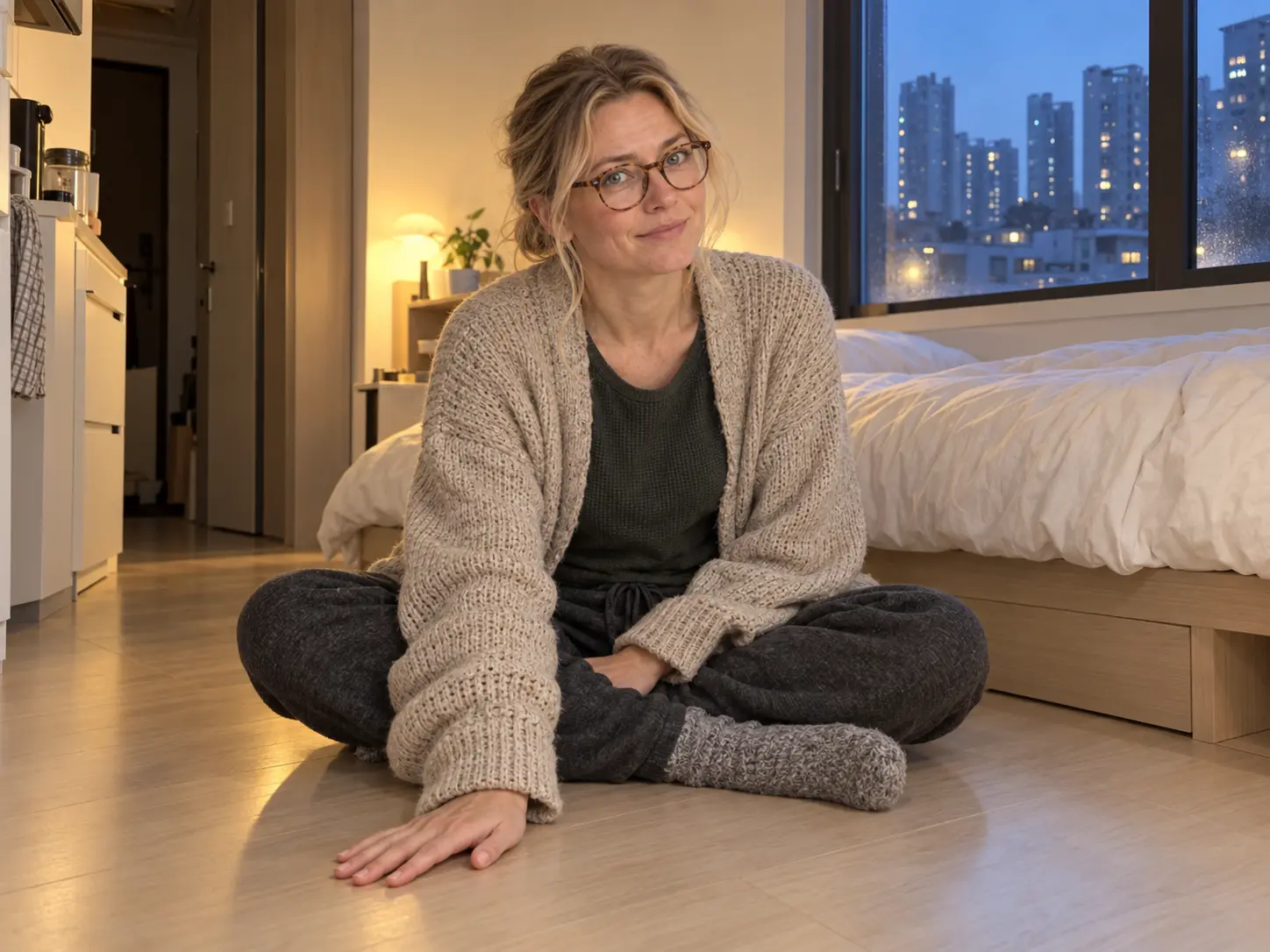
It’s the first properly cold night of November. The floor is still chilly under your socks, so you find the small panel on the kitchen wall and tap the up arrow until the number looks warm enough. Korean apartment heating doesn’t answer that tap the way a radiator would, though. That one push can quietly set the tone for your whole winter bill.
Nothing happens for a while. Twenty minutes. Forty. Then the floor warms up, then gets hot, and by midnight you’re kicking off the blanket. A month later the gas bill shows up, and it’s a lot bigger than anyone mentioned when you signed the lease.
The panel isn’t broken. And you probably aren’t doing anything obviously wrong. The system simply assumes you grew up with it, the way most Koreans did. This guide walks through what those buttons actually control, why floor heating punishes quick fixes, and which everyday habits burn the most gas in a typical one-room or officetel.
The First Winter Bill Nobody Prepares You For
Ask around in any expat group around January and the same post appears. Someone new to Korea opens their gas bill, sees a number two or three times what October cost, and asks whether the meter is broken. It almost never is.
Part of the surprise with Korean apartment heating is timing. Gas is billed after you use it, so the heavy December heating usually arrives as a January bill, long after the habit that caused it has settled in. By then you’ve had six weeks of running the floor hot.
The other part is that not every apartment heats the same way, and the bill looks different depending on which kind you have:
- Individual boiler (개별난방): your own gas boiler, usually mounted on the utility balcony, in a laundry nook, or inside a kitchen cabinet. You pay the city gas company directly, every month, for what you burn.
- District or central heating (지역난방 / 중앙난방): hot water comes from a shared plant, and there’s no boiler in your unit. Heating shows up as a line on your building’s monthly fee instead of a separate gas bill.
A quick way to tell: look for a white or grey box with a gas pipe running into it and an exhaust pipe running out through the wall. If you find one, you have an individual boiler. If you can’t, check your monthly building statement — our guide to the Korean maintenance fee shows where the heating charge hides. Either way, the Korean apartment heating habits below still matter. District heating just moves the cost onto a different piece of paper.
And if the gas account itself was never opened in your name, that’s a separate problem worth fixing first; this utilities setup guide covers it.
How Ondol Floor Heating Actually Warms a Room
Ondol is old. The modern version is simple: the boiler heats water, the water runs through pipes buried in the concrete floor, and the floor slowly warms the room from below.
That word “slowly” is the whole story.
Concrete stores heat. A cold slab can take one to three hours to feel properly warm, depending on the building, and it keeps giving off heat for a while after the boiler stops. A radiator reacts in minutes. A heated floor reacts in hours. Most of the wasted gas in Korean apartment heating comes from people treating the second one like the first.
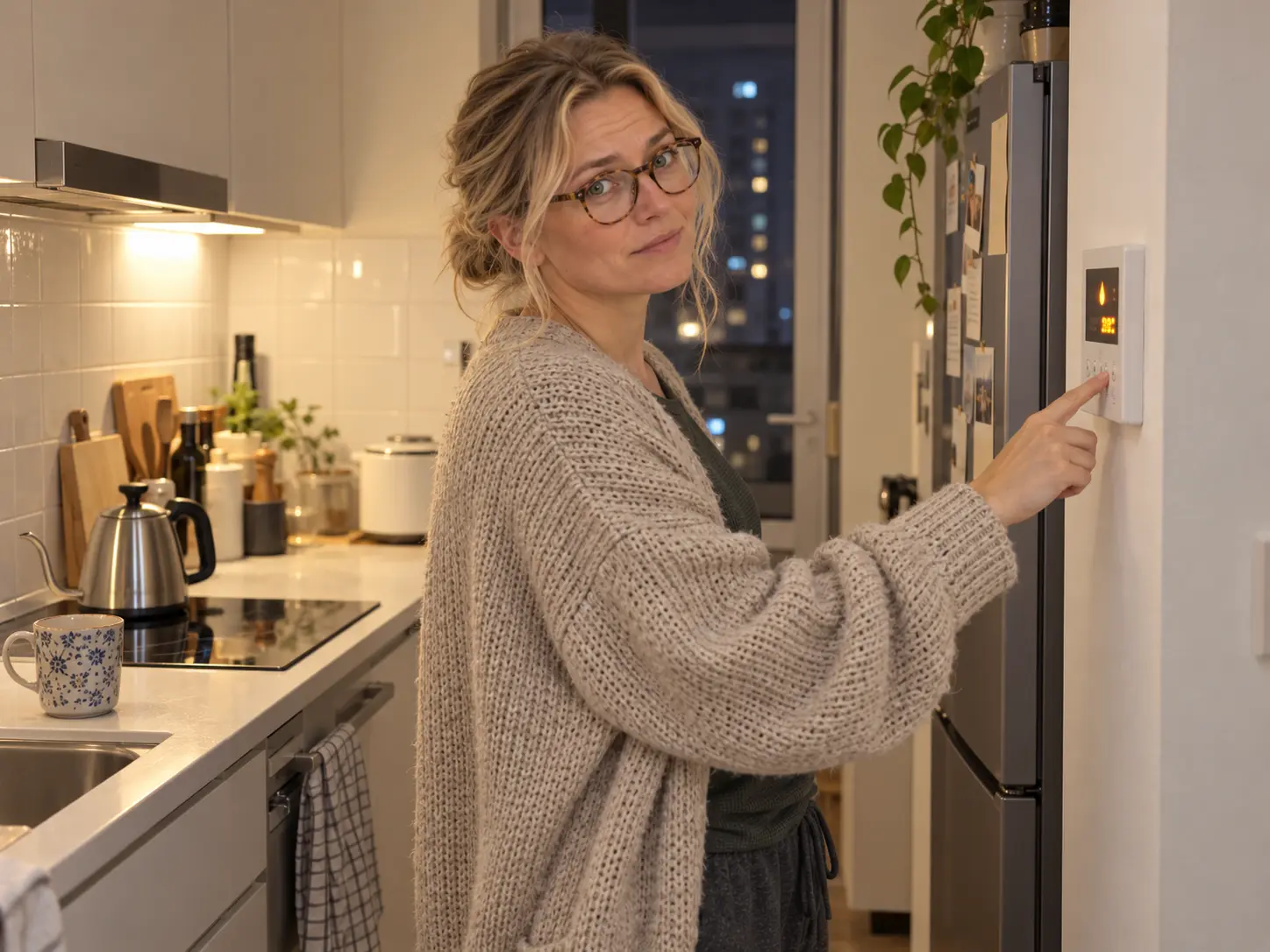
In Korean apartment heating, the panel on your wall is just a remote for the boiler. Brands differ (Navien, Kyungdong, Rinnai and Kiturami are the common ones), and many panels label their buttons only in Korean. The modes, though, are close to universal:
| Label | What it controls | When it tends to make sense |
|---|---|---|
| 실내 (room) | Target air temperature, measured by a sensor inside the panel itself | Panel is on an inside wall, away from doors and windows |
| 온돌 (floor) | Temperature of the water going into the floor, not the air | Panel sits in a drafty or oddly warm spot |
| 외출 (away) | A low minimum, mainly to stop pipes from freezing | Trips of a day or more in winter |
| 예약 (timer) | Runs heating in short cycles at set intervals | Steady background warmth overnight |
| 온수 (hot water) | Hot water for taps and shower only, no floor heating | Mild days in spring and autumn |
Icons usually help: a little house with a thermometer for room mode, wavy lines for floor mode, a walking figure for away, a clock for the timer. If your panel has none of these and you’re stuck, search the model number printed on the boiler itself. Most manufacturers post PDF manuals, and a few have English versions.
Four Habits That Quietly Burn Gas
None of these Korean apartment heating habits feel like mistakes in the moment. That’s what makes them expensive.
1. Setting the number high to “heat faster”
Pushing room mode to 28°C doesn’t make the floor warm up any quicker. The boiler just runs flat out for longer and then overshoots, because the slab keeps releasing heat after the panel says “done.” People end up opening a window at 1 a.m. to cool a room they paid to heat.
2. Turning it fully off every time you leave
Switching off for an eight-hour workday feels thrifty. In a cold week, though, the floor loses most of its stored heat, and the boiler has to reheat the whole slab from scratch when you get home. For short absences, many residents find that dropping the setting by a few degrees costs less than a full restart. How much less depends heavily on insulation, so this is worth testing in your own place rather than taking on faith.
3. Trusting a panel that’s in the wrong spot
In room mode, the panel decides when to stop based on the air right next to it. Mount it by a drafty front door and it reads cold all night, so the boiler never rests. Mount it beside the stove and it reads warm, so the bedroom stays cold. Older one-rooms and officetels are especially prone to this.
4. Heating rooms nobody uses
Two-room and three-room apartments usually have a manifold, called a 분배기, with one valve per room. It’s often under the kitchen sink or in a closet near the utility area. Leaving every valve fully open means paying to heat a spare room full of boxes.
Questions That Come Up Every November
Is it cheaper to leave the boiler on all day?
Sometimes. For absences of a few hours on cold days, a lower steady setting often beats switching off. For a full day out in mild weather, off or away mode may win. The honest answer is that it depends on your building, which is why the meter test further down is worth ten minutes of your time.
What does away mode really do?
It keeps the system ticking over at a minimum so the pipes don’t freeze. It isn’t designed to keep you comfortable. On many models it only kicks in when the room gets quite cold; your manual will list the exact threshold.
Why is the floor hot but the air still cold?
That’s normal for ondol, especially with thin or single-pane windows. The heat rises from the floor and leaks out through the glass. Bubble-wrap window film (뽁뽁이), heavier curtains, and a draft stopper at the front door often help more than turning the boiler up.
Can I ask my landlord to repair the boiler?
Generally, the boiler is part of the property, and breakdowns from age or normal wear are usually the landlord’s responsibility. Damage from misuse, like frozen pipes after leaving the heat off during a cold snap, can be a different story. Check your contract and raise it in writing early. This deposit guide explains why repair disputes can come back up when you move out.
What Actually Works on a Korean Apartment Heating Panel
The fix isn’t one magic setting. It’s picking a mode that suits where your panel is, then leaving it alone long enough for the floor to catch up.
Choose one mode and commit. If the panel is on an inside wall at roughly shoulder height, room mode around 20–22°C is a reasonable starting point. If it’s by the door, a window, or the stove, switch to floor mode and start at a middle setting. Then adjust one step at a time, waiting half a day between changes. The slab needs that long to show you the result.
For nights, the timer mode is underrated. Instead of running all night, it fires the boiler for a short stretch every couple of hours, which keeps the floor from cooling completely. Intervals vary by panel, so try a few combinations over one week.
When you leave for the day, lower the setting a little rather than switching off. Away for a long weekend or longer in December through February? Use away mode, and don’t skip it.
Close the manifold valves for rooms you don’t use most of the way. Not all the way, and never every valve at once; the boiler needs somewhere to push water.
Then do the test that no general guide can do for you. Write down the number on your gas meter on a Sunday evening. Run one routine for the week, read it again the next Sunday, and switch routines. Two weeks of readings tell you more about your specific apartment than any rule of thumb, including the ones in this article.
One small surprise: a thick rug over a heated floor works against you. It insulates the floor from the room. A thin rug, or none in the spot where you sit most, lets the heat through. For the bed, many Koreans pair a modest floor setting with an electric mat (전기장판), which warms one person far more cheaply than heating a whole room to bedtime comfort.
Once the heating is under control, it’s a good moment to see what else from your first weeks here might still be half-done.
Once the Settings Are Right, Watch for These
Good settings handle most of what Korean apartment heating costs you. A few winter risks sit outside the panel entirely.
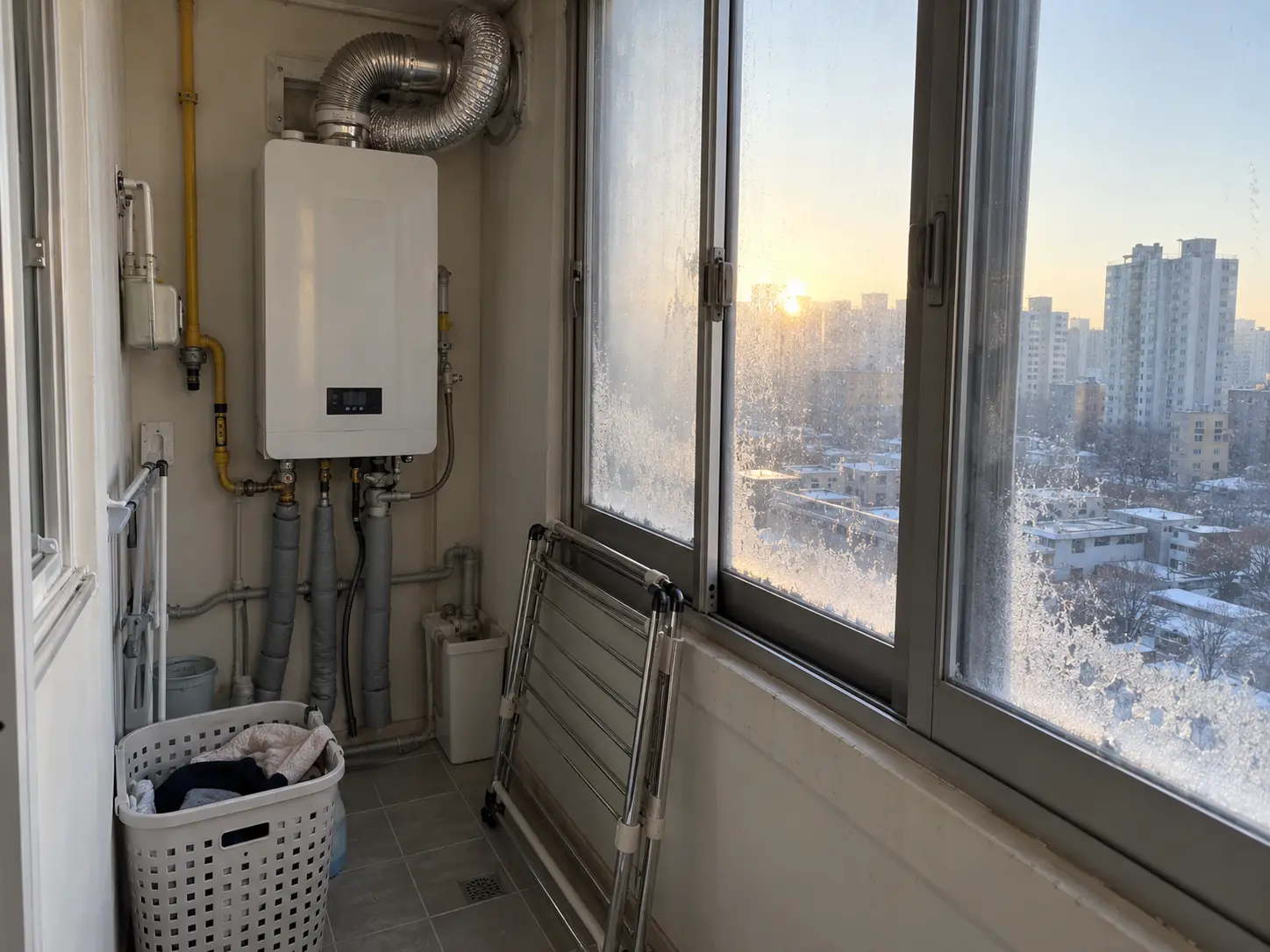
Frozen pipes are the big one. When forecasts drop toward −10°C, boilers on open utility balconies are vulnerable. Korean apartment management offices often post the same advice on elevator notice boards: keep the heating on at least in away mode, and on the coldest nights leave a hot water tap dripping slightly. Wrapping exposed pipes with insulation helps too.
Error codes come next. If the panel flashes a number and the floor goes cold, the brand’s service line is usually printed on a sticker on the boiler. Have the model number and the code ready before you call; it shortens the conversation, especially if the call starts with a Korean-only automated menu.
Gas safety matters more than either. The exhaust pipe should be firmly connected and run outside. If you ever smell gas, don’t flip switches. Open the windows, leave, and call your city gas company. The Korea Gas Safety Corporation publishes official safety guidance, and city gas providers in many areas schedule periodic home safety checks, which are worth letting in.
Last, when you move out, ask for a final meter reading so the next tenant’s winter doesn’t land on your bill. Our moving guide lists that step alongside the rest of the move-out sequence.
What This Comes Down To
Korean apartment heating isn’t expensive because the system is bad. It’s actually very efficient once you stop fighting it. The cost comes from radiator habits: high numbers for quick heat, full shutdowns, and trusting a sensor in the wrong place.
Pick the mode that fits your panel’s location. Change one thing at a time. Read your meter for two weeks. By mid-December you’ll know your apartment better than most guides could, and January’s bill should look a lot less alarming.