
Korean phrases government offices—these four words can mean the difference between a quick visit and hours of confusion. Learning the right expressions before walking into a Korean immigration office or district office makes everything easier. The ticket machines with Korean-only options, rapid announcements, and staff who assume you understand the system can feel overwhelming at first.
This is exactly where most foreigners run into trouble. The problem is not that government workers are unhelpful. In most cases, they genuinely want to assist. The real issue emerges when you cannot communicate what you need or understand what they are asking. And in places like immigration offices or district offices, miscommunication often means coming back another day with documents you did not know you needed.
This guide covers the practical Korean phrases government offices require when you are standing at the counter. Not textbook vocabulary, but the specific expressions that help you get through visa extensions, residence registrations, and document requests without unnecessary complications.
Quick Reference: Where to Go and What to Say
The table below covers the most common tasks foreigners handle at Korean government offices. Each row shows the office to visit, required documents, and the Korean sentence to use at the counter.
| Task | Office | Required Documents | Korean Phrase |
|---|---|---|---|
| Visa Extension | Immigration Office | Passport, ARC, Application form, Fee (₩60,000) | 비자 연장하러 왔어요 |
| Address Change | Immigration Office or Local Gu Office | ARC, Lease contract or proof of address | 주소 변경 신고하러 왔어요 |
| ARC Reissue (lost/damaged) | Immigration Office | Passport, Photo, Police report (if lost), Fee (₩30,000) | 외국인등록증 재발급 받으러 왔어요 |
| Certificate of Alien Registration | Immigration Office or gov.kr | ARC (online: login credentials) | 외국인등록 사실증명서 주세요 |
| Entry/Exit Record | Immigration Office or gov.kr | ARC or Passport | 출입국 사실증명서 발급해 주세요 |
Sources: Government 24 (정부24), Hi Korea Immigration Portal. Verified September 2026. Fees and requirements may change—confirm at immigration.go.kr before your visit.
Why These Phrases Matter in Government Settings
Most foreigners assume that major government offices in Seoul will have English support. Some do, particularly the main immigration office in Omokgyo. But district offices, tax offices, and local community centers rarely have dedicated English-speaking staff. Even when they do, the person might be busy with another case or unavailable that day.
The real issue emerges when you are asked a question you did not anticipate. Staff might ask for clarification about your address, your visa type, or whether you need a certified copy versus a regular printout. If you cannot understand the question, you cannot answer it correctly. Wrong answers lead to wrong documents, rejected applications, or wasted trips.
Having essential Korean phrases government offices require does not mean you need to be fluent. It means you can communicate your basic purpose, understand simple instructions, and ask for help when something is unclear. That is usually enough to get through most administrative tasks successfully.
For foreigners planning to stay longer in Korea, government office visits become routine. After your initial registration, you may need to return for visa extensions, address changes, or document requests. Understanding how administrative systems work here is part of settling in—just like figuring out how to choose a mobile plan in Korea that fits your actual needs.
Mistakes Foreigners Commonly Make at Korean Government Offices
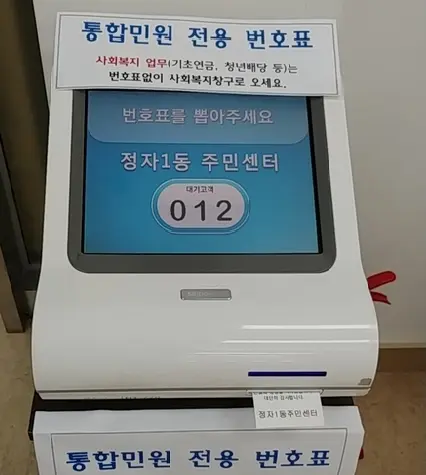
The first mistake happens before you even reach the counter. Many foreigners skip the ticket machine because they cannot read the options, then stand in the wrong line or interrupt someone else’s turn. Government offices in Korea run on a numbered queue system, and not taking a ticket often means starting over once you reach the front.
Another common problem is assuming that showing your passport or ARC card explains everything. Staff still need to know specifically what you want. “Certificate of facts” and “entry/exit record” are different documents. “Address change” and “new registration” require different procedures. Simply handing over your ID and hoping they figure it out rarely works.
The third mistake is not confirming what you received. Documents in Korean all look similar at first glance. People leave the office thinking they have what they need, only to discover later that they received a different type of certificate or that a required stamp is missing. By then, they have to return and explain the situation all over again.
Finally, many people do not know how to ask for help properly. There is a difference between asking “Do you speak English?” and asking “Is there someone who can help in English?” The second question gives staff an option to find a colleague or call an interpretation service. This is where knowing the right Korean phrases government offices use becomes valuable.
Korean Phrases Government Offices: Arrival and Navigation
When you first enter a government office, finding the right department matters. These Korean phrases government offices use help you get pointed in the correct direction before you take a number or start waiting.
- 저기요, 외국인 등록 어디서 해요? — “Excuse me, where do I do foreigner registration?”
- 번호표 어디서 뽑아요? — “Where do I take a number ticket?”
- 민원실이 몇 층이에요? — “What floor is the civil service office?”
- 출입국관리사무소가 여기 맞아요? — “Is this the immigration office?”
Notice that these are polite but direct questions. Korean administrative settings generally expect efficiency. You do not need elaborate greetings—a simple “저기요” (excuse me) before your question is appropriate and gets attention without being rude.
At the Counter: Explaining Your Purpose
This is where knowing specific Korean phrases government offices expect makes the biggest difference. Staff process hundreds of requests daily, and clearly stating what you need helps them help you faster.
- 비자 연장하러 왔어요 — “I came to extend my visa”
- 주소 변경 신청하고 싶어요 — “I want to apply for an address change”
- 외국인등록증 재발급 받으러 왔어요 — “I came to get my ARC reissued”
- 전입신고 하러 왔습니다 — “I came to register my move-in”
The pattern “~하러 왔어요” (I came to do ~) is extremely useful in these contexts. It immediately tells staff your purpose without requiring them to guess from context clues. Once they understand what you need, they can direct you to the right forms or procedures.
If you are unsure about exact terminology, describing your situation also works. Saying “제 외국인등록증 잃어버렸어요” (I lost my ARC) communicates the problem even if you do not know the formal word for reissuance. Staff will understand and guide you from there.
Phrases for Document Requests
Requesting documents requires precision. Different certificates serve different purposes, and using the correct Korean terms ensures you get exactly what you need. These Korean phrases government offices accept are especially important when documents are required for visa applications, employment, or banking.
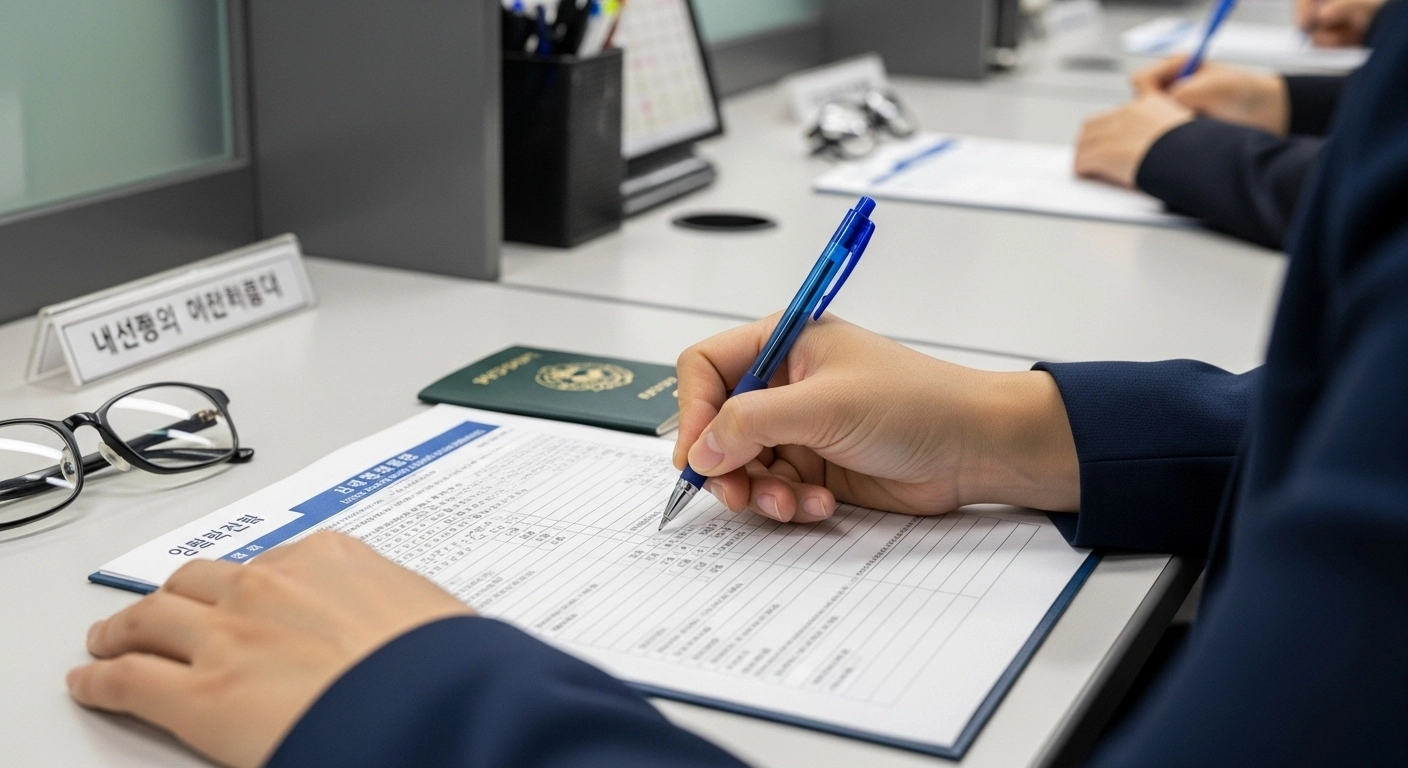
- 외국인등록 사실증명서 주세요 — “Please give me a certificate of alien registration facts”
- 출입국 사실증명서 발급해 주세요 — “Please issue an entry/exit certificate”
- 영문으로 된 것도 있어요? — “Is there an English version too?”
- 이게 [서류 이름] 맞아요? — “Is this the [document name]?”
Note: Foreigners cannot request 주민등록등본 (resident registration certificate). This document is only for Korean citizens. Use 외국인등록 사실증명서 instead.
For many documents, you can also request them through the Korean government’s online civil service portal at gov.kr. However, some certificates still require in-person visits, particularly those involving foreigner registration or immigration records.
Before leaving the counter, confirm what you received by asking “이게 [서류 이름] 맞아요?” Staff will verify, and this small step prevents the frustration of discovering you have the wrong document after you have already left.
One thing worth noting: fees for most documents are minimal, usually just a few thousand won. But payment methods vary by office. Some accept only cash, while others have card terminals. Bringing both ensures you are not caught off guard at the final step.
When Something Goes Wrong
Even with preparation, things sometimes do not go smoothly. Maybe you are missing a required document, or the staff member explains something you cannot follow. These Korean phrases government offices hear frequently help you recover without the situation becoming more complicated.
Requesting Interpretation:
- 통역 서비스 있어요? — “Is there an interpretation service?”
- 영어 통역 가능한 분 계세요? — “Is there anyone who can interpret in English?”
Missing Documents:
- 어떤 서류가 더 필요해요? — “What other documents do I need?”
- 서류가 부족하면 어떻게 해요? — “What do I do if I’m missing documents?”
Scheduling a Return Visit:
- 다음에 다시 와도 돼요? — “Can I come back another time?”
- 예약 필요해요? — “Do I need an appointment?”
Five phrases worth memorizing with pronunciation:
비자 연장하러 왔어요 (Bija yeonjang-hareo wasseoyo) — “I came to extend my visa”
주소 변경 신고하러 왔어요 (Juso byeongyeong shingo-hareo wasseoyo) — “I came to report an address change”
외국인등록증 재발급 받으러 왔어요 (Oegugin-deungrokjeung jaebalgup badeureo wasseoyo) — “I came to get my ARC reissued”
천천히 말씀해 주세요 (Cheoncheonhi malsseumhae juseyo) — “Please speak slowly”
여기에 적어 주세요 (Yeogie jeogeo juseyo) — “Please write it here”
Asking someone to write down information is particularly helpful. Korean pronunciation can be difficult to catch, but seeing the words written makes it easier to look them up later or show to someone who can help you understand.
Some immigration offices and larger district offices now offer interpretation services through a phone line. If available, staff can call a translator who speaks your language and relay information between you.
If your visit requires specific preparation that you did not anticipate, staying connected is important. Having reliable mobile connectivity in Korea helps you quickly search for information, translate unfamiliar terms, or contact someone who can assist. Many foreigners find choosing a Korean SIM card confusing at first, but it becomes essential in exactly these kinds of situations.
One final tip: take a photo of any document before you leave, and save a picture of the office’s contact information. If questions arise later about what you received or what your next steps should be, having this record makes follow-up much easier than trying to remember details.
How Korean Offices Compare to Other Countries
Expats who have dealt with government paperwork in Southeast Asia often note the contrast when they arrive in Korea. In the Philippines, for example, getting a document notarized or authenticated can involve visiting multiple offices across different locations, with processing times stretching days or weeks. In Korea, a local gu office or immigration branch typically handles everything in one visit, often within an hour.
The tradeoff is strictness. Korean offices follow procedures exactly—if a form requires a specific date format or a particular stamp, there is no flexibility. This rigidity can frustrate first-time visitors, but it also means outcomes are predictable. Once you bring the right documents and say the right phrases, the process moves quickly.
One observation that comes up frequently in expat communities: Korean government offices rarely ask for unofficial payments or “processing fees” outside the posted rates. What you see on the fee schedule is what you pay. For foreigners accustomed to more ambiguous systems elsewhere, this predictability is a relief.
Quick Reference Checklist Before Your Visit
Before heading to any Korean government office, run through this mental checklist. Having these Korean phrases government offices require and basic preparation steps ready prevents most common problems.
☐ Do you know exactly which document or service you need?
☐ Do you have your ARC or passport with you?
☐ Can you say your purpose in Korean, even simply?
☐ Do you know the Korean name of the document you need?
☐ Do you have a way to translate or look up words if needed?
☐ Do you know the office hours and whether appointments are needed?
☐ Can you confirm what you received before leaving?
Finding Your Footing
Korean government offices can feel intimidating at first, but they follow predictable patterns. Once you understand the queue system, learn a few key Korean phrases government offices expect, and know how to ask for clarification, most visits become straightforward.
The phrases in this guide are not meant to make you fluent. They are meant to give you enough language to communicate your needs and understand basic responses. That is usually sufficient for getting through visa extensions, address changes, and document requests without major complications.
These phrases become even more useful when combined with understanding specific processes. For detailed guidance, see our guides on visa extensions, address registration, obtaining official documents, ARC card procedures, and opening a bank account.
It also helps to visit during less busy times when possible. Mid-morning on weekdays, avoiding the first day of the month and Mondays, tends to mean shorter waits and staff who have more time to assist. This gives you a better environment to practice using Korean phrases government offices require without feeling rushed.
From there, things tend to get simpler. Each successful visit builds familiarity with the process, and the vocabulary that seemed foreign at first starts to feel more natural. Most people find that after a few visits, government office trips become just another routine part of living in Korea.
Last reviewed: September 2026. Information verified against Government 24 and Hi Korea.