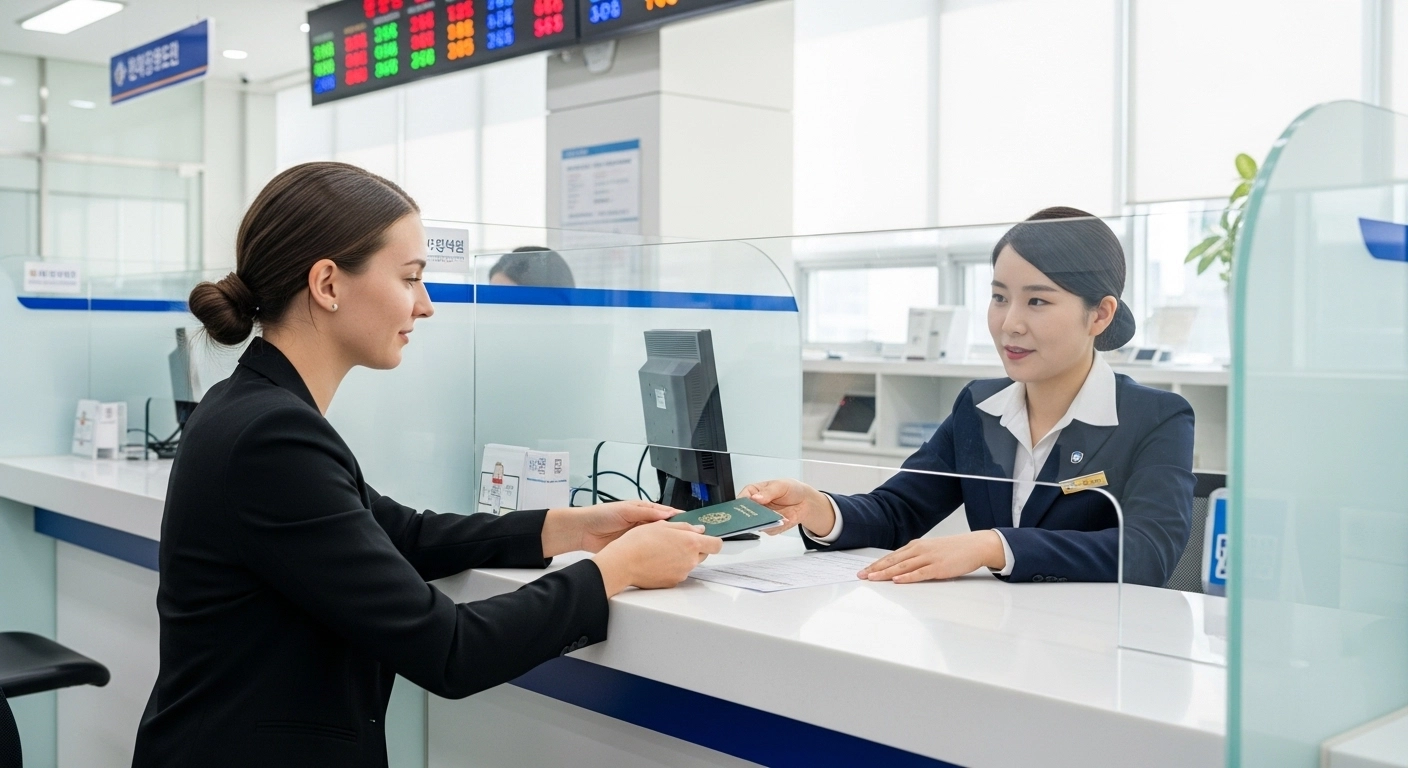
The bank account Korea foreigner process sounds simple enough. Walk in, show your ID, fill out some forms, walk out with a debit card. In theory, that’s how it works. In practice, most people leave the bank confused, delayed, or told to come back another day.
The frustration isn’t usually about language. It’s about timing, documentation, and a handful of requirements that bank staff assume everyone already knows. These assumptions create delays that could have been avoided with a few minutes of preparation.
This guide won’t promise you a perfect experience. What it will do is explain where things typically go wrong, what each document is actually for, and what to do when a branch turns you away.
Why Delays Happen More Often Than They Should
Korean banks have become more cautious about opening accounts for non-residents. This shift happened gradually over the past several years, driven by anti-money laundering regulations and fraud prevention measures. The result is a bank account Korea foreigner application process that feels inconsistent — what worked for one person last month might not work for you today.
Staff at different branches interpret requirements differently. Some are flexible with documentation; others follow every rule to the letter. This variability is the root cause of most foreigner frustrations with the Korean banking system.
The other issue is timing. Banks process new account applications more smoothly during quieter hours. Show up at lunch or late afternoon on a Friday, and you’re more likely to encounter delays simply because staff are managing multiple priorities at once.
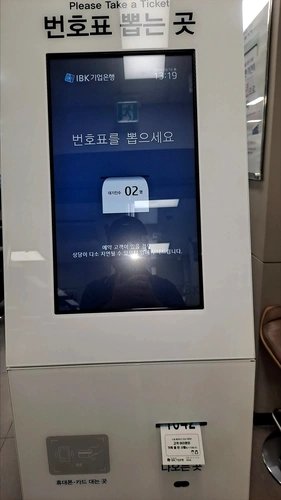
Bank Account Korea Foreigner: Common Mistakes to Avoid
These are patterns that repeat across different people, different banks, and different situations. Understanding them ahead of time tends to reduce the back-and-forth that makes the process feel harder than it needs to be.
Arriving Without a Korean Phone Number
This is where things usually start to go wrong. Korean banks require a local phone number for account verification, SMS authentication, and app registration. Without one, the bank account Korea foreigner application often stops before it even begins.
The phone number needs to be registered in your name. A friend’s number or a temporary SIM won’t work for most banks. If you haven’t sorted out your mobile situation yet, that step needs to come first. Many visitors find that choosing a Korean SIM card is more complicated than expected, so it’s worth addressing early.
Assuming Any Branch Will Do
Not all branches handle foreigner accounts equally. Smaller branches in residential areas sometimes lack staff experienced with non-Korean documentation. They may ask you to visit a larger branch instead, or they might process your application but miss steps that cause problems later.
Branches near universities, business districts, or international areas tend to be more familiar with foreign applicants. This doesn’t guarantee a smooth experience, but it reduces the chance of miscommunication.
Bringing Incomplete Documentation
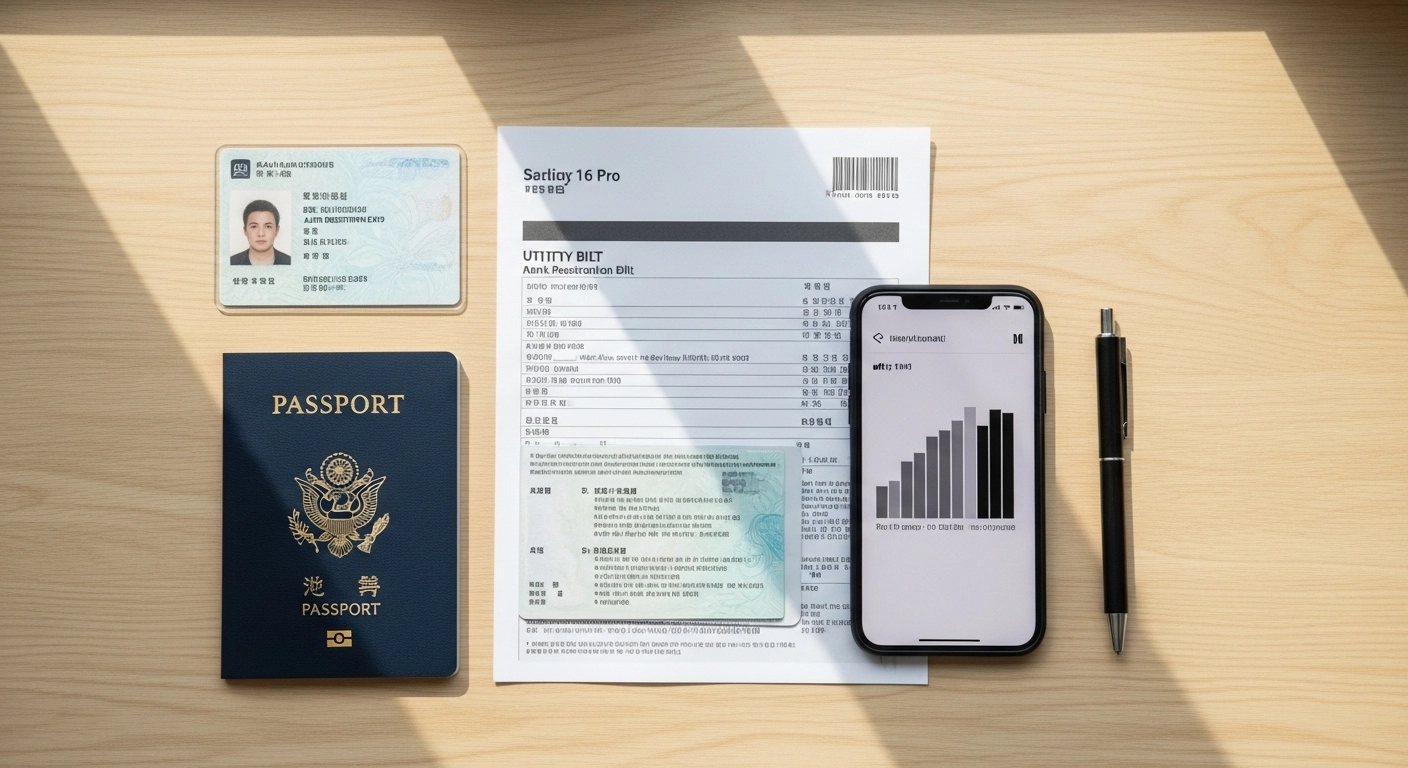
The basic requirements for a bank account Korea foreigner application seem straightforward: passport, Alien Registration Card (ARC), and a Korean phone number. One naming detail trips people up: since January 2021, the physical card issued by Korean immigration has been printed as “Residence Card” in English, not “Alien Registration Card.” The Korean side (외국인등록증) and the 13-digit registration number are unchanged. Bank staff recognize both terms, so the wording on your card is not a problem — but if a form asks for your “ARC number,” it means the number printed on your Residence Card.
Employment verification letters, enrollment certificates for students, or proof of address can all come up during the application. When you don’t have these documents ready, the process pauses while you figure out how to obtain them.
Underestimating the ARC Timing Issue
Most major banks won’t open accounts for foreigners without an Alien Registration Card. The problem is that ARC processing takes time — often several weeks after you apply at immigration.
During this waiting period, your banking options are extremely limited. Some people try to work around this by using cash or relying on someone else’s account, but this creates complications of its own. The wait is frustrating, but it’s usually unavoidable.
Not Understanding Account Restrictions
Even after you successfully open a bank account Korea foreigner restrictions usually apply from day one — and this catches more people off guard than the application itself. What you receive is often not a full account but a limited-transaction account (한도제한계좌).
This is not a policy any single bank invented. It comes from the Financial Services Commission’s anti-money-laundering framework, which requires banks to verify a customer’s purpose for holding an account before granting full transaction limits. Banks apply it to Korean nationals too, but foreign applicants hit it more often because employment or residency evidence is harder to produce in the first weeks.
In practice, a limited account caps daily transfers and ATM withdrawals at a level that covers ordinary living costs but not much else. Card payments and salary deposits are typically unaffected. Paying a housing deposit or sending money overseas is where the cap becomes visible — often at the worst possible moment.
The cap is lifted by supplying evidence, not by waiting. Employment certificates, a signed lease, a few months of salary deposits, or a student enrollment certificate are the usual routes. Ask at the counter which specific document lifts the limit at that bank, and write the answer down — the requirement is set per institution, and staff at a different branch may quote a different one.
What Actually Matters When Choosing a Bank
Koreans often choose banks based on relationships — where their employer deposits salary, where their family has accounts, or which bank offers the best mortgage rates. As a foreigner, your priorities are different when navigating the bank account Korea foreigner requirements.
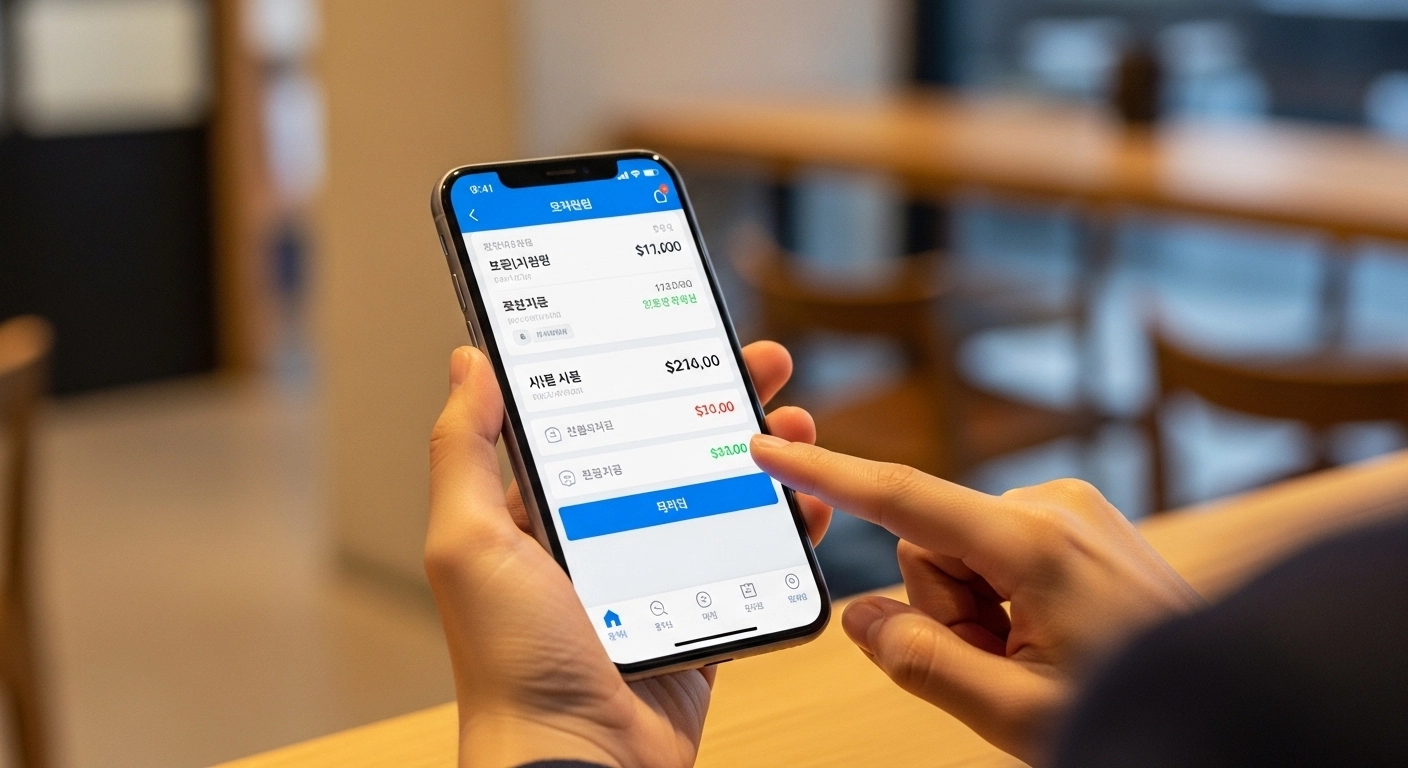
App quality matters more than you might expect. You’ll use the mobile app daily for transfers, checking balances, and authentication. Some Korean bank apps have reasonable English support; others are almost entirely in Korean. This becomes a daily convenience issue, not just a one-time setup problem.
ATM network coverage varies by bank. The major banks — KB Kookmin, Shinhan, Woori, Hana — have extensive ATM networks, but fees for using other banks’ machines add up over time. Consider where you’ll be living and working when thinking about convenience.
Branch accessibility for in-person services still matters. Despite digital banking improvements, some transactions require visiting a branch. If you’re locked into a bank with no convenient branches near your daily routine, those visits become time-consuming errands.
English support quality differs significantly between institutions. Some banks have dedicated foreigner banking services with English-speaking staff and translated materials. Others expect you to navigate everything in Korean or bring your own translator.
Decision Guide: Which Bank Fits Your Situation
Rather than ranking banks from best to worst, it’s more useful to think about which situations favor which choices. Your circumstances matter more than general reviews when completing a bank account Korea foreigner application.
If you’re employed by a Korean company, the path is usually clearest when you open an account at the bank your employer uses for payroll. This simplifies salary deposits and often makes the approval process smoother since the bank can verify your employment directly.
If you’re a student, check whether your university has a partnership with a specific bank. Many Korean universities have on-campus bank branches or preferred banking relationships that make the process easier for enrolled students.
If English support is your top priority, Shinhan and KEB Hana have historically offered better English-language services for foreigners. Their apps and customer service tend to be more accessible for non-Korean speakers. This isn’t absolute — individual branch experiences vary — but the pattern is consistent enough to be useful.
If you need to send money abroad regularly, compare transfer options before committing. Rates and fees vary by bank and by destination country, and a limited account will block larger remittances until the cap is lifted. The fee structures and where the costs actually sit are broken down in sending money from Korea. Services like Wise or Remitly may be part of the answer, but each still needs a Korean account to draw from.
If you’re here short-term on a tourist visa, your options are very limited. Most banks won’t process a bank account Korea foreigner request without an ARC. Some fintech solutions offer prepaid cards that work for basic transactions, but a full bank account typically requires longer-term residency status.
A Safer Direction for Most Newcomers
For most foreigners arriving in Korea without a specific employer or university guiding their choice, starting with one of the major four banks — KB Kookmin, Shinhan, Woori, or Hana — tends to be the safer direction. These banks have the most experience handling bank account Korea foreigner applications and the most extensive branch and ATM networks.
Shinhan and KEB Hana come up often in English-speaking expat reports, but that reputation describes certain branches rather than the institution as a whole. A branch in Itaewon or near a university international office may have staff who process foreign applications weekly; a residential branch of the same bank may see one a year. No bank is uniformly better here — what decides the outcome is your visa type, whether an employer or school is attached to the application, the transactions you need, and which branch you walk into.
Visit a branch in a business district or near a major subway station rather than a small neighborhood branch. Go on a weekday morning if possible, avoiding lunch hours and late afternoons. Bring every document you might conceivably need — it’s better to have extras than to be sent home for something you didn’t expect.
This recommendation is not for everyone. If your employer uses a different bank for payroll, that bank is probably your better choice regardless of general reputation. If you have specific needs like frequent international transfers to a particular country, research which bank offers the best terms for that specific corridor.
What Each Document Is Actually For
Banks rarely explain why a document is required, which makes the list feel arbitrary. Each item maps to one verification step, and knowing which step it serves tells you what to offer as a substitute when you don’t have the standard version.
| Document | Why the bank asks for it | If you don’t have it |
|---|---|---|
| Passport | Primary identity check. Confirms legal name and nationality against the account record. | No substitute. Original only — a copy or photo is refused. |
| Residence Card (ARC) | Carries the 13-digit registration number every Korean financial system indexes you by. Without it there is no record to attach the account to. | A few branches open a limited account against the immigration receipt. Most wait for the physical card. |
| Korean phone number | Carries SMS identity verification (본인인증), which the banking app and every later online transaction depend on. | A prepaid SIM registered to your own passport works. A number in someone else’s name does not. |
| Proof of address | Confirms the address on file matches your immigration record, and shows the stay is settled rather than transient. | Lease contract, a utility bill in your name, or 외국인등록사실증명 from a 주민센터. |
| Employment or enrollment certificate | Establishes purpose of stay. This is the document that most often lifts the limited-account cap. | 재직증명서 from HR, a signed contract, or a university enrollment certificate. Bring it even when not asked. |
When a branch asks for something you don’t have, the useful question is which verification step it covers. An alternative document often satisfies the same requirement — and a request that no staff member can explain is sometimes a branch habit rather than a rule.
Final Checklist Before Your Visit
Before heading to the bank for your bank account Korea foreigner application, run through these items mentally. Each one represents a common point where delays happen.
☑ Residence Card / ARC – Issued and in hand, not just applied for
☑ Korean phone number – Registered in your name, able to receive SMS
☑ Passport – Original, not a copy
☑ Proof of address – Utility bill, lease contract, or residence certificate
☑ Employment or enrollment verification – If applicable to your situation
☑ Branch selected – Larger branch in a business or international area
☑ Timing planned – Weekday morning, avoiding peak hours
One step is worth adding before any of this: call the branch. It takes about five minutes and settles the questions that otherwise cost you a second trip.
“Does this branch open accounts for foreign residents?”
이 지점에서 외국인 계좌 개설이 되나요?
Not every branch processes foreign applications. Asking first avoids the redirect to a main branch after you’ve already waited.
“I hold a [visa type] visa — which documents do you need?”
[E-2 / D-2 / F-6] 비자인데, 어떤 서류가 필요한가요?
Requirements shift by visa category. Naming yours gets a specific list instead of a generic one, and surfaces any extra document that branch expects.
“Is there a time when staff who handle foreign customers are available?”
외국인 업무 담당 직원이 있는 시간이 있나요?
Larger branches often have one or two people who handle these applications routinely. Arriving during their shift changes the experience considerably.
If you’re still working through the ARC application process, you may need to prepare some Korean phrases for government office visits as well. The card itself takes several weeks to arrive after the immigration appointment, and that gap is where most bank refusals originate — the timeline and what fails during it are covered in what still fails after ARC approval.
Once your bank account is active, you’ll also want to ensure your mobile plan in Korea supports the authentication methods Korean banks require. Some prepaid plans have limitations that cause problems with banking apps later on.
If the Branch Turns You Away
Being refused is common enough that it should be treated as a step in the process rather than a verdict. It rarely means you cannot open an account in Korea — usually it means this branch, on this day, with these documents, declined to proceed.
Get the reason before you leave. Ask which requirement was not met and write it down. A specific answer — no employment evidence, address mismatch, ARC not yet issued — tells you exactly what to fix. A vague one is itself informative: a refusal that staff cannot explain in concrete terms may reflect branch practice rather than bank policy, and a different branch may not repeat it.
Try another branch of the same bank. Branch-level discretion in Korean retail banking is wide. The same documents that fail in a small residential branch are often accepted at a main branch, one near a university international office, or one in a district with many foreign residents.
Return with more than was asked. If identity or purpose of stay was the sticking point, add the employment certificate, the lease, and a utility bill together rather than one at a time. Over-documenting has no downside here.
Change banks if two branches decline. Internal thresholds genuinely differ between institutions. An application refused at one bank being approved at another the same week is a pattern that shows up in expat forums every spring, when the arrival season begins.
The follow-up conversation goes better with a few set phrases ready — asking why an application was declined and what would change the answer. Those specific expressions are collected in Korean phrases for bank visits.
Conclusion
The bank account Korea foreigner process is rarely as quick as it sounds, but it’s also not as complicated as it sometimes feels in the moment. Most delays come from predictable gaps — missing documents, wrong timing, or branches unfamiliar with foreign applications.
With your Residence Card in hand, a Korean phone number registered to your name, and a visit to a well-chosen branch during quieter hours, the process usually moves forward without major obstacles. The limited-account cap eases as you supply evidence of employment or residence, and within a few months your banking setup will feel routine.
This is one of those early logistics that feels bigger than it is. Once it’s done, you have the foundation for everything else — receiving salary, paying rent, setting up utilities, and managing daily life. If you’re still in your first week, the order these steps go in matters more than any single one of them; the first 3 days sequence lays out phone, address, and bank in the order that actually clears. From there, things tend to get simpler.
Where to Verify Current Requirements
Document lists and transaction caps are revised periodically, and branch practice drifts from published policy in both directions. Two sources are worth checking directly rather than relying on a guide:
- Korea Immigration Service — residence card issuance, processing times, and the registration number your bank record is built on.
- Financial Services Commission (English) — the anti-money-laundering framework behind limited-transaction accounts and the customer verification rules banks apply.
Each major bank also runs an English page for foreign customers, listing branch locations with English-speaking staff and the documents that bank expects. Search the bank’s name with “global banking” or “foreign customer” to reach the current page — these URLs are reorganized often enough that a bookmarked link tends to break.
Last reviewed: September 2026. Requirements and transaction limits change. Confirm with your target branch by phone before visiting.