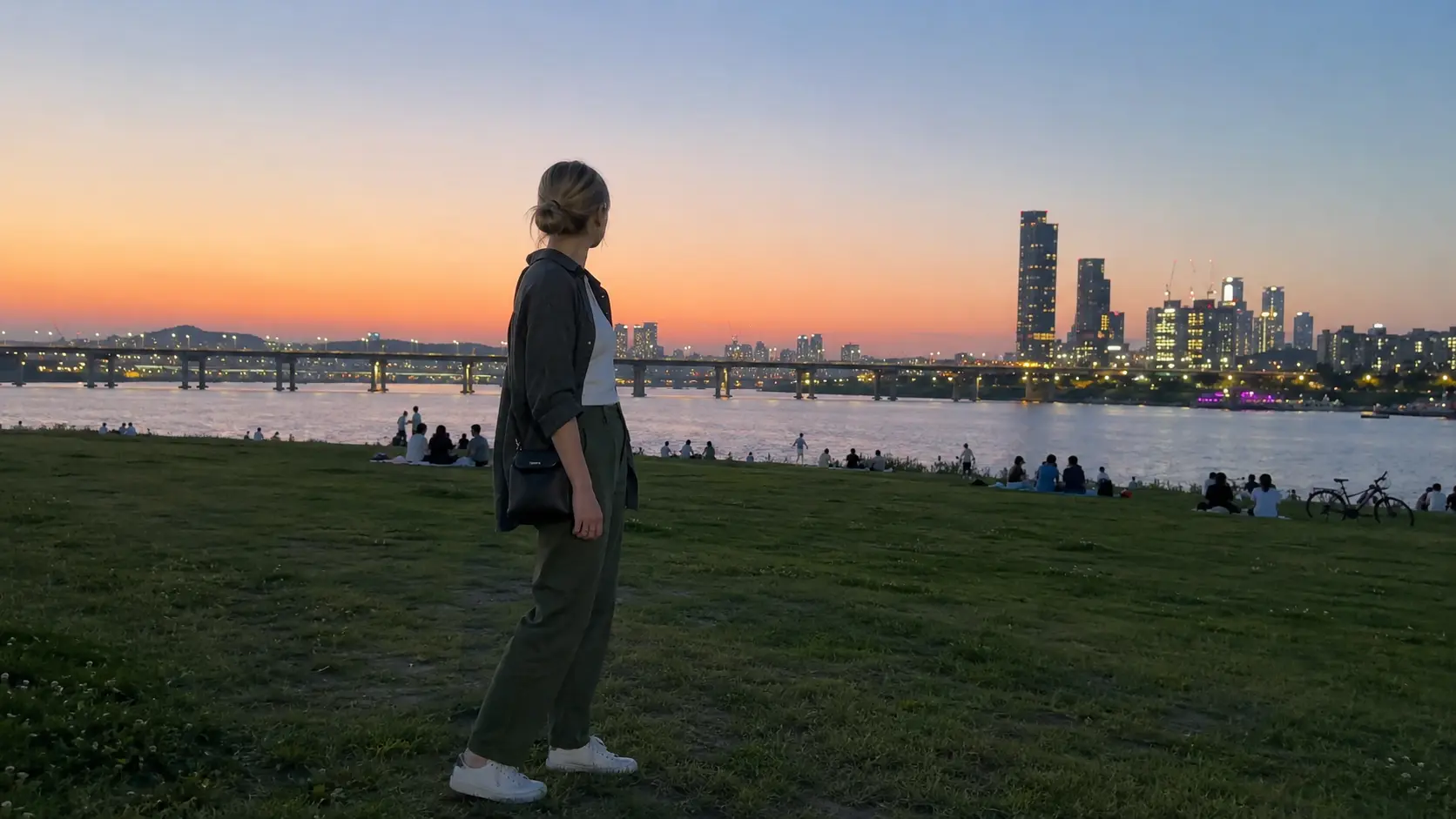
Han River Seoul residents use is a different place from the one in the postcard shots. Same bridges, same skyline. The difference is that almost everyone sitting on that grass is running a small logistics operation — food arriving at a fixed pickup point somewhere behind them, a tent standing inside a painted boundary, a rental bike due back before the meter ticks past the hour.
Visitors tend to treat Han River Seoul as one activity. It isn’t one activity. Three separate plans run there, each on its own rule set, and the rules barely overlap. The delivery rules have nothing to do with the tent rules. The pool has its own calendar and closes for the year while the parks stay open.
Choose the wrong plan and the evening still happens. You just spend part of it walking back toward a parking lot you didn’t know was the pickup zone, or folding up a tent early because everyone around you started folding theirs.
Why a Han River Seoul Evening Splits Into Three Plans
Eleven riverside parks sit along both banks, and they are not interchangeable. Han River Seoul is a name for all of them at once, which is where the trouble starts. Yeouido and Ttukseom carry the crowds, the food traffic and the summer pools. Ichon and Mangwon stay quieter. Nanji has the campground. Each park runs the same city rulebook, but the facilities that matter to a foreigner — a delivery pickup point, a tent zone, a pool gate — exist in some parks and not in others.
That is the part travel guides skip. They describe the view.
The riverside works more like a public facility with posted operating rules than like an open field. Seoul’s Future Hangang Headquarters publishes a list of prohibited acts with fines attached, and the numbers are not symbolic. Littering runs ₩30,000. Leaving your picnic trash behind runs ₩100,000. Camping or cooking outside a designated area starts at ₩1,000,000 for a first offense and climbs from there — you can read the full schedule on the Hangang Park prohibited acts and fines page.
Nobody is walking around handing out penalties to picnickers. Still, the gap between “park” and “supervised public space” explains most of the confusion foreigners run into. So the sensible move is to decide which of three evenings you actually want, then set up for that one.
Scenario One — You Want Food Brought to the Grass
A Han River Seoul evening built around delivered food is the version everyone has seen on video: fried chicken, a mat, the water going dark, someone’s Bluetooth speaker two mats over. It works. It just doesn’t work the way it looks.
Riders on scooters are kept out of the park interior for safety reasons, so Ttukseom and Yeouido operate designated delivery zones instead. Your food does not come to your mat. It comes to a marked point, and you walk to meet it.
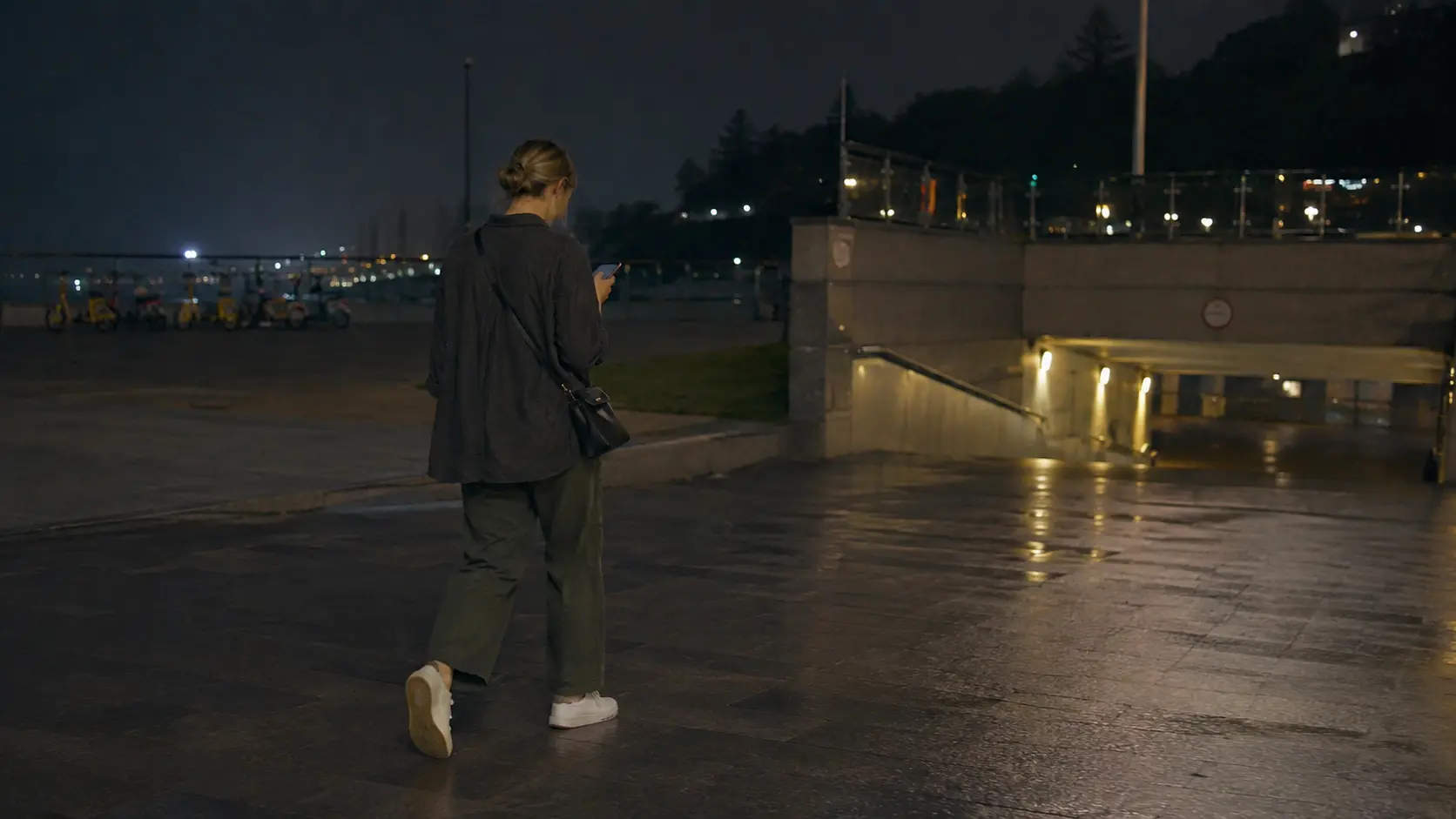
According to the city’s own park FAQ, Ttukseom runs two of these zones — one at the park entrance passage, one in front of the information center. Yeouido runs three: near the second parking lot, at the Yeouido entrance passage, and beside the entrance to Mulbit Plaza. Pick the one closest to where you’re actually sitting before you order, not after.’re actually sitting before you order, not after.
Two things break for foreigners at this step, and neither has anything to do with the river.
The first is address entry. Korean delivery apps expect a structured address, and “Yeouido Hangang Park, near the big tree” is not one. Typing the delivery zone name into the address field is the usual workaround, and Korean-language app screens make that harder than it sounds. If the app itself is the sticking point, the walkthrough in our guide to delivery apps in Korea for foreigners covers verification and address format in detail.
One exception is worth filing away. On the largest event nights the zones stop functioning as intended, and the fireworks festival organisers now ask people to bring their own food because riders simply cannot reach the pickup points through the crowd.
The second is the pickup itself. Riders call. They call in Korean, they call while parked, and they do not wait long. Standing at the zone before the estimated arrival time solves roughly ninety percent of that problem without a single word of Korean being exchanged.
One thing worth knowing if you’re ordering for a group: the convenience stores inside the parks are stocked for exactly this situation — ice, cups, cooked ramyeon at the machine, cold drinks. Sometimes that’s simply faster than delivery. What works and what doesn’t at Korean convenience stores is worth a look if you haven’t used one much yet.
Scenario Two — You Want a Tent and a Whole Afternoon
Shade tents are allowed across Han River Seoul parks. They are allowed in specific places, at specific hours, in a specific configuration, and this is where visitors most often get quietly corrected by a park staff member.
For 2026 the city expanded the season to run from March 1 through November 30 across fifteen designated shade-tent zones. From September the hours are 09:00 to 19:00, so tents come down at seven. Through the June-to-August peak the cutoff sits an hour later, at eight. Outside those marked zones, a tent isn’t a tent — it counts as camping, which is the ₩1,000,000 category.
There’s also a shape requirement that surprises people. The tent has to stay at least half open — two sides up, essentially. A fully closed tent gets a knock on the fabric.
A picnic mat, meanwhile, is unrestricted. Any park, any hour, no zone, no takedown time. For a first visit to Han River Seoul parks, a ₩10,000 mat from a convenience store or a nearby shop does everything a tent would do and skips the entire rulebook.
Rentals near Yeouido will set a tent up for you for around ₩20,000 to ₩30,000 depending on size and season. Reasonable if you’re staying five hours with kids. Excessive if you’re staying two hours with a beer.
Scenario Three — You Came for the Water, or the Fireworks
Nobody swims in the river itself. Swimming at Han River Seoul happens in outdoor pools built on the riverside parks, and they run on a short, fixed calendar that catches visitors off guard every year.
In 2026 the season ran June 19 through August 30 across six sites — Ttukseom and Yeouido as full pools, Jamsil, Gwangnaru, Nanji and Yanghwa as water-play facilities, with Jamwon out for construction. Daytime hours were 09:00 to 18:00, night opening until 22:00 from July 3. Entry stays cheap at ₩5,000 for an adult, ₩3,000 at the water-play sites.
Three details reliably trip people up. Rest periods clear the water for fifteen minutes every hour plus a longer midday break, so arriving at noon means waiting. Delivery food and alcohol don’t come inside the pool fence, which means the chicken plan and the swimming plan are two different afternoons. And by early September the pools are shut while the parks around them are still full of people — a September arrival looking for the pool photos will find an empty deck.
The other reason to be at the water is the fireworks festival, staged at Yeouido and Ichon each September (September 5 in 2026, with the show starting at 20:00) and free to watch from the general park areas. Over a million people come, which suspends every convenience described above for one evening.
Questions That Come Up Most
Can you drink alcohol at the Han River?
Drinking in the riverside parks is not banned outright, and it is a normal part of an evening there. What carries a penalty is the behavior afterward — noise, disturbance, drunken conduct toward other people sits at a ₩70,000 fine under the park ordinance. Inside the pool fences, alcohol isn’t permitted at all.
Do I need a Korean phone number to rent a Ttareungi bike?
No. The Seoul Bike app has a Foreigner login that takes an overseas credit card, and passes run ₩1,000 for one hour, ₩2,000 for two hours, or ₩5,000 for twenty-four hours. Seoul’s official tourism site walks through the steps on its Seoul Bike guide for visitors. Return the bike to any station and lower the lever until it clicks.
Is the Hangang Bus worth taking to get there?
The river bus connects seven piers between Magok and Jamsil, splitting east and west at Yeouido. A single adult ride is ₩3,000, and cash isn’t accepted — a transit card or the Climate Card is the only way to board, which catches out anyone who arrived in Korea last week. Setting up a card early is covered in our piece on the T-money card and what foreigners miss on day one.
Which park should a first-timer pick?
Yeouido, if the plan involves food, crowds and a night view — it has the most delivery zones and the easiest subway access. Ttukseom, if the plan involves the pool or a quieter stretch of grass. Mangwon and Ichon are for people who have already done the other two and want to hear themselves talk.
When You Don’t Know Which One You Are Yet
Plenty of people head to Han River Seoul without a plan, which is fine. There’s a setup that survives all three versions of the evening.
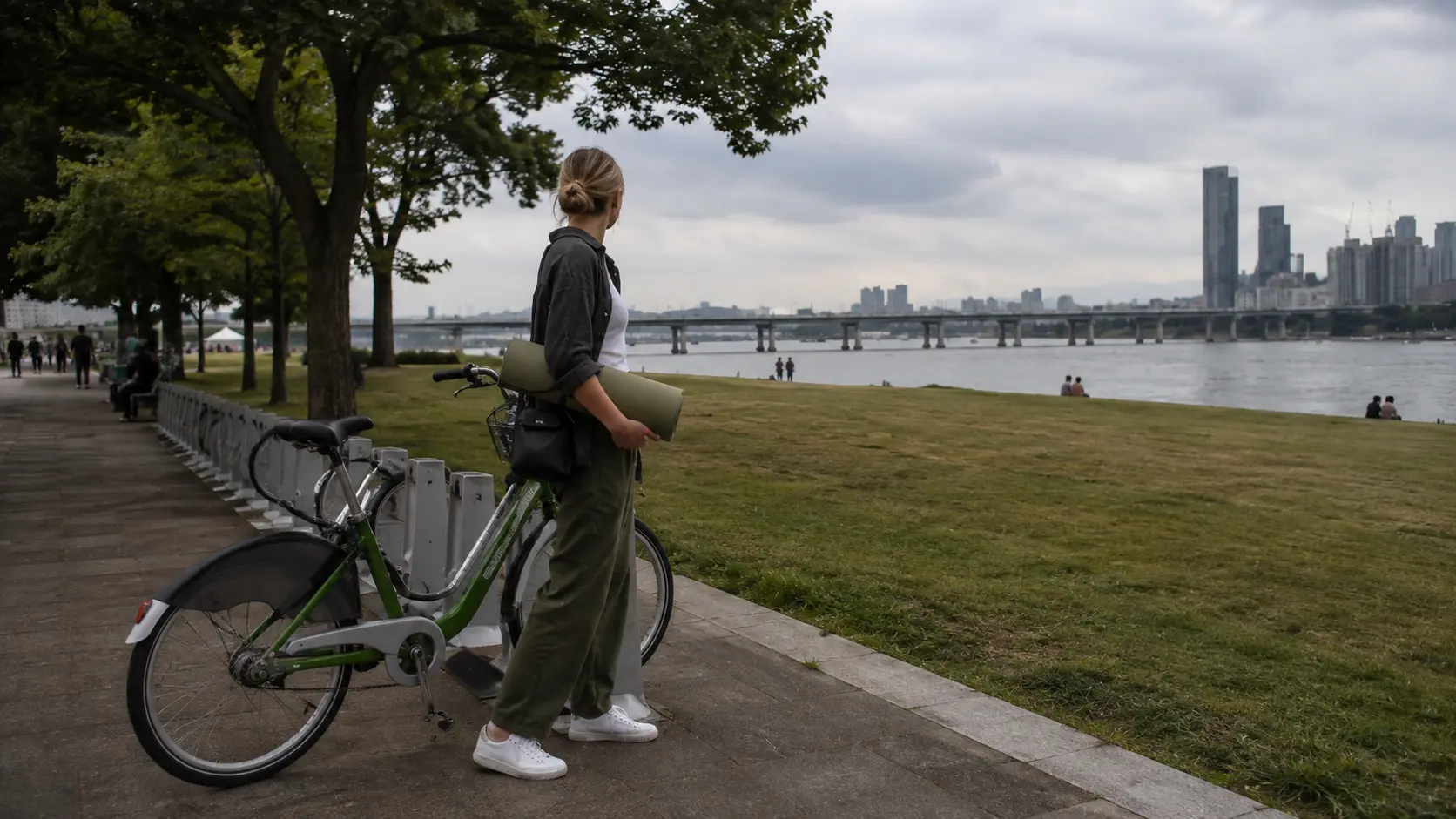
Bring a mat instead of a tent. It removes the zone question, the takedown-time question and the fine question in one move, and it fits in a tote bag.
Get there by subway or by bike rather than by car. Riverside parking fills by mid-afternoon on summer weekends and the walk from an overflow lot can run twenty minutes. A bike also solves the delivery zone problem, since the pickup point stops mattering when you can ride to it in three minutes.
Then pick your park by navigation app before you leave. Google Maps still gives incomplete walking directions inside Korea, and riverside entrances are one of the places that shows up badly — the comparison in Naver Map versus Kakao Map explains which one to install. Search the park name, find the entrance passage nearest your subway exit, and start from there.
If the whole river turns out to be more of a project than you wanted, the riverside also works as a two-hour stop on a larger day out. Our list of day trips from Seoul that are actually worth the ride has a few routes that end at the water in the evening.
A Short Check Before You Leave the Apartment
- Park chosen and its nearest entrance passage found on Naver Map or Kakao Map
- Delivery zone identified in advance if food is part of the plan
- Mat packed, or the tent zone and takedown time confirmed — 19:00 from September, 20:00 in June–August
- Transit card charged if the Hangang Bus is on the itinerary — no cash accepted
- Pool dates checked against the current year’s announcement, not last year’s
- A bag for your own trash, since leaving it behind is the ₩100,000 line
What This Comes Down To
Han River Seoul isn’t difficult. It’s specific.
Delivery lands at a marked zone and you walk to it. Tents live inside painted boundaries from nine until the posted evening cutoff, and a mat sidesteps all of it. Pools open for about ten weeks and close while the parks stay busy. Nothing there is hidden — it’s posted, in Korean, on signs most visitors walk past on the way to the water.
Sort out which of the three evenings you want before you leave, and the Han River Seoul summers are built around turns into exactly the night the videos promised.
Eric Youn lived abroad for over 15 years and writes practical Korea living guides based on firsthand experience.