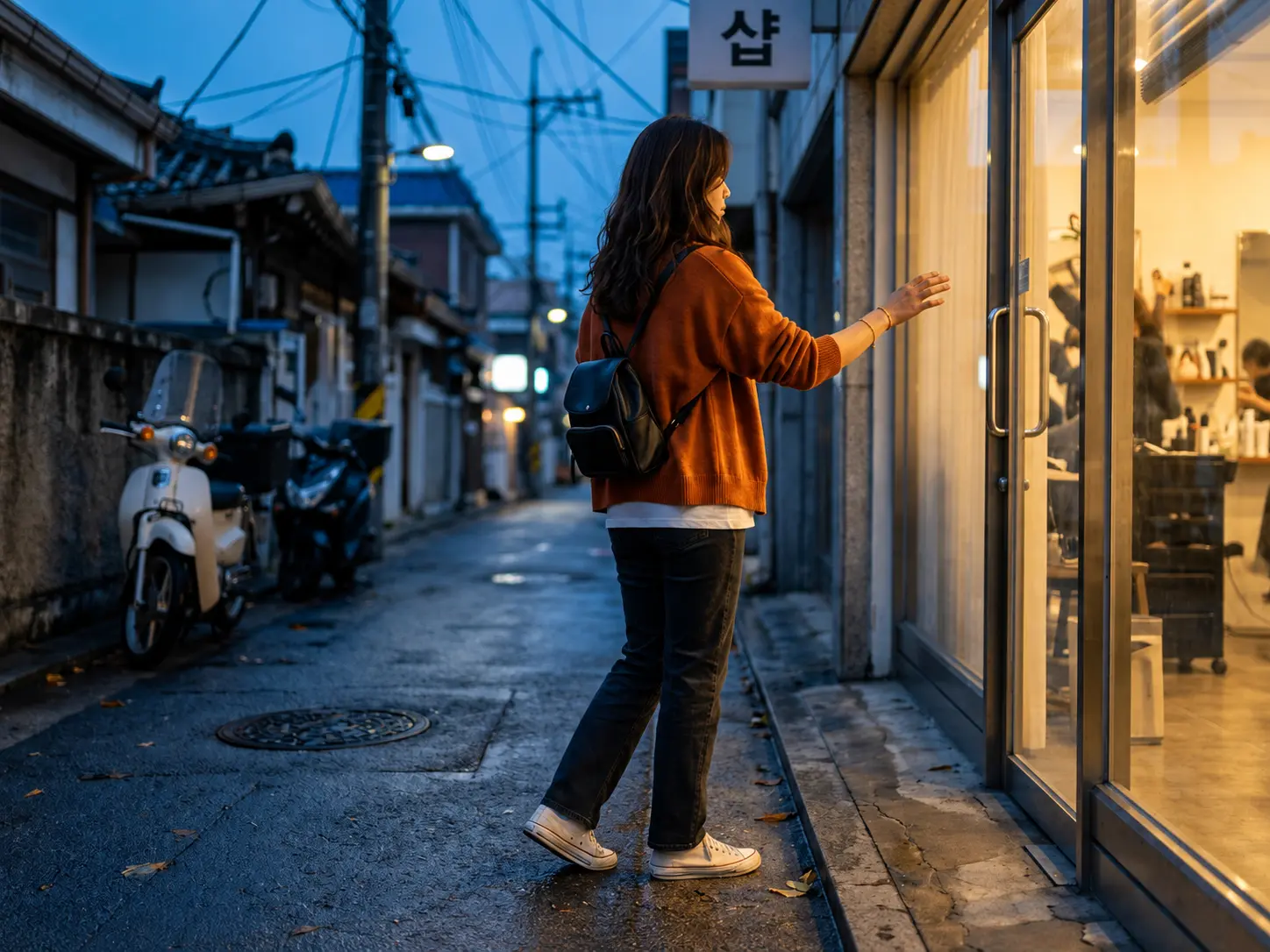
The cape goes on. Someone hands you a warm drink, adjusts the chair, and asks a question you half understand. You hold up your phone with a photo you saved three weeks ago, and the stylist nods — a slow, confident nod that feels like agreement. Forty minutes later you are looking at a haircut that is technically fine and completely not the one in the picture. This is where a korean hair salon foreigners walk into for the first time usually goes sideways, and it is almost never about skill.
The cutting is good. Often better than what you paid twice as much for back home. The scalp massage during the shampoo is genuinely nice, nobody is angling for a tip, and the whole thing runs on a level of service that feels borderline unfair for the price.
The failure happens in the four minutes before any scissors come out. That conversation is doing more work than you think, and it is running in a vocabulary that does not map cleanly onto English hair words.
What You Picture on the Way In
Most people arrive with a version of the same mental image: glassy, weightless hair, a stylist who has clearly done this exact cut on a K-drama lead, and a bill that comes out lower than expected. Some of that holds up. Korean salons really do run advanced coloring and perm techniques, and the finishing blow-dry alone can make you understand why people book a salon visit before a flight home.
The other half of the picture is where it gets shaky. Almost every korean hair salon foreigners book carries three quiet assumptions with it: that a photo functions as a contract, that “just a trim” is a universal concept, and that the number painted on the window is what you will pay.
None of those three survive contact with an actual appointment.
Where Korean Hair Salon Foreigners Rarely Have Trouble
Worth being fair about the parts of this that are genuinely easy. Booking is one of them. Naver Booking (네이버 예약) is built directly into Naver Map, so you can search a neighborhood, filter to salons that accept reservations, pick an individual stylist, choose a service, and confirm a time slot — all without speaking to anyone. If you have not set up Naver Map yet, our comparison of Naver Map and Kakao Map covers why Google Maps keeps failing you here.
Payment is a non-event. Domestic cards, most foreign cards, and mobile payment all work at the counter, though the usual foreign-card quirks from our guide on paying in Korea as a foreigner still apply at smaller independent shops.
Then there is tipping, which simply does not exist here. Not at the neighborhood shop, not at the ₩70,000 place in Cheongdam. Stylists are on wages, the listed price is the whole transaction, and pressing cash into someone’s hand at the end mostly produces confusion. If you want to say thank you in a way that actually lands, rebook with the same stylist or leave a Naver review with a photo.
One more thing in the “works fine” column: price transparency is a legal requirement, not a courtesy. Under the outdoor price display rule attached to Korea’s Public Health Control Act, hair and beauty businesses above a certain floor area have to post a final-payment price list where customers can see it before entering. So the numbers on the window of any korean hair salon foreigners pass on the street are real numbers. They are just not the whole story, which is a different problem.
The Part That Breaks: Describing What You Want
Here is the thing nobody warns you about. Korean hair vocabulary is built around technique, not around look. English speakers describe an outcome — “shorter, but keep the length,” “a bit more shape,” “not too layered.” Korean salon language names the operation: layers (레이어드), thinning (숱치기), a straightening perm (매직), a root volume perm (볼륨매직), a specific curl size. When you give an outcome and the stylist has to reverse-engineer an operation from it, you have handed them a guessing game.
“Just a trim” is the single worst offender, and it is the phrase korean hair salon foreigners reach for most often. Translated literally as 다듬어 주세요, it lands somewhere between “tidy the ends” and “reshape the whole thing,” depending entirely on who is holding the scissors.
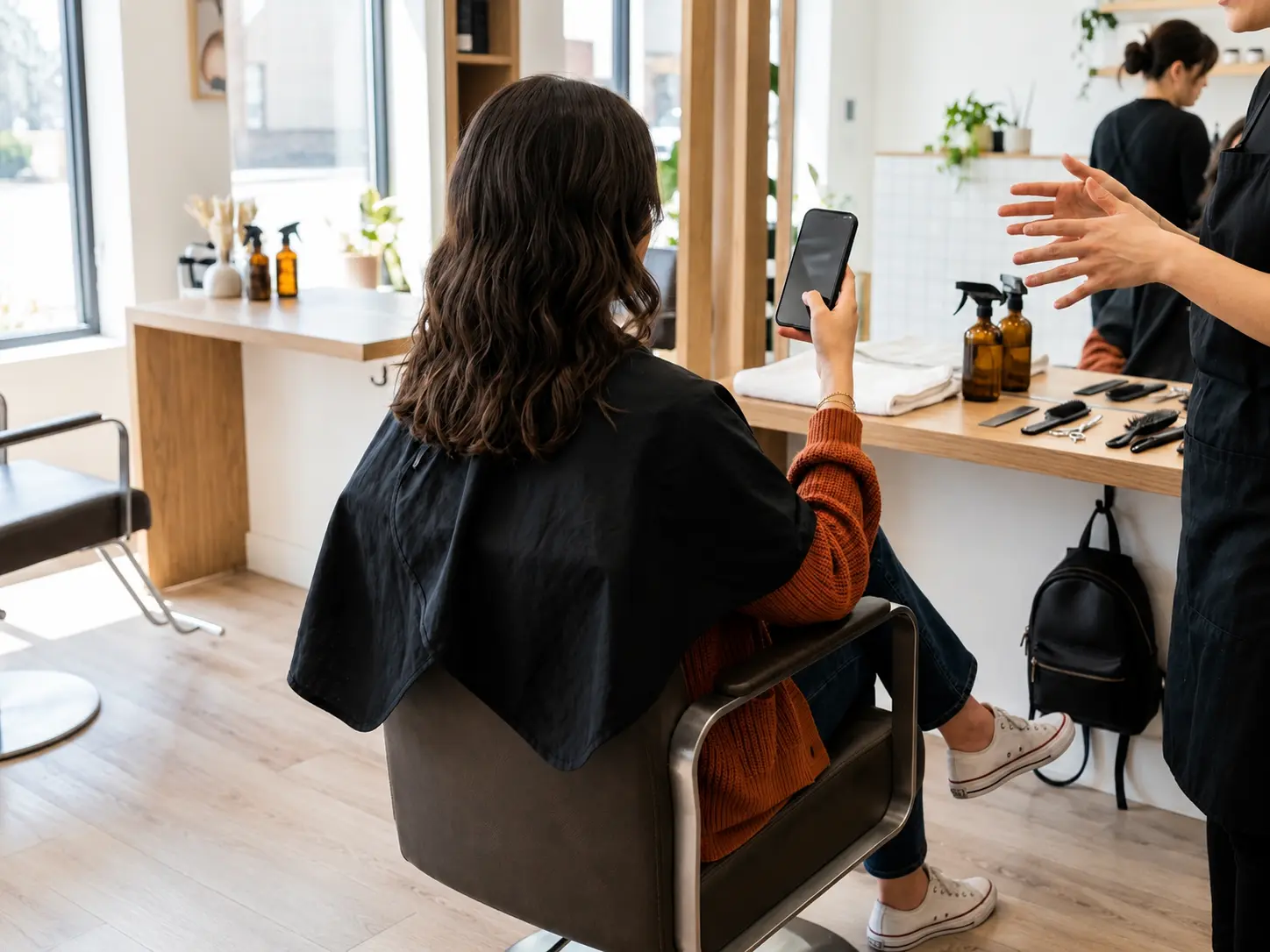
The reference photo has its own trap. Almost every saved screenshot shows a Korean model, shot from the front, with hair that has been styled for a photograph and probably has a texture nothing like yours. A stylist looking at that photo sees the styling, not the cut. And if your hair is wavy, curly, or coily, the gap widens: many Korean salons work almost exclusively with straight, fine hair types and have limited day-to-day experience with other textures. Some foreigner-oriented salons in Hongdae and Gangnam now assign specific designers to curly clients precisely because this kept going wrong.
There is also a communication habit that catches people off guard. If you ask for something the stylist thinks will not work, the response is frequently not a direct “no.” It may be a nod, a soft “네,” and then a quiet decision to do the version they believe you actually want. That is not dishonesty. It is a different default around disagreement — the same one you will recognize from our guide to Korean phrases for restaurants and cafés, where a polite non-answer often means no.
What the Price Board Doesn’t Cover
The posted number is a base. What gets added on top is where most of the bill shock at a korean hair salon foreigners choose on price alone ends up coming from.
According to price tracking published by the Korea Consumer Agency through its price comparison portal, the national average for an adult women’s cut was about ₩19,558 as of August 2025 — up roughly 24% over five years. Regional spread is wide: Incheon sat around ₩25,000 while North Jeolla came in near ₩15,200 in the same survey. Premium salons in Gangnam or Cheongdam routinely run ₩40,000 to ₩60,000 for a cut alone, and budget cut-only shops still exist at ₩5,000 to ₩12,000.
Three things commonly get added to a base price:
| Add-on | Korean term | When it applies |
|---|---|---|
| Length surcharge | 기장 추가 | Hair past the shoulders; scales with length |
| Stylist rank | 디자이너 / 실장 / 원장 | Senior stylists and the director charge tiers above the base |
| Treatment or clinic | 트리트먼트 / 클리닉 | Often proposed mid-service after color or perm |
The stylist-rank one surprises people most. A salon can advertise a ₩25,000 cut and charge ₩60,000 for the same cut done by the director (원장), and both numbers are legitimately posted. Booking through Naver Booking usually shows the rank next to each name, which is the easiest place to check before you commit.
Ask one question before the cape goes on: 최종 얼마예요? — “how much in total?” It takes three seconds and closes almost every version of this problem.
Working Around the Gap
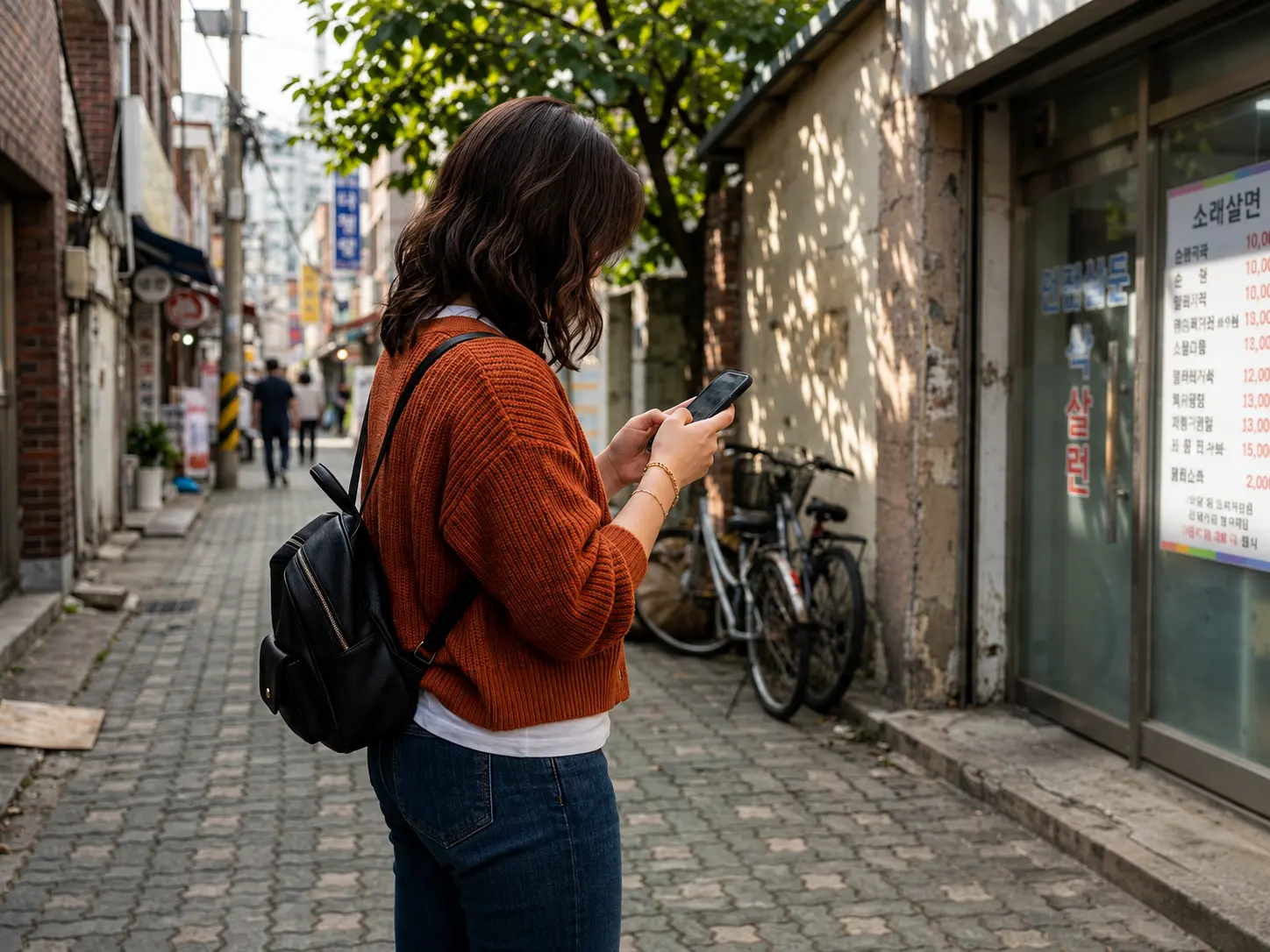
None of this requires fluent Korean. Every fix that works in a korean hair salon foreigners visit does the same thing — it moves the decision out of spoken language and into something you can point at.
Bring four photos, not one. Front, back, side, and one photo of a cut you specifically do not want. The fourth one does more work than the first three combined, because it defines the boundary rather than the target.
Give numbers instead of adjectives. “Two centimeters off, nothing above the chin” survives translation intact. “A little shorter” does not. Pinch the exact spot on your own hair and hold it while you say it.
Write the sentence out in Korean before you go, in a translation app, and show the screen rather than reading it aloud. Pronunciation is not the bottleneck here — precision is.
For color or a perm, mention your hair’s history: previous bleaching, box dye, chemical straightening. Korean stylists will often adjust or decline a service based on that, and they are usually right to. Korea’s consumer authority and the national hairdressers’ association jointly publish a hair service consent form (모발미용서비스 동의서) designed to be filled in before chemical treatments precisely to prevent this category of dispute — a salon offering one is a good sign, not a red flag.
And book earlier than you need. If the cut goes wrong, you want two weeks of runway before the wedding, the visa photo, or the flight — not two days.
Four Habits That Make the Result Worse
Nodding through the consultation. Understandable, and expensive. If you did not follow a sentence, say 잠시만요 and open the translation app. The pause costs thirty seconds; the alternative costs three months of growing it back.
Using one front-facing photo. The back of a haircut is where most of the shape decisions actually live, and it is the part you cannot describe from memory.
Treating “trim” as a safe, low-risk request. It is the vaguest word in the entire interaction.
Stacking a perm and a color on the same visit. Many stylists will refuse this outright to protect the hair, and the common recommendation is to leave roughly two weeks between the two. Booking both in one slot and expecting it to happen tends to end with a rearranged appointment.
Which Salon Type Matches Your Situation
| If you… | Go to | Trade-off |
|---|---|---|
| Just need it shorter, no styling | Cut-only shop (커트 전문점) | Fast and cheap; no consultation, no English |
| Live here and want a regular stylist | Neighborhood salon (동네 미용실) | Relationship pays off over time; rough first visit |
| Want predictability and walk-in options | Franchise chain | Consistent process; mid-to-high pricing |
| Have curly hair or a specific request | Foreigner-oriented salon | English or interpreter support; costs more, books out |
For a first korean hair salon foreigners try in a new city, the middle two are the safest starting point. The budget cut shop is excellent once you already know how to say what you want, and considerably less excellent before that.
Questions That Come Up After a Bad Cut
Do I tip at a Korean hair salon?
No. Tipping is not part of the service model at a korean hair salon foreigners visit, at any price tier, and the posted price already covers the full service including the shampoo and blow-dry. Rebooking with the same stylist is the recognised way to signal you were happy.
Can I get a refund if the result is wrong?
It depends on whether there was an actual defect in the service or simply a mismatch in expectations, and the two are treated differently. Korea’s Consumer Dispute Resolution Standards include a category covering beauty services, and the general first remedy for a faulty result is re-service rather than cash back. Keep your receipt, booking message, and before-and-after photos. If a salon refuses to discuss it, you can raise a consumer complaint through the Consumer Counseling Center, though the process runs in Korean and outcomes vary case by case. For anything involving injury or a chemical burn, see a doctor first and treat the paperwork as secondary.
Do I need a reservation, or can I walk in?
Large chains often take walk-ins, and cut-only shops usually do. Independent and popular salons frequently do not, especially on weekends. Booking through Naver also lets you choose the stylist rank, which quietly controls your final price.
Will a Korean salon know how to handle curly or textured hair?
Not automatically. Standard training and daily experience skew heavily toward straight, fine hair. Salons that market to international clients are far more likely to have a designer with real experience across textures — worth filtering for rather than hoping.
How much Korean do I actually need?
Less than you would think, if you prepare. Maybe six phrases and a translation app. The same principle that makes ordering food manageable applies here — our guide to ordering Korean street food as a foreigner covers the same “point, confirm, then commit” pattern that works at the salon chair.
Before You Book: What to Have Ready
Run through this before any korean hair salon foreigners book for the first time. It takes about five minutes the night before.
- Four reference photos saved offline — front, back, side, and one “not this”
- Your target length in centimeters, not adjectives
- The phrase 최종 얼마예요? ready to ask before the cape goes on
- A translation app with the request already typed out
- Your hair’s chemical history, if you are booking color or a perm
- The stylist’s rank checked on the booking page, not guessed at the counter
- Two weeks of buffer before any event you actually care about
What This Comes Down To
The technical side of a korean hair salon foreigners visit is not the risk. The cutting is good, the pricing is posted, nobody wants a tip, and the booking system works in three taps.
What fails is a four-minute conversation carrying more weight than any of it — conducted in outcome words on one side and technique words on the other.
Move that conversation onto photos, centimeters, and one direct question about the total. Then the mirror at the end stops being a surprise.
Eric Youn lived abroad for over 15 years and writes practical Korea living guides based on firsthand experience.