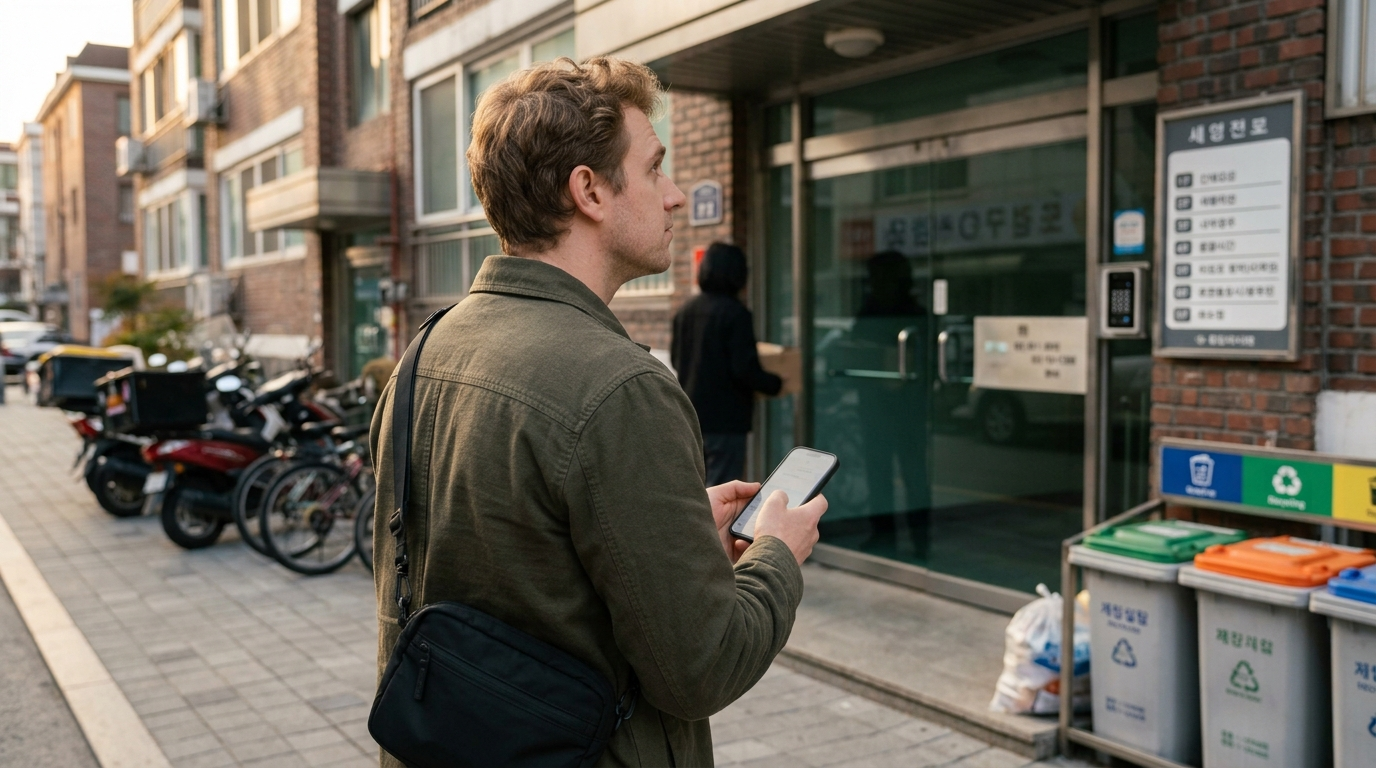
Over 22 million people in South Korea use Danggeun Market (당근마켓) — the app Koreans simply call “Karrot.” Around 85% of all peer-to-peer secondhand transactions in the country happen on that single platform. Secondhand market Korea foreigners try to join should feel straightforward. Download, sign up, browse. But the app requires Korean phone verification, GPS-based location proof, and Korean-language chat with sellers — and each of those steps works differently for foreigners than it does for Korean users.
The result is a gap. The listings are right there on your screen. The prices make sense. But between browsing and actually completing a deal, three specific walls appear — and each one has a workaround that most guides never mention. This article breaks down what blocks foreign users, what actually works, and how to set yourself up before your first message to a seller.
Understanding the secondhand market Korea foreigners actually use means looking beyond Karrot alone. This guide also covers Joonggonara (중고나라) and Bunjang (번개장터) — Korea’s other major platforms — and explains when each one makes more sense depending on your situation.
Why Korea Has Three Secondhand Systems, Not One
Korea’s secondhand market doesn’t work the way Craigslist or Facebook Marketplace does. There’s no single platform that covers everything. Instead, the market splits into three layers, and each one handles trust, reach, and payments differently.
Karrot (당근) dominates face-to-face neighborhood trades. The app restricts your view to a 2–6 km radius using GPS verification. You can only see sellers who live near you, and most deals happen in person — at a subway exit, a convenience store entrance, or the lobby of an apartment complex. There are no listing fees, no shipping costs, and no transaction commissions. The entire model runs on hyperlocal trust: you’re trading with someone you could literally run into at the grocery store tomorrow.
That trust system is built around something called Manner Temperature (매너온도). Every user starts at 36.5°C — normal body temperature. Good transactions and polite behavior push the number higher. Late arrivals, no-shows, or rude messages pull it down. Before meeting anyone, you check their temperature the way you’d check a seller’s rating on eBay. Below 36.0°C is a red flag.
Joonggonara (중고나라) is older and broader. It started as a Naver Café in 2003 and now operates as both a web forum and a standalone app. It covers the entire country — not just your neighborhood — which means more selection but also more reliance on shipping and less personal accountability. Joonggonara requires identity verification through a Korean phone number, and for some features, a Naver or Kakao account.
Bunjang (번개장터) works best for hobby items, electronics, and collectibles. Think of it as the Korean equivalent of Mercari or Depop. It supports in-app payments and shipping, which means you don’t have to meet anyone face-to-face. That convenience makes it popular among foreigners who aren’t comfortable with the in-person format.
For most foreigners living in Korea, Karrot is the one that matters most. It’s where the furniture, appliances, kitchen gear, and daily-life items are. But it’s also the one with the highest entry barrier.
The Phone Verification Wall — What Blocks Signup
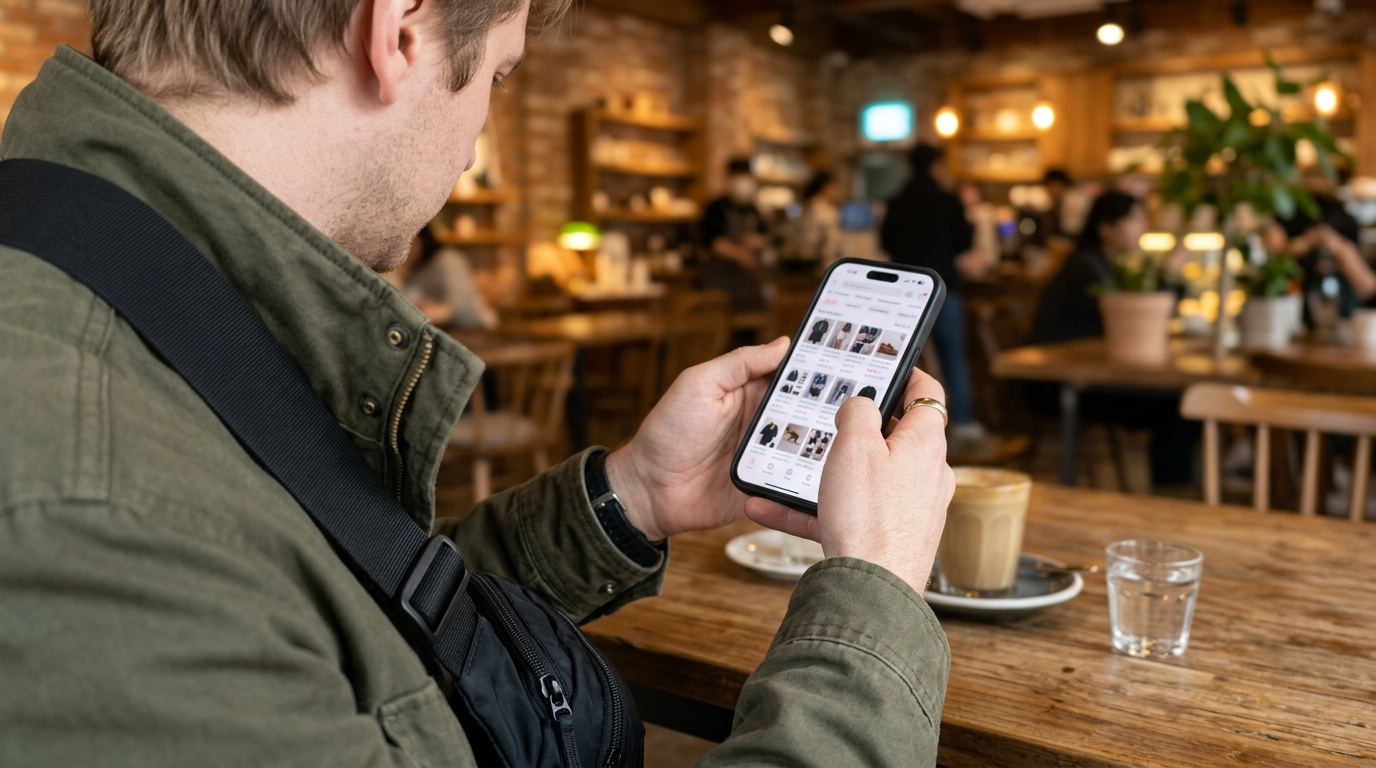
The secondhand market Korea foreigners encounter starts with a familiar pattern: download the app, try to sign up, hit a wall. Every secondhand platform in Korea requires a Korean phone number to register. Not an international number. Not a Google Voice number. A Korean 010 number tied to a domestic carrier or MVNO.
For Karrot, that’s technically the only hard requirement to create an account. You enter your 010 number, receive a verification code via SMS, and you’re in. But “in” doesn’t mean full access. Karrot Pay — the in-app payment system that lets you send money without exchanging bank account numbers — requires an ARC-verified phone account. Without it, you’re limited to cash or direct bank transfers when meeting sellers.
This is where the chain matters. If your phone verification isn’t set up properly, or if your SIM is a short-term tourist plan without identity registration, the SMS code either won’t arrive or the account will be flagged as unverifiable for payment features.
Joonggonara has a slightly different wall. In addition to a Korean phone number, it may ask for your resident registration number — which for foreigners means your Alien Registration Number from your ARC card. Some users bypass this by signing up through an existing KakaoTalk or Naver account instead. That works, but only if those accounts are already verified, which loops back to the same phone verification dependency.
One thing worth knowing: if you already have KakaoTalk verified, half the battle is done. Most platform signups in Korea accept Kakao as a login bridge.
The Location Lock — Why You Can Only See Your Neighborhood
Once you clear the signup step, the secondhand market Korea foreigners see on Karrot is restricted by geography. Karrot’s GPS verification isn’t a one-time thing. To maintain trading privileges, you need to re-verify your location every 30 days by physically being in the area and confirming it through the app. You can register up to two neighborhoods — for instance, your home and your workplace — but you must be physically present at each location to verify it.
This creates a very specific problem for foreigners who haven’t settled into a fixed address yet. If you’re still in temporary housing, or if you’ve just moved and haven’t done your address registration, your GPS location might pin to a neighborhood you won’t stay in for long.
Here’s a practical detail that helps: set your two location slots strategically. Put one where you live and one where you spend time regularly — your office, your university, or a neighborhood you visit often. This effectively doubles the number of listings you can see. If you live on the border between two districts, this trick can open up a noticeably wider range of sellers.
High-density areas like Gangnam, Hongdae, and Itaewon tend to have more listings, faster turnover, and lower prices because of competition. Suburban areas outside Seoul have fewer listings but less competition for popular items.
Joonggonara and Bunjang don’t have this restriction. Both let you search nationwide. But that means shipping is usually involved, which adds cost and complexity — especially if the seller only accepts Korean bank transfers.
The Korean Chat Problem — Closing a Deal Without Fluency
The third wall facing secondhand market Korea foreigners is language. The Karrot app has limited English support in its interface. You can switch the menu language to English in Settings. But the listings? They’re 99% in Korean. The chat? Also Korean. Searching “refrigerator” might return five results. Searching “냉장고” returns five hundred within walking distance.
This is the block that’s hardest to work around with a technical fix. You need to know at least the Korean word for what you’re looking for, or copy-paste from a translation app like Papago. Some practical search terms worth saving:
| English | Korean Search Term | Notes |
|---|---|---|
| Refrigerator | 냉장고 | Most common big-item listing |
| Washing machine | 세탁기 | Check capacity (kg) in listing |
| Rice cooker | 밥솥 or 전기밥솥 | Extremely common on Karrot |
| Desk | 책상 | Add 컴퓨터 for computer desk |
| Bed frame | 침대 프레임 | Check if mattress is included |
| Free / giveaway | 나눔 | Items posted for ₩0 — go fast |
When you message a seller, the standard approach is direct. Don’t open with “Is this available?” — Koreans find that redundant if the post isn’t marked as reserved (예약중) or sold (판매완료). Instead, suggest a time: “안녕하세요, 구매하고 싶습니다. 언제 시간 되세요?” (Hello, I’d like to buy this. When are you available?)
Some foreigners add a short note in their listing description or first message: “I’m a foreigner — please use simple Korean or English.” Many Korean sellers are genuinely happy to accommodate. Some even want to practice English. The preset quick-reply buttons in Karrot’s chat also help bypass the language gap for basic responses.
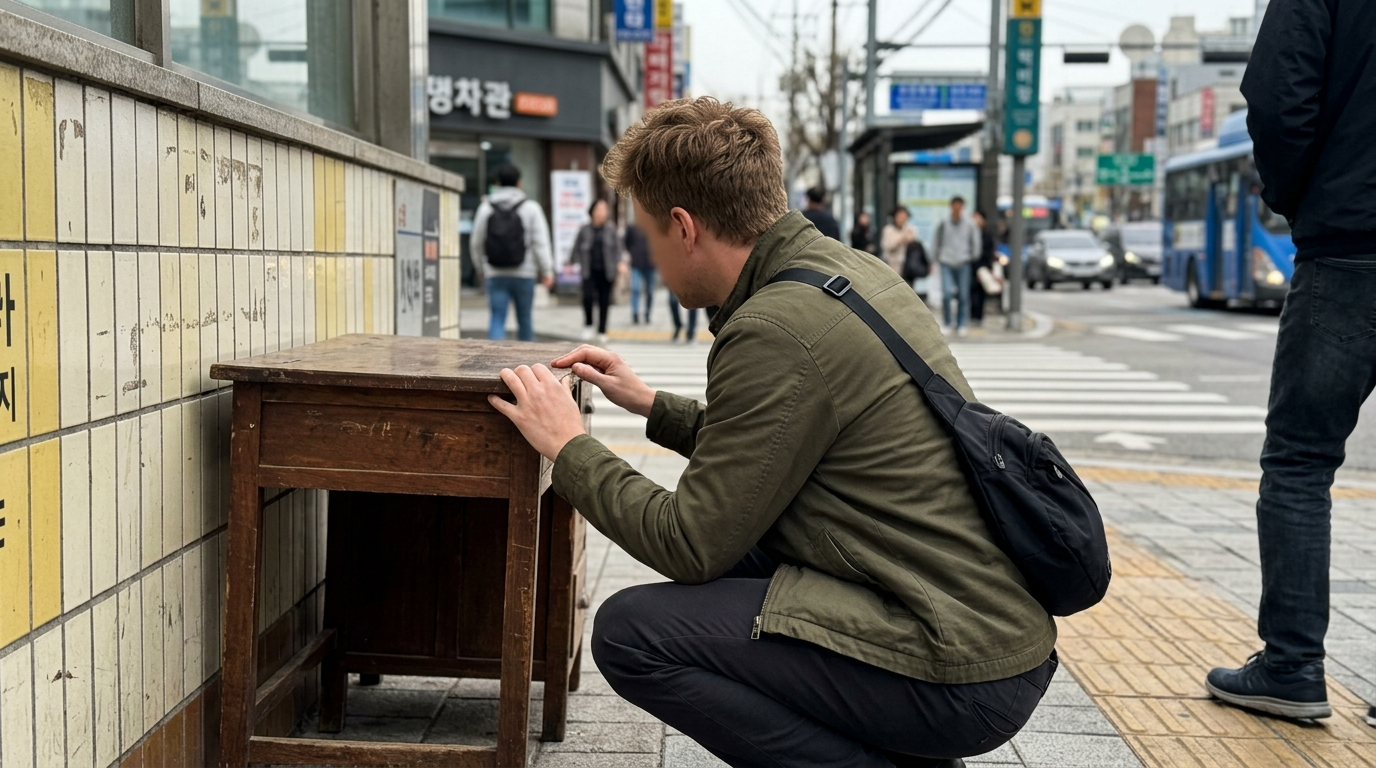
One cultural detail that catches people off guard: don’t negotiate at the meetup. If you want a discount, ask in the chat before meeting. Showing up and asking for a lower price in person is considered rude and can hurt your Manner Temperature. Speed matters too. Korean trading culture values punctuality — being late or changing the meeting spot at the last minute is a fast way to get a negative review.
When you arrive and you’re not sure which person is the seller, there’s a phrase that’s become practically a national joke: “당근이세요?” (Danggeun-iseyo? — “Are you the Karrot?”). It works every time.
If You’re Buying: Which Platform Fits Your Situation
Not every secondhand market situation calls for Karrot. The right platform depends on what you’re buying and how you want to pay — and for Korea foreigners especially, the payment method often narrows the choice before anything else.
Furnishing an apartment from scratch? Karrot is the best bet. Furniture, appliances, and kitchen gear dominate the local listings, and face-to-face pickup means no shipping fees for bulky items. Many Koreans replace furniture not because it’s broken but because they want a different style — so the quality of secondhand items is often surprisingly high. Some items are even listed for free under 나눔 (sharing/giveaway), though those disappear within 30–60 seconds of posting.
Looking for electronics or branded items? Bunjang is stronger here. It has better filtering for product conditions, supports in-app payment with buyer protection, and handles shipping logistics. For high-value items like laptops, cameras, or K-pop merchandise, the extra layer of payment safety matters.
Need something niche or nationwide? Joonggonara has the largest total selection — musical instruments, car parts, textbooks, gym equipment. The trade-off is that scam risk was historically higher (though the platform has added verified accounts and safe payment in recent years), and shipping costs eat into whatever you saved on the item price.
Payment is the wild card for all three. On Karrot, most transactions in 2026 happen via bank transfer (Toss or KakaoBank) or Karrot Pay. Cash is rare. If you don’t have a Korean bank account yet, you’ll need to ask the seller if they accept cash — and some won’t. If a missing bank account is what stalls your first deal, a few other early setup steps are probably still open too.
If You’re Selling or Leaving Korea: The Fastest Path
This is actually where the secondhand market in Korea works most smoothly for foreigners. If you’re leaving Korea and need to clear out an apartment fast, listing items on Karrot gets results within hours — sometimes minutes. The hyperlocal model means your neighbors see the listing immediately, and pickup is just a walk down the hallway or across the parking lot.
Pricing strategy matters. Check what similar items are listed for in your neighborhood, then price slightly below the average. If you want items gone within 24 hours, price aggressively — or list them as 나눔 (free). Koreans prefer items that are priced to sell, not items with negotiation baked in. If you’re open to offers, write “네고 O” (negotiation OK). If not, write “네고 X” (fixed price).
There’s a practical reason why free giveaways move so fast: in Korea, disposing of large items officially requires purchasing a paid sticker from the local district office. Giving away a usable item on Karrot saves the seller that disposal fee and gives the buyer something for free. It’s a win on both sides, and it’s deeply embedded in how the platform works.
When creating a listing, write a short description — even if it’s partially in English — and include clear photos. State the condition. If you’re a foreigner, saying so in the description (“외국인입니다, 영어 가능합니다”) can actually help. Some Korean buyers are curious to practice English, and knowing you’re a foreigner explains any Korean language gaps in the listing.
The Safety Layer Most People Skip
The secondhand market Korea foreigners navigate feels safe on the surface — and Karrot’s hyperlocal model genuinely makes it safer than most platforms because you’re dealing with verified neighbors. But safety gaps still exist — especially for foreigners who may not know the warning signs.
Always check Manner Temperature before agreeing to meet. A score above 36.5°C is normal. A score below 36.0°C means multiple people have reported negative experiences. Skip those sellers entirely.
Meet in public places — subway exits, convenience store fronts, apartment complex lobbies. Never go to someone’s private home for a first transaction. If a seller insists on wire transfer before meeting and refuses to do face-to-face, that’s a red flag on any platform.
On Joonggonara, use the “safe transaction” (안심결제) button whenever possible. It holds the payment in escrow until both sides confirm the deal is complete. This costs a small fee but eliminates the most common scam — someone taking payment and never showing up.
If something does go wrong, Karrot has an in-app report function and cooperates with Korean police. You can also call 112 (press 7 for the foreigner interpretation service) or the immigration helpline at 1345 for multilingual support.
One more thing. Karrot’s community section (동네생활) includes meetup groups for hiking, language exchange, and hobby activities. Some of these are legitimate neighborhood groups. But there have been reports of cult-related recruitment using meetup boards. If anyone pressures you to attend a gathering that feels off, walk away.
A Few Things Worth Clarifying
Do I need an ARC card to use Karrot?
Not for basic Karrot registration — a Korean phone number is enough to enter the secondhand market Korea foreigners use most. But Karrot Pay and identity verification for high-value features require an ARC-verified phone account. If you’re on a tourist SIM, you can browse and chat, but payment options will be limited. For more on how verification chains work, see why many services fail without proper phone setup.
Can I use Karrot without speaking Korean?
The menu interface supports English. Listings and seller chats are almost entirely in Korean. Papago (Naver’s translation app) handles most of the gap. Keep a list of Korean search terms for the items you need — searching in Korean returns dramatically more results than searching in English. Photos and prices are intuitive enough for basic transactions even without fluency.
Where to Go From Here
Korea’s secondhand market runs on three platforms, each with different strengths. Karrot works best for local, face-to-face deals on everyday items — furniture, appliances, kitchen gear. Bunjang handles electronics and branded goods with built-in payment protection. Joonggonara covers the broadest nationwide selection but requires more caution.
For any secondhand market Korea foreigners want to access, the three blocks — phone verification, location lock, and Korean-only chat — are real, but each one has a workaround. Get your phone verification sorted first. Set your Karrot locations strategically. Save Korean search terms for the items you need. And check Manner Temperature before you meet anyone.
The deals are genuinely good. Koreans replace items frequently, and the disposal system pushes quality goods into the secondhand market at prices that don’t make sense compared to what you’d pay new. Once the setup blocks are cleared, the app works exactly the way it should — fast, local, and surprisingly personal. You’ll know you’ve arrived when a stranger at a subway exit looks up from their phone and asks: “당근이세요?”
This guide covers general information about secondhand market platforms in Korea as of 2026. Platform policies, verification requirements, and app features may change. Always check the latest requirements on each platform’s official app or website before starting a transaction. For official consumer protection guidance, visit the Korea Consumer Agency (한국소비자원).