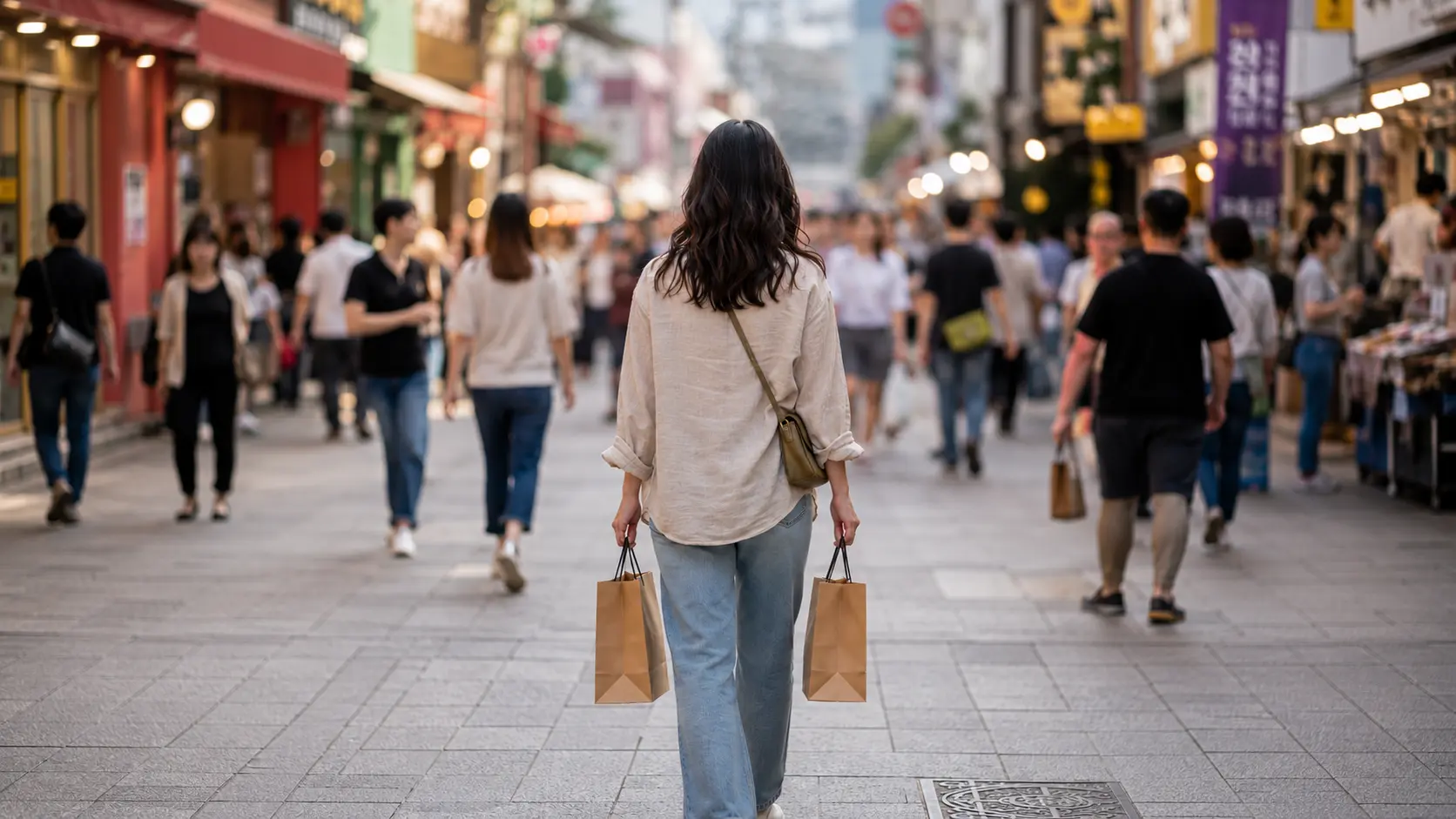
Why does the person ahead of you at the Olive Young (올리브영) register pay less than the shelf price — while you pay every won of it? The answer korea beauty shopping foreigners keep missing isn’t a membership card or a coupon. It’s a tax status, and it splits shoppers into completely different situations before anyone touches a single sheet mask.
I found this out the annoying way. My first year in Seoul, I watched a tourist next to me hand over her passport and get roughly 7% knocked off at the register. I asked the cashier for the same thing. She looked at my ARC and shook her head. Same store, same basket, different rules.
That’s trap one of three. The other two — convincing fakes sold outside official retail, and a shade range that may not include your skin tone at all — depend just as much on which kind of shopper you are. So instead of one generic checklist, this breaks into scenarios. Find yours below.
Why Korea Beauty Shopping Foreigners Need Different Playbooks
Most beauty shopping advice for Korea assumes everyone is a tourist with a departure flight booked. That assumption quietly decides everything — whether you qualify for tax-free prices, where it’s safe to buy, even which stores stock products for your skin tone.
Three variables actually matter. How long you’re staying in the country. Where you’re buying — an official retail chain, an open online marketplace, or a street stall. And what your complexion needs are, because the Korean market was built for a narrow shade spectrum and only some brands have moved past it.
Change any one of those, and the smart move changes with it. A tourist skipping the tax refund leaves real money on the counter. A resident chasing that same refund wastes time on something they can’t have. And anyone buying a trending serum from an unverified seller is playing a genuinely different game than someone shopping the shelves at a flagship store.
Here’s how each situation plays out.
Visiting Under 6 Months: The Tax Refund Window
If your total stay in Korea is under six months, you’re eligible for the tourist VAT refund — and in 2026, the bar for using it dropped hard. The minimum qualifying purchase is now ₩15,000 per transaction at a single participating store, down from the old ₩30,000 threshold. A couple of lip tints clears it.
The mechanics matter more than people expect. Korea’s shelf prices already include 10% VAT, and after operator fees you typically get around 5–8% of the purchase back. The smoothest version is the instant refund (즉시 환급): the cashier scans your physical passport and the tax comes off right at the register, no airport paperwork. Instant refunds work for purchases up to ₩1,000,000 per transaction, with a total cap around ₩5,000,000 for your whole stay.
Three details trip people up. First, a photo of your passport usually doesn’t cut it — bring the physical booklet on every shopping run. Second, only stores displaying a Tax Free (사후면세) sign participate, so small roadshops (로드샵) and market stalls may not. Third, if you take the airport-refund route instead of the instant one, products generally need to stay sealed and unopened until you leave the country. Cracking open that cushion compact in your hotel room can void the claim.
One more 2026 change worth knowing: the separate VAT refund for cosmetic and aesthetic medical procedures was discontinued as of January 1, 2026. Product shopping still qualifies. Procedures don’t. Refund rules shift, so it’s worth checking the official tourism guidance on the Visit Korea site or the Korea Customs Service before a big haul.
And if you’re weighing whether to pay in cash or card for all this, the fees stack differently than you’d guess — the breakdown in our currency exchange guide covers where the ₩30,000+ gaps hide.
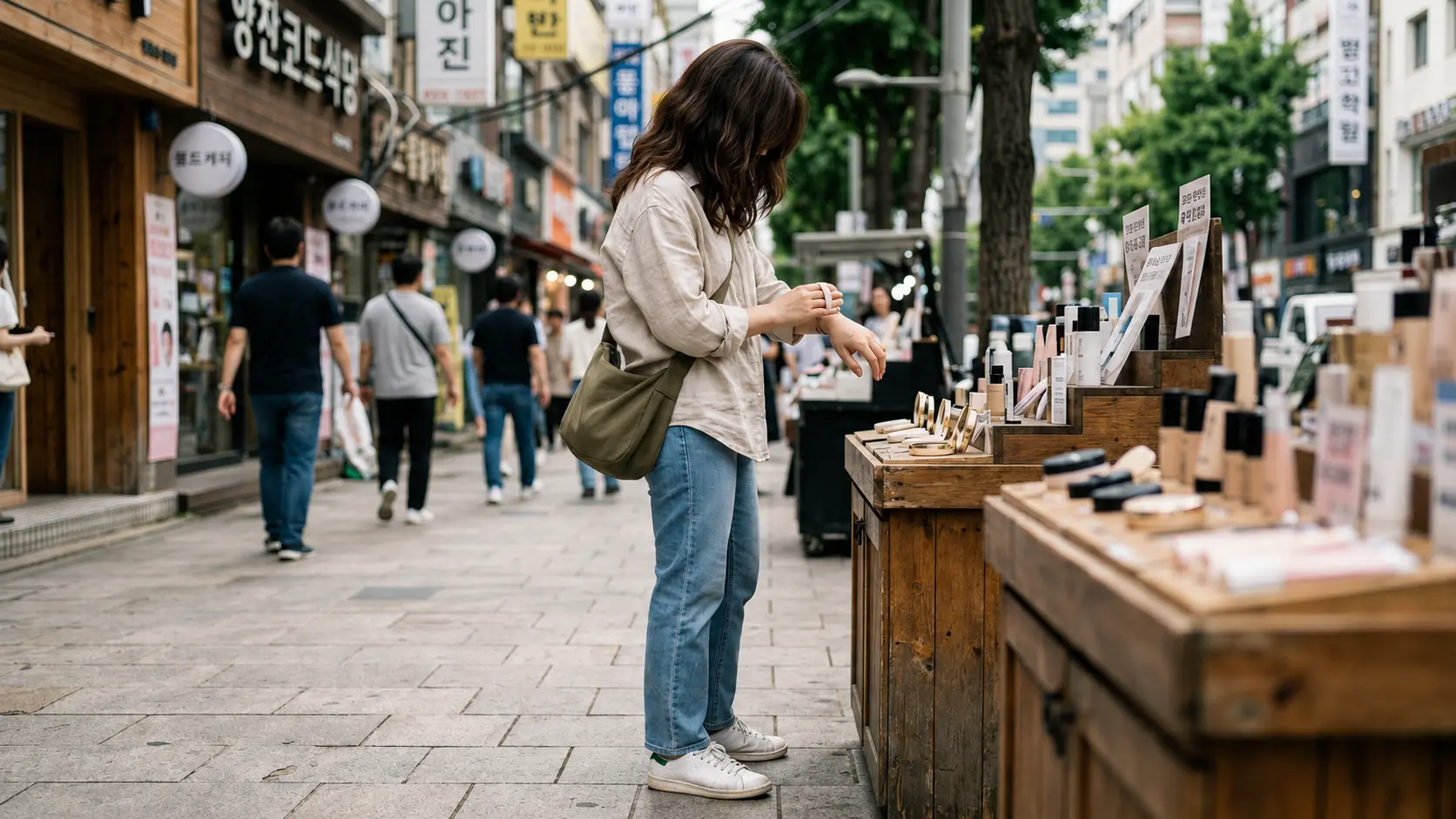
Living Here on an ARC: What Replaces the Refund
Now the situation I was standing in at that register. If you hold an Alien Registration Card (외국인등록증) and your stay runs six months or longer, the tourist refund isn’t yours. No workaround, no special counter. You pay the same tax residents pay, because for tax purposes, you effectively are one.
What replaces it isn’t nothing, though. Korean beauty retail runs on aggressive sale cycles, and residents can actually use them. Olive Young holds major discount events several times a year where popular items drop 30–50%, and the store’s membership points stack on top. Signing up typically needs a Korean phone number — one more reason that setup chain matters when you first arrive.
Official brand malls online run their own promotions, often deeper than in-store prices, and delivery inside Korea is fast enough that stocking up during a sale beats paying shelf price ever again. The catch is that most of these sites lean heavily on Korean-language checkout and local payment verification. If your card keeps bouncing at that last screen, the failure points are the same ones covered in our guide to paying in Korea as a foreigner.
Residents also get one quiet advantage tourists don’t: time. You can wait for restocks, chase the shade that sold out, and skip the panic-buying that airport departure dates create. Use it.
Buying Outside Official Stores: The Authenticity Problem
Here’s the part that surprises people who assume everything sold in Korea is automatically genuine. Inside official retail — the big chains, department stores, brand flagships — counterfeit risk is genuinely low, thanks to tight regulation and controlled distribution. Step outside that channel and the picture changes.
The K-beauty counterfeit problem has exploded alongside the export boom. Reported cases of fake Korean cosmetics circulating in overseas online markets jumped from around 16,800 in 2023 to over 36,000 in 2025, according to Korean intellectual property authorities. Most fakes are produced abroad, but some flow back — customs officials in Incheon have seized counterfeit premium creams that were imported and listed on Korean e-commerce sites as authentic.
For a shopper on the ground, the risk zones are specific: unauthorized third-party sellers on open marketplaces, non-chain cosmetic shops in some underground shopping arcades, and street stalls selling trending brands at prices that seem too kind. The health angle isn’t theoretical either — counterfeit cosmetics skip safety testing entirely, and fake eye and lip products have been linked to infections and allergic reactions. Korea’s Ministry of Food and Drug Safety regulates legitimate cosmetics; fakes answer to no one.
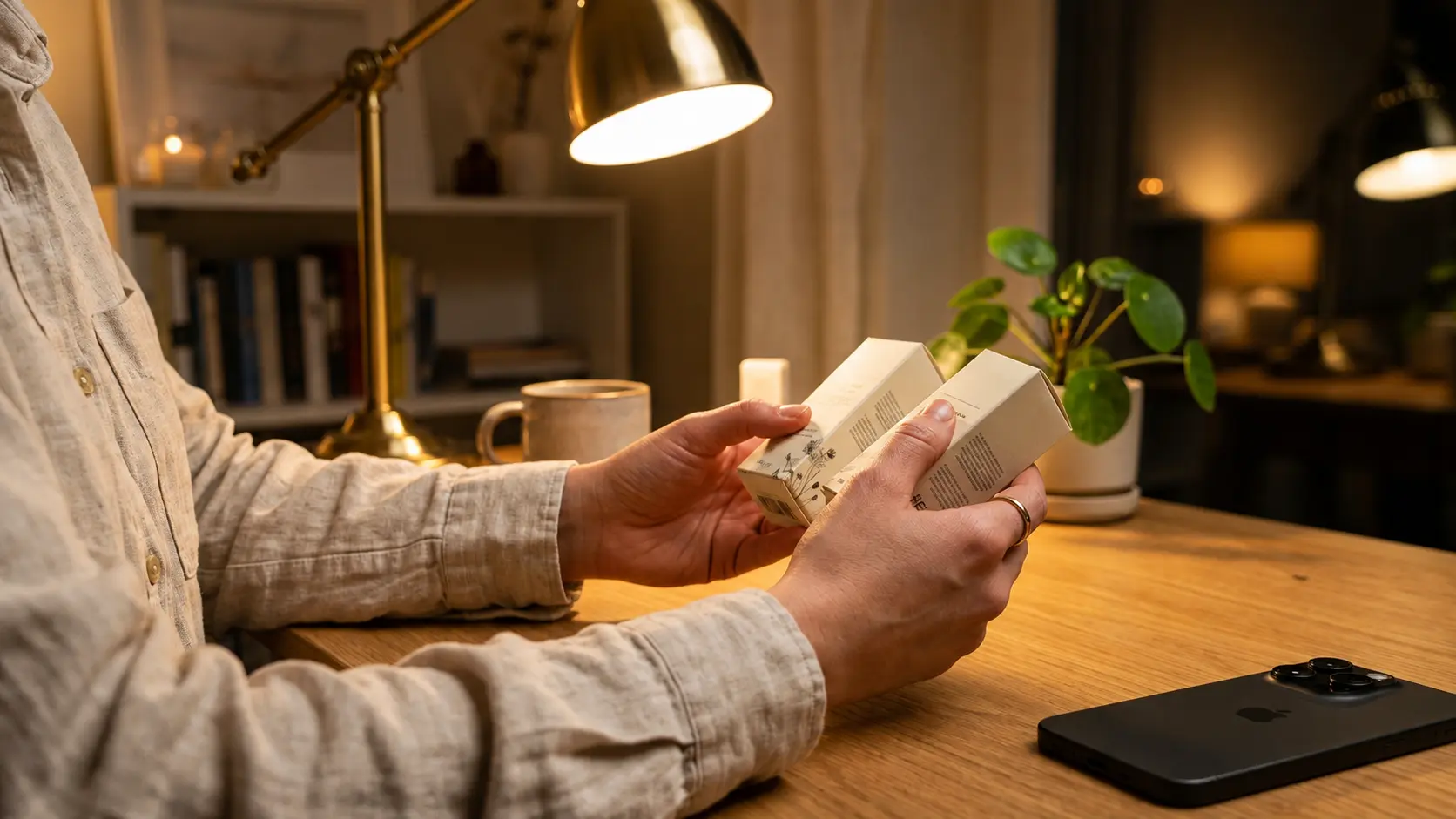
Two habits keep you safe. Buy complexion and eye products only from official channels. And for premium brands, check the hologram authentication sticker (정품 인증 스티커) — several major labels use scannable tags that verify through an app, and a sticker that scans to nowhere is your answer.
The Shade Gap That Cuts Across Every Scenario
This one hits tourists and residents equally, and almost no shopping guide mentions it before you’re standing at the tester wall. Korean complexion products — foundations, cushions, BB creams — were built for the domestic market, and for years the standard range was around three shades. Three.
Most Korean shade systems run on numbers from roughly 13 (very fair) up through 21–25 (the most common range domestically), with darker options thinning out fast above that. If your skin is tan or deep, whole tester walls may simply not include you. I’m on the medium end and still spent my first year swiping shades on the back of my hand that all read a size too pale.
It’s changing, unevenly. A few brands have pushed ranges to 20, 30, even 40 shades after international pressure, and Seoul now has custom shade-matching services — Amorepacific’s flagship spaces near Yongsan Station and in Seongsu formulate foundation to your exact tone on site, with hundreds of testers. Stores in Itaewon that cater to international residents also stock Western complexion brands as a fallback.
The practical move: test in person before committing, and don’t assume a brand’s online swatch chart reflects what’s physically stocked in Korean stores. Some expanded shade ranges ship only to overseas markets, which stings, but knowing it saves you an empty-handed trip.
Not Sure Which Shopper You Are? Start Here
If your situation is fuzzy — say you arrived on one visa and might extend, or you’re between statuses — the safe default covers you either way.
Shop official retail chains and department stores. Carry your physical passport if there’s any chance you qualify for the refund; the worst case is a polite no at the register. Ask before opening anything you might claim at the airport. Test complexion shades in person. And treat any deal from an unofficial seller that undercuts the flagship price by a third as a warning label, not a bargain.
One habit worth borrowing from grocery runs applies here too: the checkout flow at big Korean retail chains has its own quirks — bags, payment order, membership prompts in Korean — and they’re nearly identical to what happens at a beauty chain register. Our grocery mart guide walks through that rhythm if checkout in Korea still feels like a pop quiz.
Two Questions Worth Clearing Up
Can I get the tourist tax refund if I live in Korea with an ARC?
Generally no. The refund program is for foreign visitors whose total stay is under six months, and holding long-term residence status places you outside it. Overseas Koreans have a separate, narrower eligibility path. If your status is borderline, the store’s system decides when your passport is scanned — arguing at the register won’t change what it says.
Is it safe to buy K-beauty from street stalls in tourist districts?
For sealed products from recognizable brands at plausible prices, many stalls are legitimate resellers. But the counterfeit cases that do surface in Korea concentrate exactly there and in unofficial online listings — and eye or lip fakes carry real health risks. If a trending product costs dramatically less than at official stores, that gap is the tell. When in doubt, walk the extra block; and if a vendor only takes cash while every store around accepts cards, our street food guide explains why cash-only spots still exist in Korea and how to handle them.
Where This Leaves You
Beauty shopping in Korea rewards knowing which shopper you are before you walk in. Tourists under six months: bring the passport, use the instant refund, keep airport-claim items sealed. Residents: skip the refund chase and ride the sale cycles instead. Everyone: stay inside official retail for anything that touches your eyes or lips, and test shades on your actual skin before believing a chart.
None of these traps costs much to avoid. All of them cost something to fall into — a skipped 7% on a big haul, a fake serum, a cushion two shades off that lives in a drawer forever. Now you know where each one hides.
Eric Youn lived abroad for over 15 years and writes practical Korea living guides based on firsthand experience.