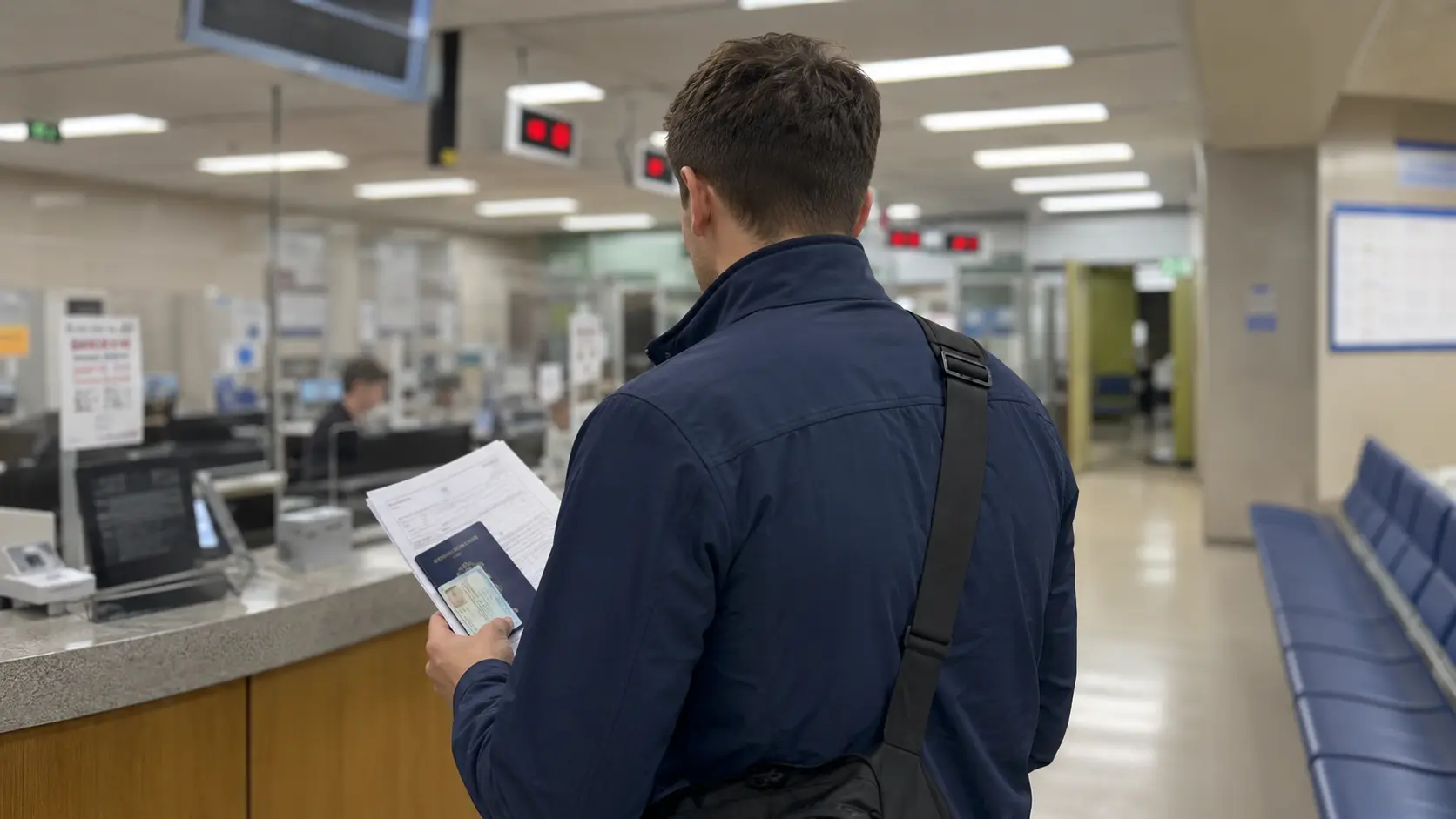
Converting a driving license Korea foreigners hold from back home sounds like one of the simpler tasks on the to-do list. Your license is valid. You’ve been driving for years. The process should take a couple of hours, maybe a morning at most.
Then you show up at the examination office and get turned away at the document window.
The problem is rarely the license itself. It’s the paperwork around it — an embassy certificate your embassy no longer issues, an apostille you can only get from your home country, or an entry-exit record you didn’t know existed. More than 100 countries have mutual recognition agreements with Korea, and yet every week, foreigners walk into KOROAD (도로교통공단) offices with incomplete files and leave empty-handed. The gap between “you can exchange your license” and “you actually walk out with a Korean license” is where most of the frustration sits.
Before You Arrive: What to Prepare at Home
This is the step that most people skip entirely — and it’s the single biggest reason a driving license Korea foreigners try to convert gets delayed by weeks.
Korea requires proof that your foreign license is genuine. That proof usually comes in one of two forms: an embassy certificate (a confirmation letter from your country’s embassy in Korea) or an apostille (a government-issued authentication attached to a certified copy of your license). You only need one accepted document — not both.
Here’s where things break. Several major embassies in Korea no longer issue license confirmation certificates. The American Embassy, British Embassy, and Finnish Embassy have all stopped this service. If you hold a license from the US, UK, or Finland, your practical option is usually an apostille — and apostilles cannot be processed inside Korea. You have to get one before you leave home, or arrange for someone back home to process it and mail it to you.
The apostille itself needs to be attached to a certified or notarized copy of your license, issued in Korean or English, and it must be less than one year old when you submit it. Processing time varies by country, but two to four weeks is common. Some people report longer waits depending on the state or regional office handling the request.
If your embassy in Korea does still issue confirmation certificates, the process is simpler. You visit the embassy with your original license and passport, request a certificate confirming license validity, and receive a document in Korean or English. Check your embassy’s website before assuming this service is available — policies change without much notice.
There’s a third route people overlook: KOROAD also accepts a license confirmation issued in Korean or English by the Korean embassy in the country that issued your license. Whichever document you use — embassy confirmation or apostille — it has to be dated within one year of your application.
First Weeks in Korea: The ARC and Document Window
You cannot exchange a foreign license without a valid Alien Registration Card (외국인등록증). That’s a hard requirement — and it shapes the entire driving license Korea foreigners conversion timeline. Short-term visitors staying fewer than 90 days without completing foreigner registration are not eligible for the exchange at all.
This creates a timing issue that catches people off guard. ARC processing typically takes two to three weeks after you apply at the immigration office (출입국관리사무소). During that window, you can’t start the license exchange. The ARC card guide covers what still fails even after approval — useful context if you’re waiting on yours. If you also need an International Driving Permit (IDP) to drive in the meantime, that needs to have been arranged before you left home — IDPs issued by your home country’s automobile association are valid in Korea for one year from your date of entry.
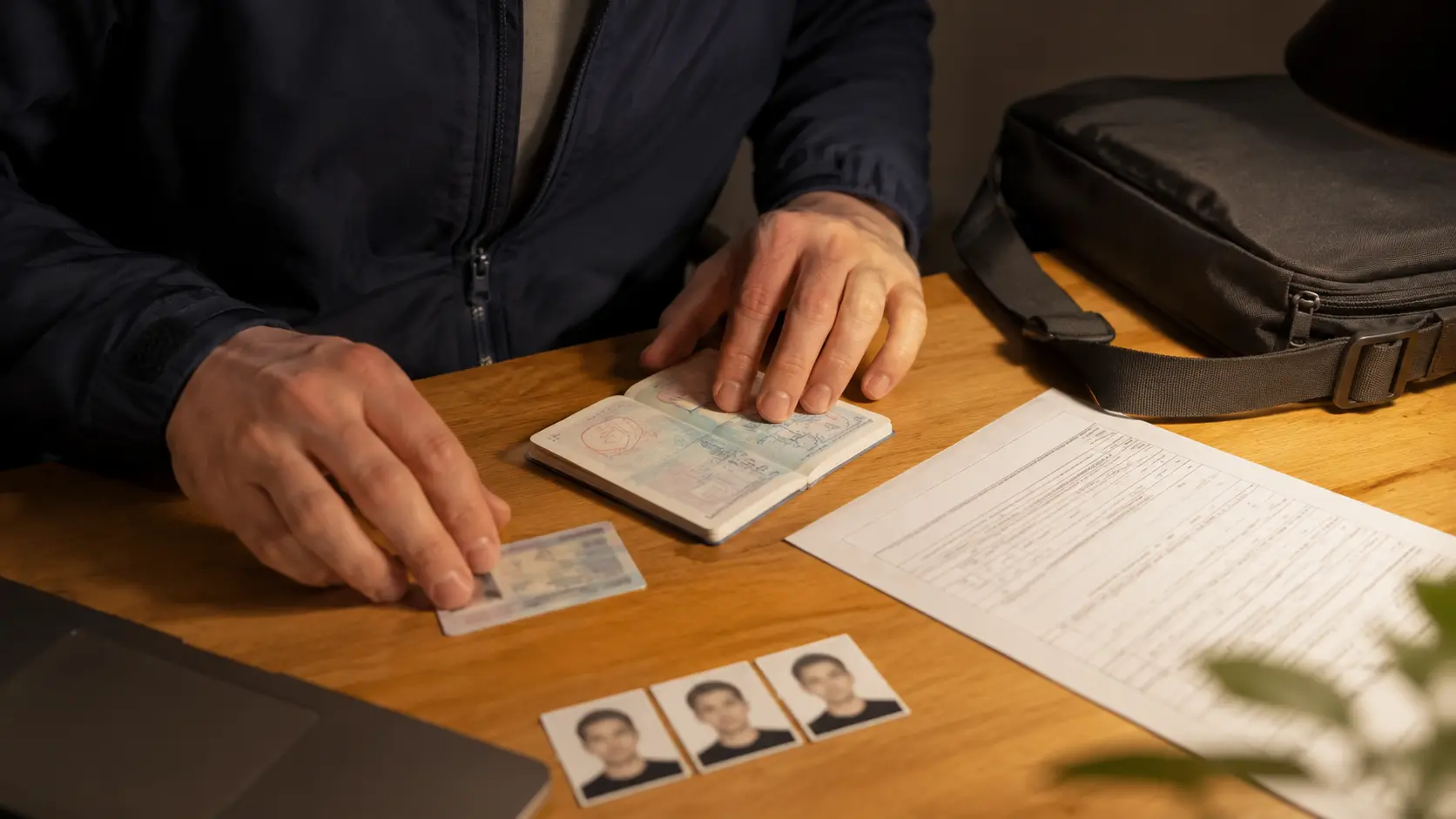
Once your ARC arrives, you’ll also need a Certificate of Entry and Exit (출입국사실증명서). This document shows your travel history from date of birth to present. You can get it at your local community center (주민센터), district office (구청), or immigration office. It’s quick — usually same-day — but people don’t always know they need it until they’re standing at the license counter.
One more thing. If you obtained your license in a country different from your nationality, you’ll need to prove you lived in that country for at least 90 days. A permanent residence card, long-term visa, employment proof, or school enrollment record can serve as evidence. Without it, the office may reject the exchange.
At the License Office: What Actually Happens
The exchange happens at a Driver’s License Examination Office (운전면허시험장) — not a regular police station, not an immigration office. For anyone navigating the driving license Korea foreigners exchange process, the main Seoul locations are the Gangnam, Seobu, and Dobong offices. Each has a dedicated foreign license counter.
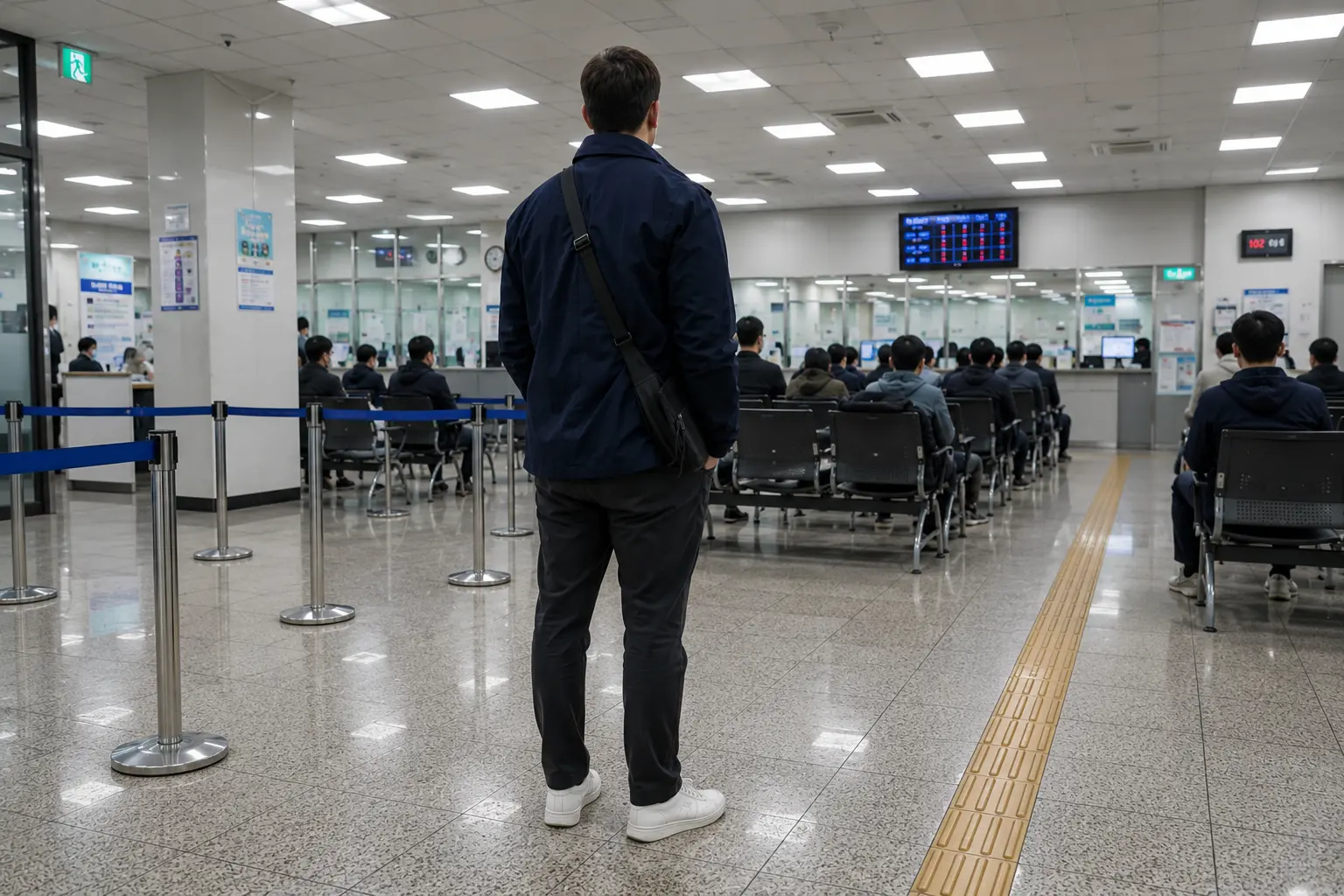
You walk in, take a number at the foreign license window, and submit your documents. The stack includes your original foreign license, passport, ARC, three passport-sized photos (3.5cm × 4.5cm, taken within the last six months), your embassy certificate or apostille, the entry-exit certificate, and the application form you fill out on-site.
What happens next depends on your country.
If your license was issued by an “acknowledged country” (인정 국가) — meaning a country with a mutual recognition agreement with Korea — you skip the written test entirely. You only take an aptitude test, which is essentially a basic health check: vision screening, color perception, and a hearing test. The whole thing takes minutes.
If your country is not on the acknowledged list, you also need to pass a written exam. It’s 40 multiple-choice questions, available in Korean, English, Chinese, and Vietnamese. You need 60% or higher to pass. Study materials are available on the KOROAD website, and there are roughly 1,000 practice questions in the question bank.
A few country-specific exceptions are worth knowing. US license holders from Oregon and Idaho fall under the acknowledged country list but still need to take the written test. Australian license holders under 25 must take the written test even though Australia is an acknowledged country. New Zealand restricted license holders also require the written test. These exceptions aren’t always posted clearly, so checking the KOROAD foreign license exchange page before your visit prevents surprises.
If everything checks out, you walk out with a Korean driver’s license the same day. The whole process, assuming your documents are in order, typically takes two to three hours including wait time. The issuance fee is ₩10,000 for the standard card or ₩15,000 for the mobile IC card, plus a separate aptitude-test fee of ₩6,000 (₩7,000 for Class 1 large or special licenses).
3 Assumptions That Break the Process
Most delays in the driving license Korea foreigners conversion process don’t come from the test or the health check. They come from assumptions people make weeks earlier.
Assumption 1: “My embassy will handle the certificate.” This used to be true for most countries. It isn’t anymore. The US, UK, Hong Kong, Finland, the Netherlands, and Colombia are among the countries whose embassies in Korea no longer issue license confirmation certificates. If you’re from one of these countries and you didn’t get an apostille before arriving, you’re looking at a minimum two-week delay while someone at home processes it — and that’s if you have someone who can do it immediately.
One thing worth knowing if you’re troubleshooting this from Korea: it is not possible to have foreign documents apostilled inside South Korea. The apostille must come from the country that issued the license. There are document processing services that can handle this remotely, but they add cost and time.
Assumption 2: “I’ll keep my original license.” Under Korea’s license exchange rules, you’re required to surrender your original foreign license when you receive the Korean one. This surprises people who expected to carry both. You can get it back — but only under specific conditions: when you’re departing Korea, if you cancel your Korean license voluntarily, or if your diplomatic mission requests it. Foreign licenses not claimed within 10 years are disposed of.
A workaround that shows up in expat forums: some people bring a printed flight itinerary showing near-future travel. Offices have reportedly allowed foreigners to keep their original license when the itinerary suggests they’re leaving soon. This isn’t official policy, and results vary by location.
The third assumption is just as common: “Any valid license qualifies.” It doesn’t. The license must be a full, valid license — not a learner’s permit, provisional license, temporary license, or probationary permit. If your license expired before your exchange appointment, the entire process stops. If the license was issued in a third country (not your nationality), you’ll need 90-day residency proof for that country. And if there’s any visible damage or if the print quality is poor, the examiner can request additional verification documents.
IDP vs Full Conversion — Which Path Fits Your Stay
An International Driving Permit is not a license. It’s a translation document — a multilingual booklet that makes your existing license readable in Korea. It’s valid for one year from your date of entry, and you must carry both the IDP and your original license at all times while driving.
For short-term stays under 90 days, an IDP is usually enough. You don’t need to register as a foreigner, you don’t need an ARC, and you can rent a car at Jeju or anywhere else in Korea with just the IDP and your passport.
For stays over one year, the math changes. Your IDP expires, and renewing it from inside Korea is not straightforward. More importantly, using an IDP as a long-term resident when you should have converted can be treated as driving without a valid license. The driving license Korea foreigners receive through the exchange is valid for 10 years (5 years if you are 65 to 74 at issuance or renewal, and 3 years from age 75), so the conversion pays for itself quickly.
There’s a middle ground that trips people up: the six-month to one-year range. You’re in Korea long enough that an IDP will cover you, but you might also be planning to stay longer. If there’s any chance you’ll extend, starting the document process early — especially the apostille — saves you from a gap period where you can’t legally drive.
After the Exchange: What Changes and What Doesn’t
Your Korean license is a Class 2 Ordinary license (2종 보통), which covers standard passenger vehicles. The driving license Korea foreigners exchange for through KOROAD won’t automatically match a higher-class license from back home — with one exception. Licenses from Belgium, Poland, Spain, and Italy can be exchanged for equivalent-type licenses under specific mutual recognition agreements.
The Korean license doubles as a secondary form of ID inside Korea. It won’t replace your ARC for immigration purposes, but it’s accepted at convenience stores for age verification, at banks for certain transactions, and in situations where carrying your passport feels unnecessary.
Korean driving rules have some differences worth noting. Right-hand traffic, metric speed limits, and specific intersection rules apply. But the biggest adjustment for most foreigners isn’t the rules — it’s navigation. Korean GPS apps like Naver Map (네이버 지도) and Kakao Map (카카오맵) handle Korean road systems far better than Google Maps. Setting up one of these apps before your first drive makes a real difference. For a detailed comparison, the Naver Map vs Kakao Map guide covers which one works better in different situations.
If you need to drive internationally while holding a Korean license, you can apply for a Korean-issued IDP at any regional examination office, police station, or the IDP issuance center at Incheon International Airport. The fee is ₩8,500, and you’ll need your Korean license, passport, and a recent photo.
Questions That Come Up Most
Can I get my original foreign license back after the exchange?
Yes, but only under certain conditions. If you’re leaving Korea, you can reclaim your original license at the same office where you did the exchange — bring your flight ticket and Korean license. You can also get it back by voluntarily canceling your Korean license, or through a request from your diplomatic mission. Unclaimed licenses are kept for 10 years before being disposed of.
What if my license is not in English or Korean?
You’ll need a notarized translation. The translation must be in Korean or English, and the notarization should ideally come from your embassy or a certified translation service. Some examination offices are stricter about this than others, so calling the office beforehand to confirm their specific requirements saves a wasted trip. For understanding common Korean terms you might encounter in the process, the Korean terms in official documents guide breaks down the vocabulary that shows up most often.
Do I need to take a driving test to exchange my license?
No road test or course driving test is required for the driving license Korea foreigners exchange process. If your country is on the acknowledged list, you only take a basic health screening. If your country is not acknowledged, you take the health screening plus a 40-question written test. The full driving test (written exam, course test, road test) only applies if you’re getting a Korean license from scratch without any foreign license to exchange.
Before You Go: What to Verify
Before heading to the KOROAD office to complete the driving license Korea foreigners exchange, run through this list. Missing even one item can mean a return trip.
Check whether your embassy in Korea still issues license confirmation certificates — if not, you need an apostille from your home country (or a confirmation from the Korean embassy in the country that issued your license), arranged before you arrive. Make sure your foreign license is valid and unexpired, and that it’s a full license (not learner’s, provisional, or temporary). Confirm your ARC has been issued — the exchange cannot proceed without it.
Prepare three passport-sized color photos (3.5cm × 4.5cm), taken within the last six months. Obtain your Certificate of Entry and Exit from a community center (주민센터) or district office. If your license was issued by a country other than your nationality, gather 90-day residency proof for that country.
Look up your nearest Driver’s License Examination Office on the KOROAD office locator — not every location has a foreign license counter, so call ahead. Bring your passport with entry stamps visible. Budget two to three hours for the entire process if documents are complete.
Whichever proof document you use, double-check that it was issued within one year of your application — this matters most if you’re from the US, UK, Hong Kong, Finland, the Netherlands, or Colombia, where an apostille is the usual route. If you’re from Australia and under 25, or from New Zealand with a restricted license, prepare for the written test even though your country is on the acknowledged list. For a full understanding of how ARC timing affects administrative processes like this one, the ARC card delay article covers the common timeline gaps, and the Korean address system guide explains the address format you’ll need for the application form. A license tends to be one of the later steps of settling in, which makes it a good moment to check what else from your first month is still open.
Where to Go From Here
The driving license Korea foreigners exchange process itself is not complicated. Paperwork gets reviewed, you do a quick health check, maybe a written test, and you walk out with a Korean license. The whole thing can genuinely take under three hours.
The pitfalls are all upstream. An apostille you didn’t know you needed. An ARC that’s still processing. An embassy service that quietly stopped operating. Each one can add days or weeks to a process that, with the right preparation, fits into a single morning.
Start with the document furthest from your control — the apostille or embassy certificate — and work backward. Everything else falls into place around it.
This article provides general guidance based on publicly available information from KOROAD and official Korean government sources. Driving license regulations, acknowledged country lists, and embassy services may change. For the most current requirements, contact the Korea Road Traffic Authority (KOROAD) directly or visit your nearest Driver’s License Examination Office. This content is not legal advice — consult a licensed professional for decisions specific to your situation.