
The name on the gate matters less than the paperwork behind it. Choosing a language school in Korea usually comes down to four lines buried in a PDF that most applicants never open: the minimum number of terms, the refund table, the class-size cap, and what happens to your visa if you leave halfway.
Rankings won’t show you any of that. Two programs can both run ten weeks and 200 hours, and still end up more than ₩1.5 million apart over six months. Before rent. One caps classes at about 13 students. Another fills rooms closer to 16.
And the timing is tight right now. Spring is the big intake, and at Yonsei, for example, applications for the March 2027 term close on January 15, with tuition due a week later. So the decision is being made in the next nine weeks, whether you feel ready or not. Below are three common situations, the safest default if you can’t tell which one is yours, and a six-point check to run before any money leaves your account.
Why “Which School Is Best?” Has No Single Answer
Here’s something that surprises people. Most university-run options for a language school in Korea are built on almost the same frame: four terms a year, ten weeks per term, four hours a day, 200 hours in total. Yonsei, Seoul National University, Sogang, and Dong-A University in Busan all publish that same structure.
When the frame is identical, the differences hide at the edges. Price. Class size. How many terms you must register for on a D-4 visa. How strict attendance is (Yonsei requires 80% of class hours to move up a level). And whether a university you might apply to later accepts that institute’s completion level in place of a TOPIK score.
There’s also one check that comes before all of them: certification. Every year the Ministry of Education and the Ministry of Justice evaluate schools under the International Education Quality Assurance System (IEQAS). In the results announced in February 2026, 123 Korean language institutes were certified, while four language programs and sixteen degree programs were barred from issuing new student visas for one year starting in the second half of 2026. An admission letter from a restricted school doesn’t guarantee a visa. Check the current list on Study in Korea before you pay anything, and check again if your start date is near a new announcement.
Once that’s cleared, the useful question isn’t “which school is best.” It’s “what am I actually coming here to do?”
If You’re Aiming for a Korean University Degree
Then the institute is not really a language course. It’s an entrance route.
Many universities accept completion of a certain level at their own language institute as proof of Korean ability. Yonsei’s 2027 undergraduate guide asks for TOPIK level 5 or completion of level 5 at the Yonsei Korean Language Institute. Pusan National University lists TOPIK level 3 or higher, or completion of level 3 or higher at its own Language Education Institute, with some departments asking for more. Inside that university, the institute certificate can stand in for a test score. At a different university, it may count for nothing at all.
So for degree-seekers, the safest move is simple: pick the university first, then study at the language school attached to it, or confirm in writing that your target department accepts the level you’ll finish. This is the one situation where the “best” language school in Korea has a single answer: the one your university recognizes.
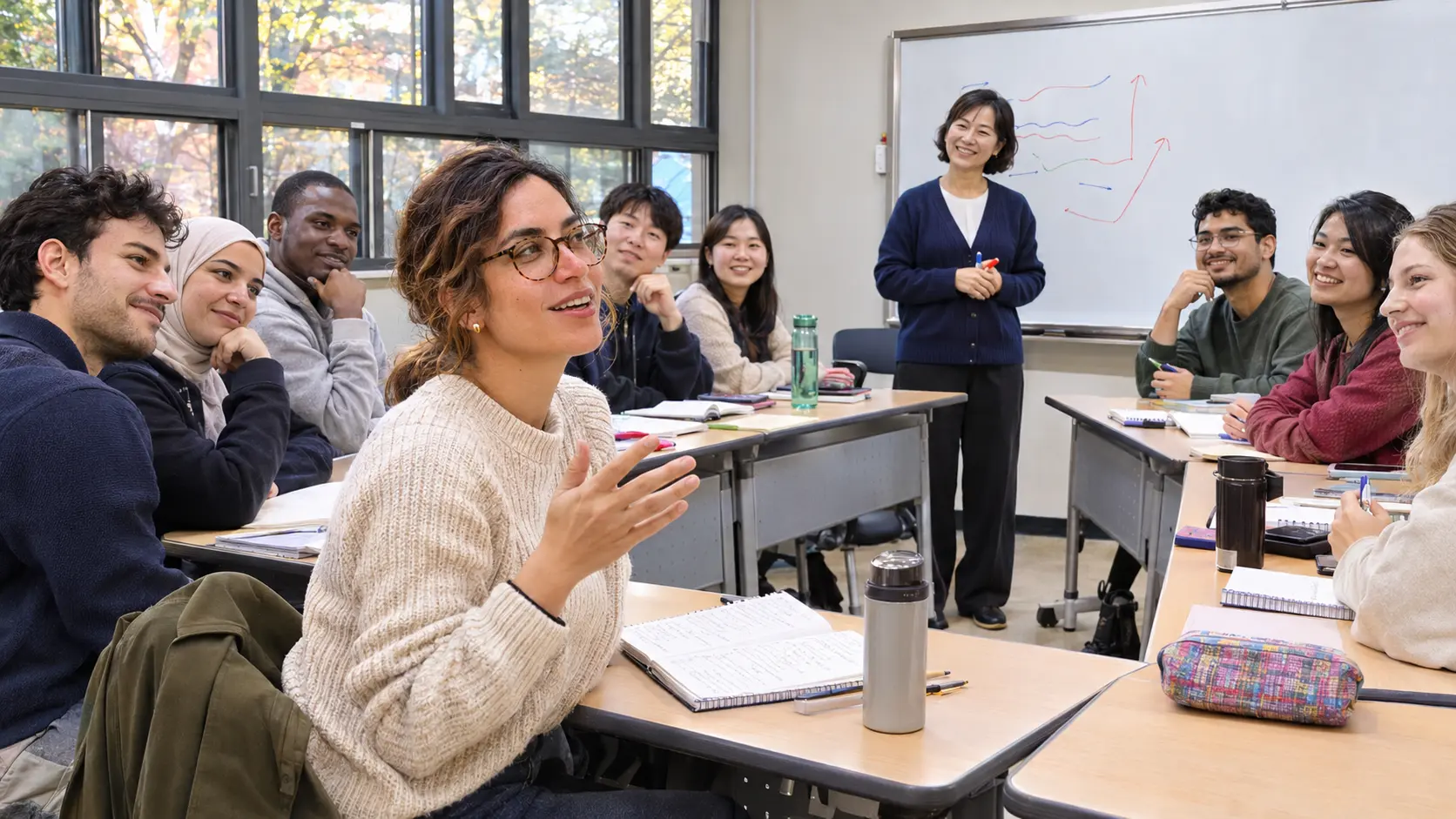
Then do the math on time. Programs typically run six levels, one level per ten-week term. Starting from zero, reaching level 5 takes five terms, which is about fifteen months if you never repeat a level. That “if” matters. At Yonsei, a student repeats the level when attendance falls below 80% or the average score drops below 60, and someone who fails the same level twice can’t continue at the institute. Build one spare term into your plan instead of assuming a perfect run.
The visa side, including when and how a D-4 changes to a D-2 once you’re admitted, is covered in D-2 vs D-4 Visa in Korea. If you’re weighing the institute dorm against a room off campus, Student Housing in Korea walks through how semester contracts change the real cost.
If You Want Six Months of Korean Life
This is the most common plan. And it’s the one where the fine print bites hardest.
Anything longer than 90 days generally means a D-4 visa, and schools set a minimum registration for D-4 applicants. Sogang asks for at least two terms. Yonsei asks for two terms from most countries but four terms, a full year, from a group of countries it lists separately. The University of Seoul requires four terms for applicants from Mongolia, Vietnam, and other countries designated by the Ministry of Justice. In practice, “six months” can quietly become “pay for twelve months up front,” depending on your passport.
The city you pick changes what a language school in Korea costs more than most people expect. Here’s a plain comparison using each school’s own published figures:
- Yonsei (Seoul), 2027: ₩1,960,000 per term plus a ₩130,000 application fee, so two terms come to ₩4,050,000.
- Dong-A University (Busan), as currently listed on its site: ₩1,200,000 per quarter plus a ₩50,000 screening fee, so two terms come to ₩2,450,000.
That’s a ₩1.6 million gap, and it doesn’t yet include textbooks, insurance, or housing. Neither number is “better.” Seoul gives you more programs and more of what a six-month stay is usually for. Busan stretches the same budget further.
Proof of funds also varies. Yonsei asks D-4 applicants for a bank balance of at least USD 10,000, Seoul National University asks for ₩10,000,000, and Hallym University lists USD 8,000. The school sets one figure and the embassy in your country may apply its own rules on top, so confirm both.
Two six-month markers are worth knowing before you book. Yonsei notes that D-4 students are enrolled in National Health Insurance after six months of residence, at their own cost. Part-time work on a D-4 also generally opens only after six months, and only with permission. A six-month student hits both right as the stay ends, so neither should be part of the budget. The rules are in Part-Time Work Permit in Korea.
One more thing for short stays: class size. You only get two terms, so the number of times you actually speak in class matters. Yonsei caps classes at about 13 and won’t open a class with fewer than 11. Seoul National University runs roughly 12 to 16. Dong-A lists about 15.
If a Job in Korea Is the Real Goal
Here the certificate on your wall matters more than the logo on it.
An institute’s “level 4” is not TOPIK level 4. Employers, and visa point systems such as the job-seeker visa, generally look at official test results like TOPIK rather than a school’s internal level. That shifts what you should look for in a language school in Korea. Does the institute run TOPIK preparation classes? The Catholic University of Korea, for example, operates a TOPIK II class for its language students. Does the term calendar line up with the TOPIK test dates you’re aiming for? Check the official schedule at topik.go.kr before committing to a start date.
Attendance becomes a career issue, too. Extending a D-4 stay typically requires a certificate showing an attendance rate of 70% or higher, and missing that can end the plan before any job search begins. Afternoon classes are often cheaper. Seoul National University lists ₩1,800,000 for its regular morning class and ₩1,650,000 for the afternoon class. At SNU, though, switching between the two is only allowed until two weeks before the term starts.
And think about where the jobs are. If the work you want is concentrated in Seoul, a cheaper term in another city may save money now and cost you networking time later.
Not Sure Yet? How to Vet Any Language School in Korea
Plenty of people arrive without a fixed plan, and that’s fine. The safe default is a certified, university-run program in the city you’d most like to live in, registered for the minimum number of terms your nationality allows, and chosen on paperwork rather than reputation.
Paperwork, specifically, means six things. Every one of them is published by the school. You just have to go looking.
| Check | What to look for | Where it’s usually written |
|---|---|---|
| 1. Certification | The language program (not just the university) is on the current IEQAS list | Study in Korea, Ministry of Education notices |
| 2. Class size | Maximum per class and the minimum needed to open one | Course overview page |
| 3. Term dates | Application close, tuition deadline, placement test, first class | Academic schedule |
| 4. Total cost | Tuition × minimum terms + application fee + textbooks + insurance | Fee or tuition page |
| 5. Housing | Dorm application window, which often runs on its own schedule | Dormitory page |
| 6. Refunds and visa | Refund percentage by class day, and what withdrawal does to a D-4 | Refund or regulations page |
Number six deserves a closer look, because it’s the one that turns a bad fit into an expensive one. Yonsei’s 2027 table refunds 80% in the first eight class days, then steps down to 50%, 30%, and 25%, with nothing back after day 43. The application fee isn’t refundable at any of the schools checked for this guide. Seoul National University adds the part that really matters: after a refund or deferral request, the D-4 is cancelled within two weeks, and under government policy you can’t transfer to another school after an admission is cancelled.
Put plainly, “I’ll try one language school in Korea and switch if I don’t like it” isn’t a real plan on a D-4. Choose as if you’re staying for the full registration. Once the school is settled, the next pressure point is the first month itself, when the paperwork, the phone, and the bank all ask for your attention in the same week.
Questions People Ask Before Paying
Can I attend a language school in Korea without a D-4 visa?
For a single short term, sometimes. Some institutes accept students who enter on another status, and Yonsei, for instance, doesn’t ask non-D-4 applicants to submit visa documents at all. Whether you can stay long enough depends on your nationality’s entry rules, so check those before you book. If your country uses K-ETA, start with Korea K-ETA Exemption.
Do I have to pay for every term at once?
Often, yes, for D-4 applicants. Schools usually collect tuition for the minimum registration period before they issue the admission certificate you need for the visa, and Seoul National University’s intensive course asks D-4 applicants to pay three sessions at once. That’s one more reason to read the refund table before the transfer, not after.
Can I change schools after my first term?
Moving between terms is not the same as quitting mid-term, but it still involves two schools and an immigration filing. Ask the new school’s visa office how they handle transfers before you tell your current school anything, because a withdrawal can trigger visa cancellation on its own timeline.
Three Emails to Send This Week
If you’ve narrowed it to two or three schools, don’t wait for the application portal to open. Write to each admissions office and ask the same three things:
- How many terms must someone from my country register for on a D-4?
- When does the spring dormitory application open, and is it first come, first served?
- Can you send the refund table for the 2027 terms?
How a school replies tells you almost as much as what it says. A school that responds clearly in a few days is usually the school that answers clearly when something goes wrong in week three. Save every reply as a PDF. Then, once you’re accepted, Korea Student Arrival Checklist lays out what to do, in order, after you land.
What This Comes Down To
A language school in Korea is a contract more than a classroom. Degree-seekers should follow the university they want. Six-month learners should read the minimum terms and the funds rule for their passport. Job-seekers should plan around TOPIK, not institute levels.
Everyone else? Pick a certified program in a city you’d enjoy, run the six checks, and pay only after you’ve read the refund page. Schools update fees and rules every term, so treat every number here as a starting point and confirm it on the school’s own site.