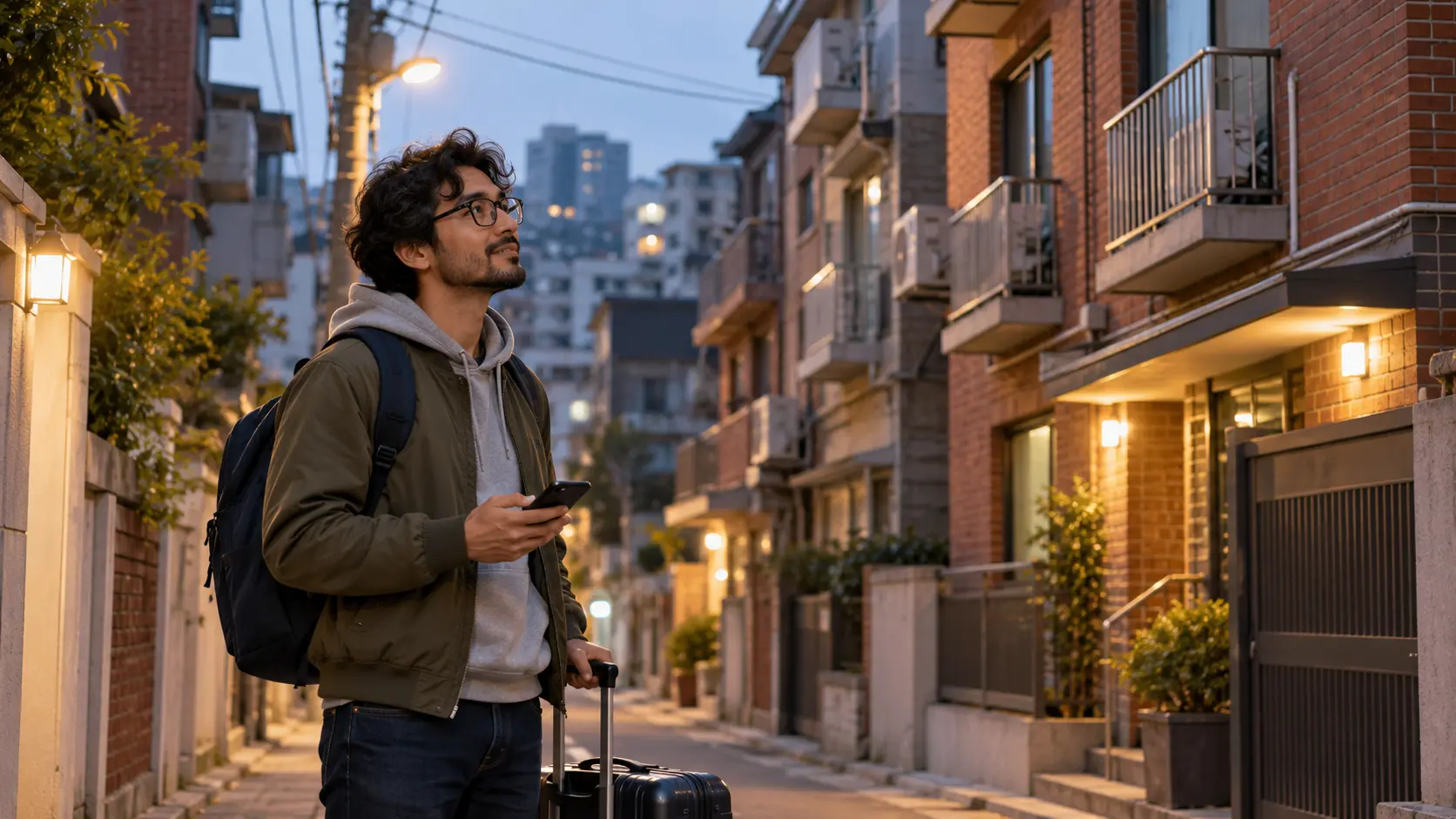
On paper, the dorm looks like the sensible, cheap choice and the one-room looks like freedom. Both can be true. But student housing in Korea is almost never priced the way people compare it, which is by the month, and that one habit is where most of the bad decisions start.
A dorm bills you once, for a fixed block of nights that usually ends before winter break. A one-room near campus bills you every month, adds a building fee on top, and holds a deposit for a year. Line those up as “monthly rent” and the numbers quietly lie.
Then there’s the part nobody mentions until move-in day. The dorm desk wants a tuberculosis result dated inside a specific window. Sometimes 90 days. Sometimes six months. No paper, no key. This guide walks through what the fall 2026 notices from Korea University, Yonsei, and Chosun University actually say, so you can compare both options on real terms before you pay for either.
Why a Monthly Comparison Gives the Wrong Answer
Start with how each side of student housing in Korea sends you the bill.
Korea University’s international houses (CJ and Anam) list a fall 2026 residence period of August 22 to December 19. A double room costs ₩1,844,500 and a single costs ₩2,380,000, paid in one transfer during a payment window in July. That’s it. No monthly invoice, no building fee. Spread across roughly four months, the double works out to around ₩465,000 a month.
Now the other side. The property platform Dabang tracks one-rooms (33㎡ or smaller) around ten major Seoul universities, using a ₩10,000,000 deposit as the baseline. In July 2026 the average rent was ₩625,000 a month, and the average maintenance fee was ₩84,000 on top of that, according to SBS Biz’s report on the Dabang data. So roughly ₩709,000 before you’ve paid a single gas or electricity bill.
That gap isn’t the real trap, though. The real trap is length. A dorm contract matches the semester. A standard one-room lease runs a year, and short-term rooms near campus tend to cost more per month than the yearly ones. If you’re here for one exchange semester, a 12-month lease is a mismatch before you’ve unpacked. If you’re here for four years, the dorm’s December end date is the mismatch. Neither option is “cheaper” until you know how long you’re staying.
The Dorm: Cheap Per Night, Strict Per Rule
The price is the easy part. With dorm-based student housing in Korea, what catches people is everything attached to it.
Take meals. At Chosun University in Gwangju, the fall 2026 Global House fee is ₩954,000 for a double room, but a one-meal-a-day plan is mandatory and billed separately at ₩315,000. The cafeteria serves lunch and dinner only. No breakfast, and it’s closed on weekends and public holidays. You’re paying for 75 meals whether you like the food or not, and refunds only happen for things like hospitalization or field training.
Roommates are the next surprise. Korea University’s notice says rooms and roommates are assigned at random, and requests to switch rooms or roommates aren’t accepted. If singles run out, single applicants are moved into doubles automatically. Yonsei’s International House is a bit softer: you can email a roommate request in the week after the payment deadline, with no guarantee.
Then the appliance list. This one matters more than people think, especially going into winter.
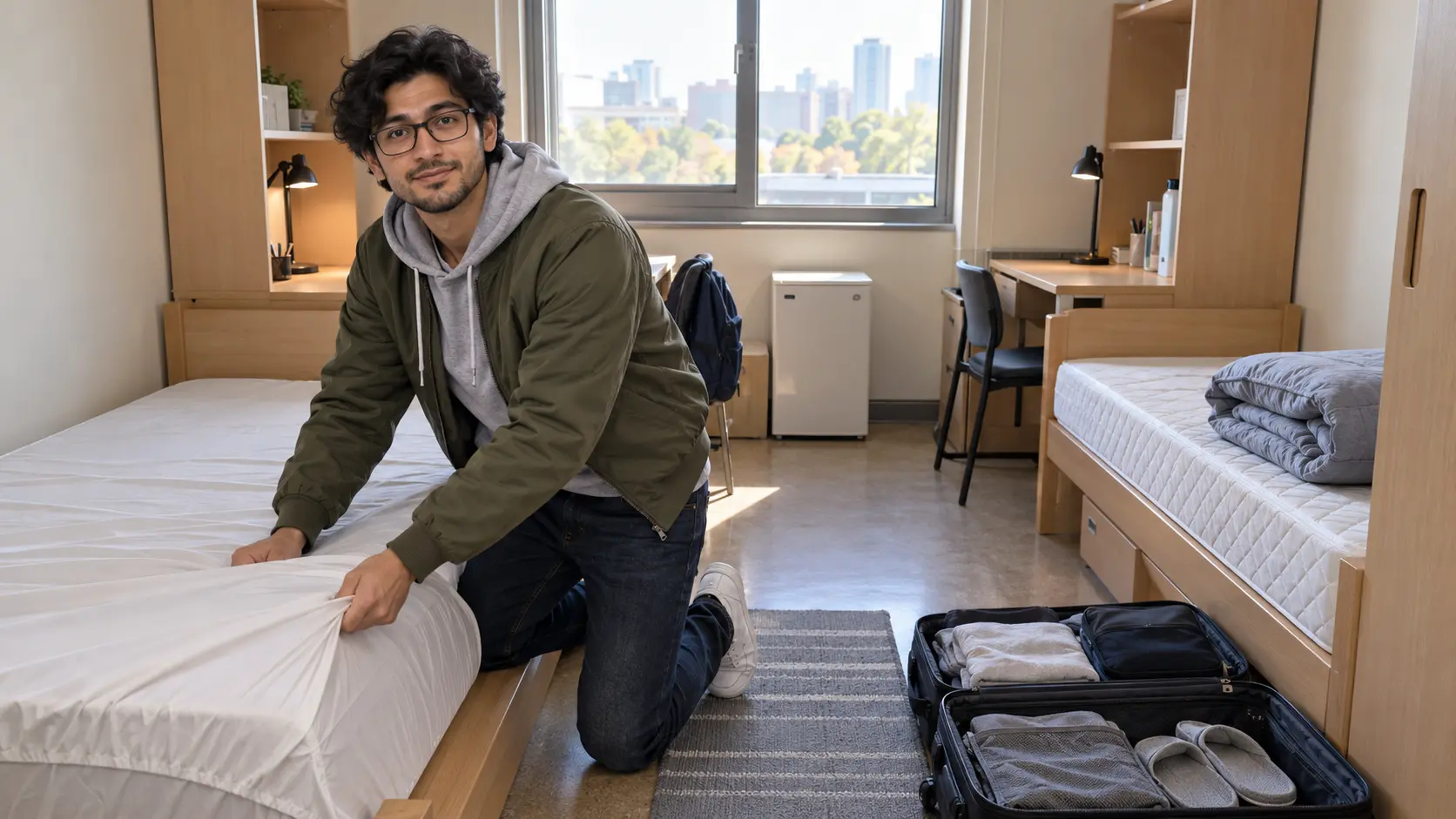
Chosun bans electric kettles, rice cookers, ramen cookers, electric blankets, heating pads, and portable heaters, and says confiscated items get thrown away. Bringing them in can mean penalty points or a forced move-out. Yonsei’s International House bans rice cookers, irons, toasters, hot plates, and personal heaters too. A small fridge is often fine (Chosun allows 50 liters or less). So if your plan was “I’ll just cook in my room,” it probably isn’t a plan.
Curfews vary more than the rumors suggest. Yonsei’s International House keeps its main gate open 24 hours with no curfew. Korea University’s notice doesn’t mention a curfew, but it won’t let new arrivals check in between 10 p.m. and 9 a.m., and it doesn’t allow early move-in before the official date.
And the date that quietly decides everything: the end. Korea University’s fall residence ends December 19 at 11 a.m. Chosun’s ends December 22 at 4 p.m. Staying over winter break, if it’s offered at all, is usually a separate application with a separate fee, and some buildings close entirely for cleaning. Past notices from Seoul National University’s Gwanak residence, for example, listed one newer building that didn’t allow vacation stays at all.
If you leave early, read the refund table before you sign. Yonsei’s International House refunds 100% if you cancel at least 7 days before the official check-in date, and deducts ₩100,000 if you cancel 6 days to 1 day before. From check-in to the halfway point of the semester, it keeps 20% and refunds the remaining days. After the halfway point, nothing comes back. Bank fees for the refund wire come out of your money, too.
The One-Room: Freedom With a Deposit Attached
A one-room (원룸) gives you a kitchen, your own bathroom, no roommate, no meal plan, and no December deadline. That’s real. So is the cost.
The average hides big swings by neighborhood. In Dabang’s July 2026 numbers, rooms around Ewha Womans University averaged ₩767,000 in rent plus ₩103,000 in maintenance fees, around ₩870,000 a month before utilities. Around Yonsei the average rent was ₩678,000. Around Seoul National University it was ₩533,000, but that figure jumped 26% in a single year. Sungkyunkwan was the only one of the ten where average rent dropped, down to ₩550,000.
Every one of those figures assumes a ₩10,000,000 deposit. Put down less and the monthly rent goes up; put down more and it comes down. That deposit is the piece most foreign students underestimate, because it’s cash you need in a Korean account before you have much of a Korean financial history. How it’s held and how it comes back is its own topic, covered in our apartment deposit guide.
The maintenance fee is the second piece. It can cover water, internet, and hallway cleaning, or almost nothing, depending on the building. Ask what’s included in writing. This breakdown of Korean maintenance fees shows which line items usually hide in that number.
When the deposit is the problem, students looking at off-campus student housing in Korea drift toward goshiwon-style rooms (고시원) and share houses. A one-room-style goshiwon listed on the room platform Gobang, five minutes from Sinchon Station, asks ₩650,000 to ₩750,000 a month with a ₩100,000 deposit, on a one-month minimum, with no separate fee. Cheap? Not really. Flexible? Very. One Japanese student near Ewha who didn’t get a dorm spot told Segye Ilbo she pays ₩750,000 a month on a ₩1,000,000 deposit for a women-only goshiwon, and didn’t consider it cheap.
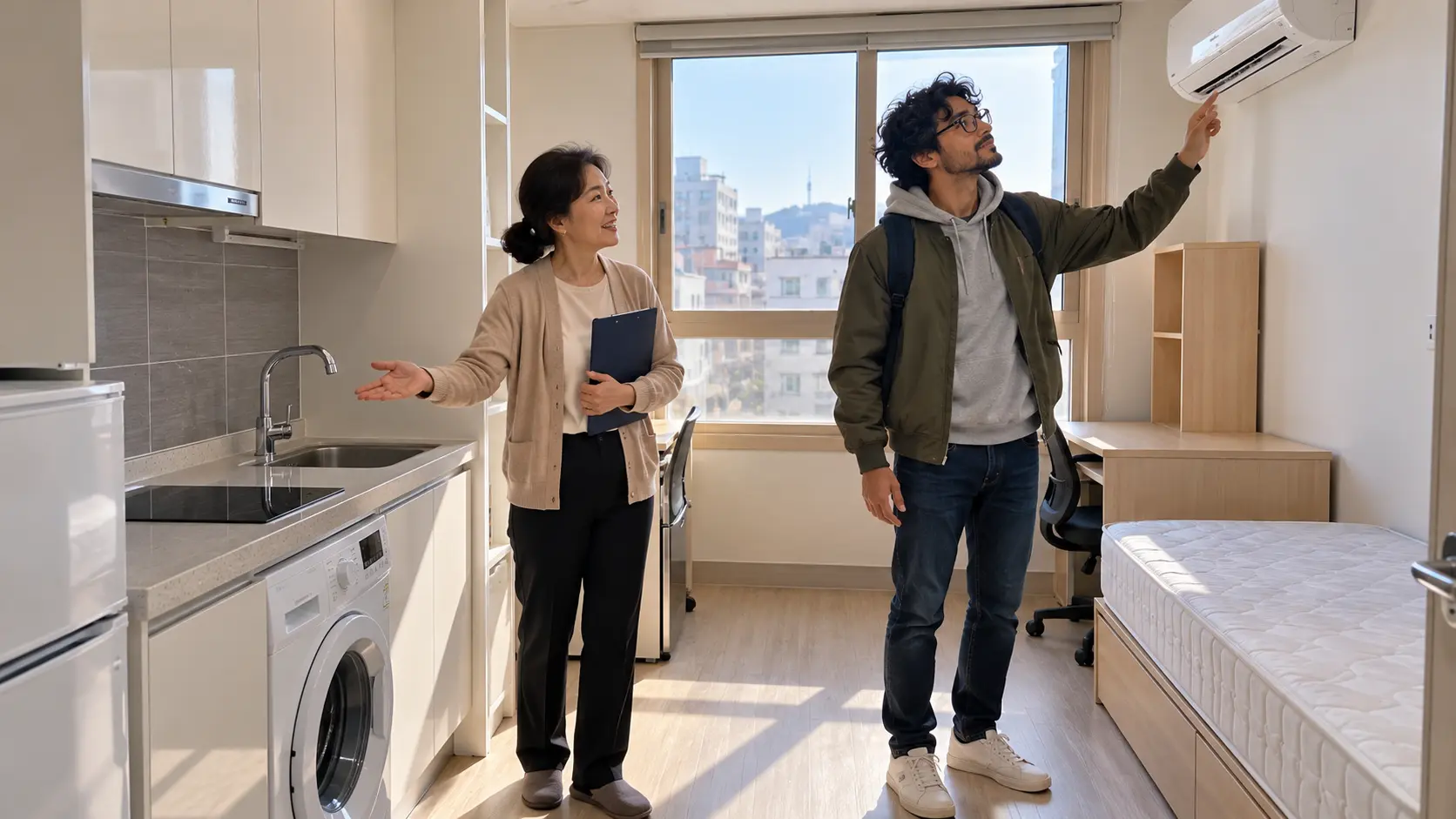
One more thing on the one-room side. You’ll be choosing it from abroad, usually through photos. If you can’t see the place first, a few weeks in a guesthouse or short-stay room buys you time to view rooms in person. This guesthouse vs one-room comparison runs the monthly math for that in-between period.
Student Housing in Korea, Side by Side
Here’s the comparison with every cost converted to the same footing. Dorm figures come from the fall 2026 notices above; one-room figures are Dabang’s July 2026 averages for ten Seoul university areas.
| University dorm | One-room near campus | |
|---|---|---|
| How you pay | One payment per semester | Monthly rent + monthly fee |
| Rough monthly equivalent | About ₩340,000 (Chosun double, with meals) to ₩600,000 (Korea Univ. single) | About ₩709,000 average, plus utilities |
| Cash up front | The full semester fee | Deposit (₩10M in the benchmark) + first month |
| Contract length | One semester, ends before winter break | Usually 12 months; shorter costs more |
| Cooking | Rice cookers, kettles, heaters often banned | Your own kitchen |
| Roommate | Often random; changes may not be allowed | None |
| Paperwork before moving in | TB result in a date window, sometimes measles records | Lease, ID, deposit transfer |
| Leaving early | Fixed refund table (e.g., 20% deduction) | Negotiated with landlord; often a replacement tenant |
Read the second row carefully. The dorm only looks that cheap because it stops in December. Add a month of winter-break housing somewhere else and the gap narrows.
Two Questions That Come Up Every Semester
Can I stay in the dorm over winter break?
Sometimes, but rarely by default. Winter break is the weakest spot in dorm-based student housing in Korea. Most schools run a separate vacation-stay application with its own fee and dates, and students who don’t apply have to move out when the semester period ends. Some buildings close for cleaning or repairs. Vacation-stay applications often close a month or more before the semester ends, so check your school’s housing notice early in the term, and plan a backup if you’re not taking a winter session.
What if I don’t get a dorm spot?
Don’t book a 12-month lease in a panic. Korea University’s notice, for instance, lets students who weren’t selected (or whose spot was canceled for non-payment) apply again in an additional round. While you wait, a short-stay room keeps your options open. This guide to temporary housing for foreigners covers what to check before booking one.
Before Move-In Day: What Stops People at the Desk
This is the section most guides to student housing in Korea skip, and it’s the one that leaves students sitting in a lobby with a suitcase.
The tuberculosis rule isn’t one rule. It changes by school:
- Korea University (fall 2026): a negative TB result from within 90 days before your actual move-in date, so for an August 22 move-in, tests from May 24 onward. Also a measles (MMR) certificate showing two doses. Previous residents have to submit a new TB result too.
- Yonsei: its International House requires a TB result at check-in. A fall 2026 Yonsei housing notice (posted on the Mirae campus site) accepts chest X-ray results only, issued after July 1, 2026.
- Chosun University (fall 2026): results issued in August 2026 or later only, and every resident resubmits each semester, including people who handed one in for spring. Missing it brings penalty points.
- Seoul National University (Gwanak, spring 2026 notice for new undergraduates): a chest X-ray dated within six months of the February 26 move-in date, with a normal overall result, plus proof of two measles doses.
Notice the trap? Get tested too early at home and the result expires before move-in. Plan to get tested in Korea the day before, and you’ll find it isn’t same-day. One Seoul district health center, Guro-gu, lists four working days for a TB certificate and five for its foreigner TB screening certificate, and if anything on the X-ray looks off, follow-up tests can take from a week to two months.
Arrival time is the second trap. Landing at Incheon at 8 p.m. and reaching campus after 10 p.m. means no check-in at Korea University that night. Early arrival is just as awkward: Korea University doesn’t allow move-in before the official date, while Chosun offers pre-move-in only if your assigned room happens to be empty, at ₩18,000 a night for a Global House single. Book one night somewhere nearby.
A few smaller things that come up again and again:
- Don’t ship boxes ahead. Chosun warns that parcels arriving before your move-in date may be lost.
- Bring bedding that fits. Chosun’s Global House lists its mattress as 198 × 98 × 21 cm and only accepts quilted mattress pads.
- Pay the exact amount. Korea University allows someone else to pay, but the depositor name has to be the student’s name or ID number. The notice asks for the exact amount, and an unpaid fee cancels the spot, so cover overseas bank charges on your side.
- Have the TB paper as a copy. Korea University collects it in the lobby on move-in day and doesn’t give it back.
Which One Fits Your Situation
If you’re an exchange student here for one semester, the dorm is hard to beat. The dates match your stay, there’s no large deposit to chase when you leave, and the rules are the price of that convenience. Your real job is the TB timing and a plan for the first night.
If you’re starting a four-year degree, a dorm for the first year and a one-room after that is the path a lot of students end up on. By year two you know which neighborhood you like, you have a Korean bank account with some history, and you can view rooms in person instead of trusting photos.
If you’re a graduate student who cooks, keeps odd hours, or simply can’t share a room with a stranger, the one-room math changes. You’re paying for control. Just budget the full number: rent, fee, utilities, and a deposit you won’t see again until you move out.
And if you’re on a short language program, month-to-month rooms often fit better than either, even at a higher monthly price. A cheaper room you can’t leave isn’t cheaper, and that’s true of student housing in Korea at every price level. Whichever way you go, housing is only one item on a first-month list that also includes registration, a phone, and a bank account. The student arrival checklist puts those in order, and the rest of the first month gets easier once the place you sleep is settled.
What This Comes Down To
Compare student housing in Korea by the length of your stay first and the price second. The dorm is cheaper per night but ends on a fixed date, comes with rules about what you can plug in, and won’t hand you a key without a TB result from the right window. The one-room is yours all year, but it costs more each month and asks for a large deposit up front.
Rules here change every semester and differ by school, so treat the figures above as a fall 2026 snapshot. Before you pay, open your own university’s housing notice and check three things: the residence end date, the TB window, and the refund table. The official notices used here are from Korea University’s Anam dormitory office, Yonsei’s International House, and Chosun University’s fall 2026 move-in notice.