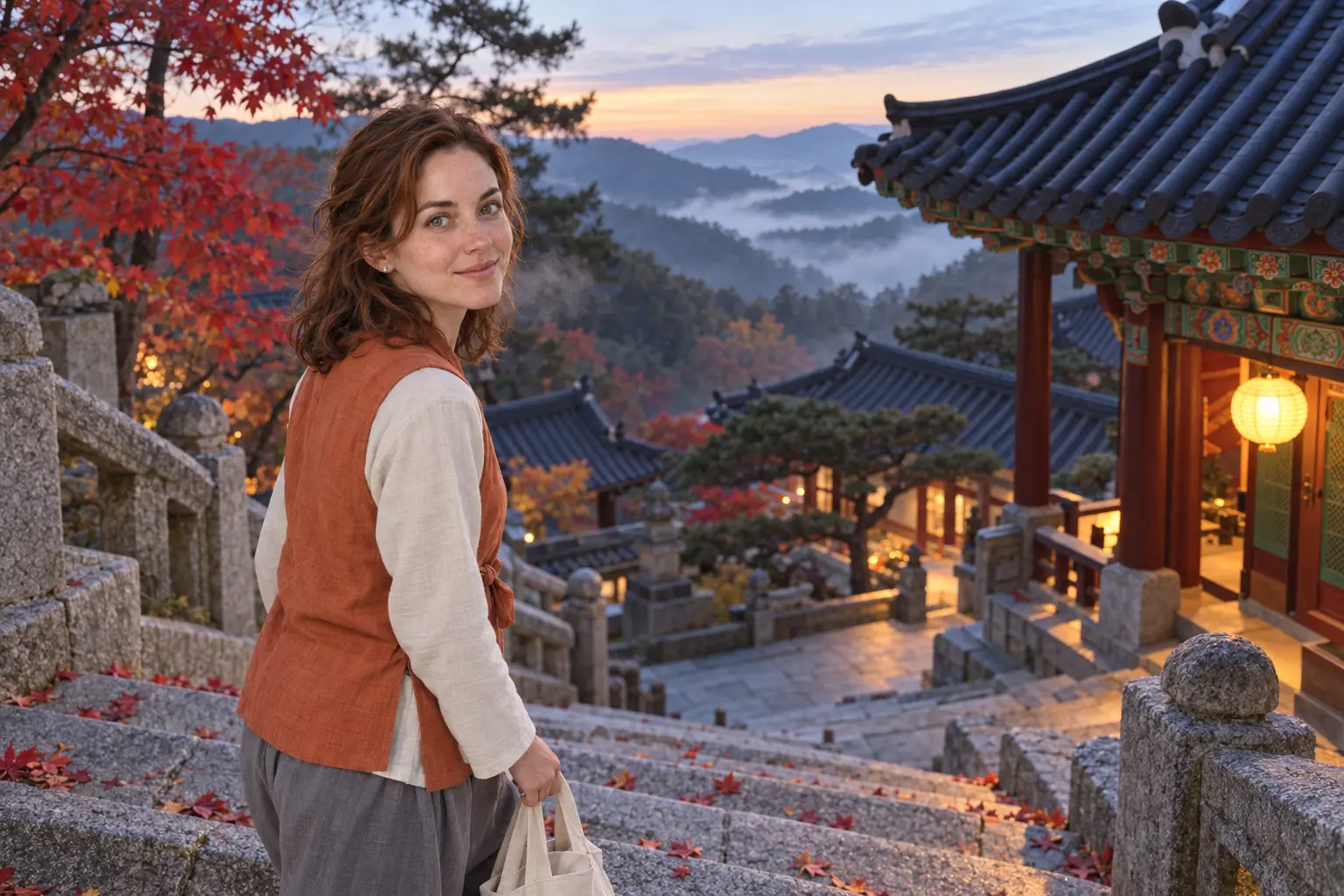
On the booking page, every temple stay Korea listing looks more or less the same. Wooden halls. Mountain fog. A monk pouring tea, and a price somewhere between ₩50,000 and ₩100,000. What the photos don’t show is that two very different weekends hide behind those listings — one where a wooden knocker passes your door at around 3:30 in the morning, and one where nobody minds if you nap through the afternoon.
Pick the wrong one and the weekend turns strange fast. Someone who came for quiet ends up doing 108 full bows before sunrise, thighs shaking by bow forty. Someone who wanted the real monastic routine gets a free-time schedule and a lot of hours staring at a courtyard. Neither program is bad. They just aren’t interchangeable.
This guide compares the two formats the way they actually run on the ground: the schedule, the rooms, what’s provided, what it costs, and the discount and refund rules that catch foreign guests out every season. None of it asks you to be Buddhist. It only asks you to choose on purpose.
Why Every Temple Offers Two Different Weekends
Templestay began as a stopgap. During the 2002 World Cup, hotels near the host cities filled up, and the Jogye Order of Korean Buddhism opened its temple gates to overnight visitors. It was supposed to be temporary. It wasn’t.
By 2025 the program recorded its busiest year yet — 349,219 participants across 158 temples, including 55,515 foreigners, according to figures the Cultural Corps of Korean Buddhism released in mid-2026. The more revealing number sits underneath that one. In the Corps’ own satisfaction survey, only about 9.9% of foreign participants described themselves as Buddhist.
So most guests aren’t coming for religion. Some want to see the ritual up close. Plenty just want a weekend without notifications.
Temples responded by splitting their listings. The Experience type (체험형) follows the monastic day closely. The Rest type (휴식형) gives you a room, meals, and a lot of freedom. A third option, the day program (당일형), runs a few hours with no overnight at all. On the official English booking site, the program type is shown on each listing — but it’s easy to scroll past when the photos all look alike.
The Experience Type: A Real Schedule, Start to Finish
This is the format most people picture, and it’s the one that surprises first-timers the most. Not because it’s harsh. Because it’s early, and it’s full.
A typical one-night program runs roughly like this, though every temple shifts the times a little:
- Day 1, early afternoon: check-in around 2–3 PM, change into the temple uniform (a vest and loose trousers, provided), then a short lesson on how to bow and how to hold your hands in hapjang.
- Late afternoon: a guided walk around the grounds.
- Around 5:30 PM: dinner. Yes, that early.
- Evening: chanting in the main hall, then meditation or tea with a monk.
- Around 9 PM: lights out.
- Day 2, 3:30–4 AM: a monk walks the corridors striking a wooden moktak. That’s your alarm.
- Dawn: the morning service (yebul), often followed by the 108 prostrations — sometimes while stringing a bead for each bow.
- Breakfast, a short stretch of communal chores (ulleok), and a wrap-up by late morning.
The rooms are simple. Sleeping is on a floor mattress, rooms are usually split by gender and shared by two to four people, and showers are communal. Most temples supply the uniform, soap, and toothpaste. Towels, socks, and a warm layer are on you.
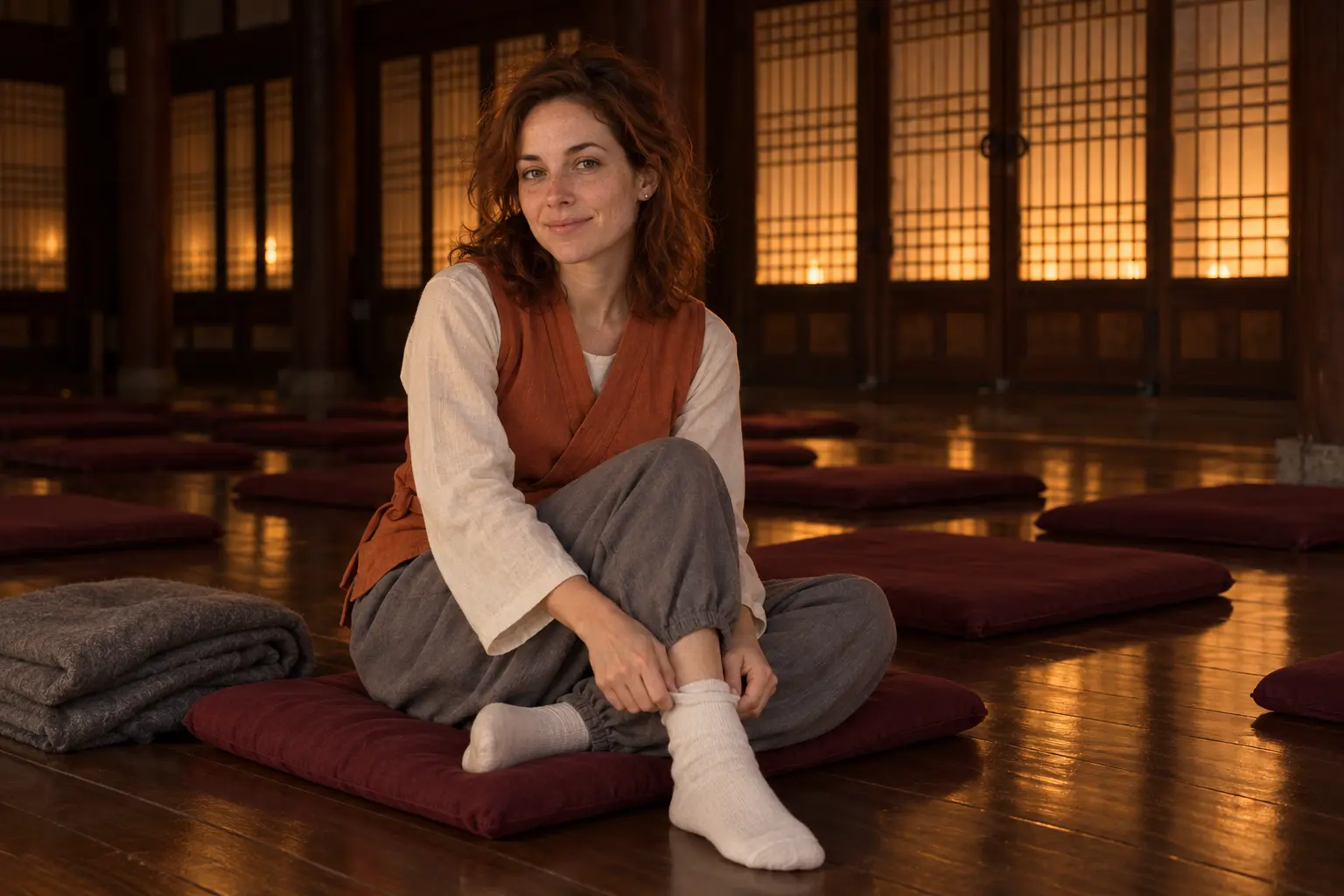
Socks matter more than people expect. Shoes come off at every hall entrance, bare feet inside worship spaces are considered disrespectful, and a mountain hall at 4 AM is cold even in early autumn. Shoes you can slip on and off without sitting down will save you a surprising amount of fuss.
And the 108 bows? Nobody checks your count. If your knees give out at forty, sitting quietly at the back of the hall is generally accepted. Telling the staff about a knee or back problem at orientation is better than struggling in silence.
The Rest Type: Quieter, but Still Not a Hotel
The Rest type sounds like a spa weekend with incense. It’s closer to a mountain retreat with house rules.
You get a room and meals. The time between is yours — walk the trails, read, sleep, sit on the wooden veranda and watch the light change. Morning chanting is usually optional in this format, though some temples still expect you at meals and at least one service. The listing tells you which.
Here’s where hotel habits break. Meals run on the temple’s clock, not yours. Miss the 5:30 dinner and there’s usually nothing later, and at a mountain temple the nearest convenience store can be a long walk or a taxi ride away. Gates may close in the evening. The quiet-hours etiquette still applies to everyone on the grounds, including rest-type guests. Meat and alcohol aren’t brought in.
Who tends to love it: residents who are burned out by city weeks, second-time visitors who’ve already done the full routine, and anyone who wants the setting more than the ritual.
Some rest-type listings offer single rooms, sometimes at an extra charge, and they’re easier to get on weekdays than weekends. If sharing a floor room with strangers is a dealbreaker, filter for that before anything else.
Temple Stay Korea Types Side by Side
Laid out in one place, the difference is less about price and more about how much of your day the temple owns.
| Detail | Experience Type | Rest Type |
|---|---|---|
| Wake-up | 3:30–4 AM, expected | Usually your call |
| Schedule | Fixed, nearly every hour planned | Meals fixed, rest open |
| Chanting and 108 bows | Core of the program | Often optional |
| Typical price (adult, 1 night) | Roughly ₩50,000–₩100,000 | Similar range; varies by temple |
| Room | Shared, gender-split, floor bedding | Shared or single, depending on listing |
| Phone use | Left in room during sessions | Allowed, quietly |
| Suits | First-timers who want the full picture | Tired residents, repeat visitors |
Prices in the table are general ranges seen across 2026 listings. The number on the program page you actually book is the one that counts.
Discounts, Refunds, and the Payment Detail Few Mention
This is the section most English guides skip, and it’s where money quietly goes missing.
Start with the ₩30,000 promotions, because autumn 2026 had two of them and they were not for the same people. From September 1 to 30, the Cultural Corps ran a foreigner-only special: one night at ₩30,000 at 19 temples, including Jogyesa, Hwagyesa, and the International Seon Center in Seoul, plus Naksansa, Woljeongsa, Tongdosa, Haeinsa, Beomeosa, and Seonunsa. It was announced at the end of July, and bookings opened on the English site on August 12 at 1 PM Korea time, first come, first served.
Then Korean news started covering a November deal — the “Happiness Double” templestay, ₩30,000 a night at 104 temples. Foreign residents who read it in translation reasonably assumed it applied to them. As announced, it’s aimed at Korean nationals, with about 7,800 spots opening on the Korean-language site from October 14. If you’re not Korean, plan on the regular price in November unless the program page says otherwise.
The pattern worth remembering: foreigner discounts tend to appear as short, one-month windows, announced roughly a month ahead on the English site’s notice board. Checking that board in midsummer is how people catch them.
Refunds are the second trap. There is no single templestay refund rule — each temple sets its own. Bongeunsa’s application page, for example, lists a full refund up to three days before, 50% one day before, and nothing on the day itself. Some programs also limit refunds after you’ve changed your date once, so read the policy before you move anything.
And the payment detail. Some temples don’t take credit cards at all. Bongeunsa’s page asks for a bank transfer completed seven days before the program. That’s easy with a Korean account and awkward without one — our guide to paying in Korea as a foreigner covers the workarounds.
One more calendar note. Many temples don’t run programs over Seollal and Chuseok, and the Templestay information center’s promotion hall in Seoul closed from September 24 to 27 this year for the holiday. If a holiday weekend looks suspiciously open, that’s usually why.
Matching the Program to Your Weekend
Most decisions come down to four questions: how much time you have, how your body feels about floors and bowing, who you’re traveling with, and how far you’re willing to go.
If this is your first time and you’re only in Korea for a week, an experience-type stay at a city temple keeps the logistics simple. Jogyesa sits in central Seoul, Bongeunsa is in Gangnam, and neither needs a mountain bus. You can fold one night into a trip that also includes a few day trips from Seoul.
If you live here and you’re simply tired, go rest-type and go to the mountains. Weekdays are calmer and single rooms are easier to find.
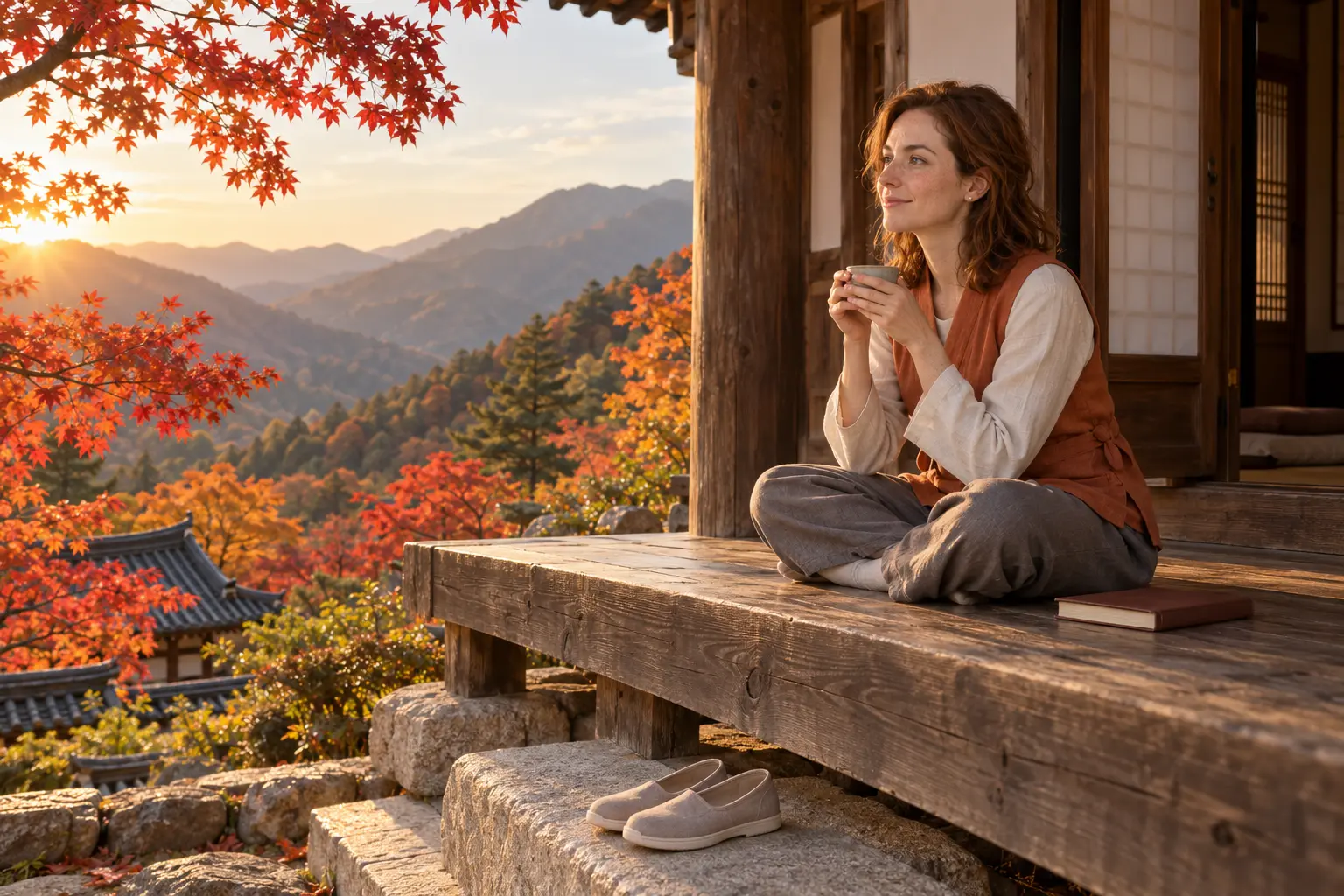
Traveling as a mixed-gender couple or group? Expect separate rooms at most temples. A few list family rooms, but they go early.
Knees, back, or hips that don’t cooperate with floor sitting are a real factor, not a minor one. The rest type removes most of the pressure. At an experience-type temple, mention it at check-in; cushions and small stools are usually available.
Heading south anyway? Golgulsa near Gyeongju runs a program built around Sunmudo, a Buddhist martial art, at around ₩60,000 a night — an easy add-on if you’re already following a Gyeongju itinerary.
Last, the ride home. Mountain temples often sit at the end of rural bus lines, and Sunday afternoon buses back to the city fill up. Book the return express bus before you go, not after the closing tea. And if what you really need is a cheap bed for a few nights between leases, a temple isn’t a hostel substitute — short-term housing options fit that job better.
A Few Things Worth Clarifying
Do I have to be Buddhist, or bow to the statues?
No. Most foreign guests aren’t Buddhist, and temples know it. In an experience-type program you’ll be invited to join the bows and chanting, and joining respectfully is part of the deal — but standing quietly with your palms together is an accepted way to take part if full prostrations don’t sit right with you.
Can I leave early or keep my phone with me?
You can leave early; just tell the staff so no one waits for you at the next session. Don’t expect a refund for the unused hours. Phones stay in your room during sessions in the experience type, and photos inside halls during services are generally off-limits. Outside, on the grounds, most temples are relaxed about pictures.
What This Comes Down To
Temple stay Korea programs aren’t graded from easy to hard. They’re two different trips wearing the same photos. Decide first whether you want the temple’s day or your own, then check three things on the listing: the program type, the refund rule, and how payment works.
Browse current programs and notices on the official Templestay English site, and keep an eye on the Cultural Corps of Korean Buddhism for the next foreigner discount window. The 4 AM knock is a lot easier to love when you knew it was coming.