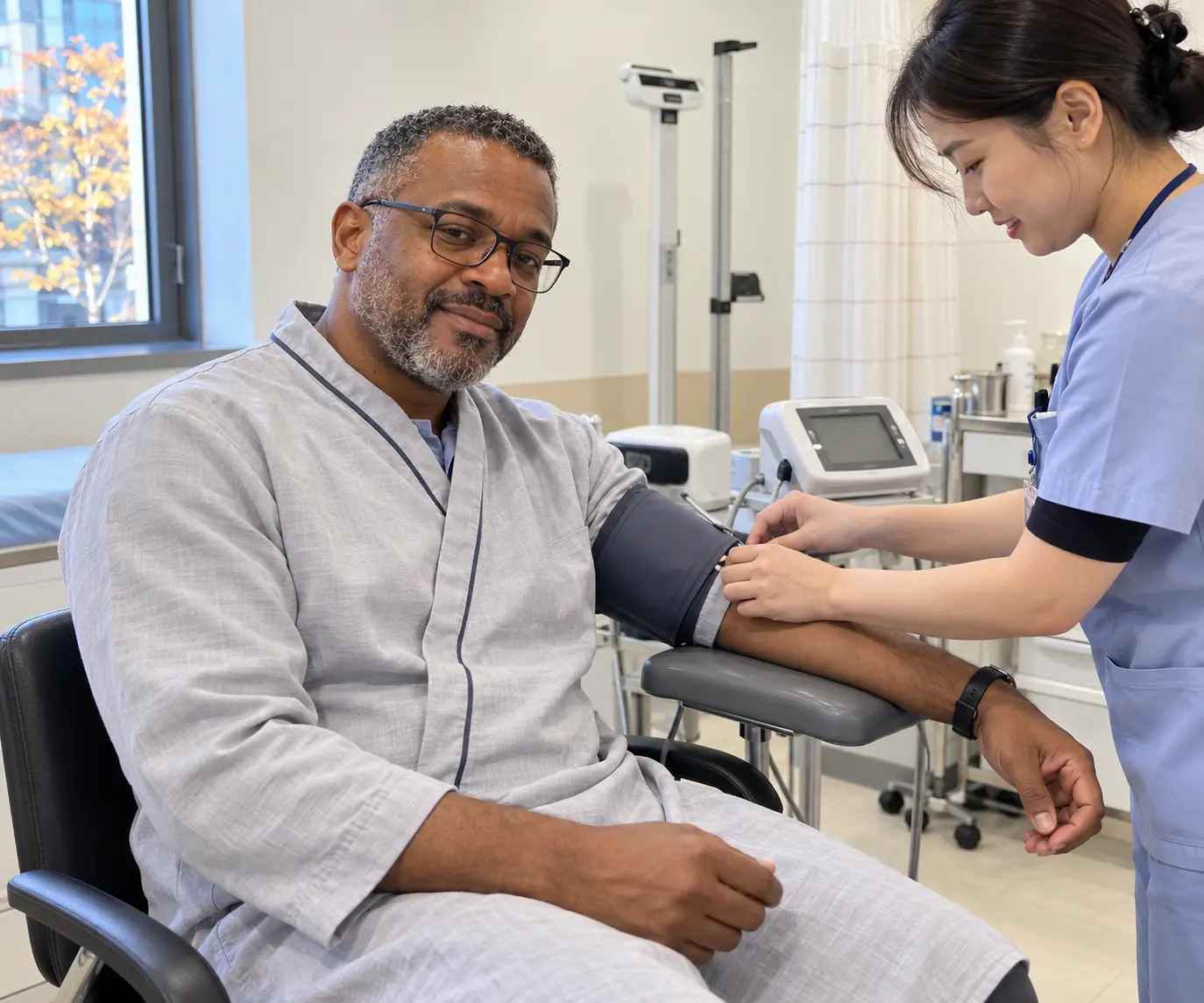
Fewer than three in ten people eligible for Korea’s national checkup had done it by the end of June this year, according to an October report in the Maeil Shinmun. For foreign residents, the free health checkup in Korea is even easier to miss. The notice usually arrives in Korean, it can look like just another bill, and unless you work for a Korean company, nobody is likely to walk you through it.
If you’re enrolled in the National Health Insurance Service (NHIS), whether as an employee, a dependent, or a regional member like most international students, there may already be a basic checkup waiting for you, paid for. In 2026, that mainly means people born in an even-numbered year, plus non-office workers of any birth year.
The window closes on December 31. The same report found that about one in five checkups gets squeezed into December, which is exactly when clinic calendars fill up. What follows is how the year actually plays out, stage by stage, and what’s worth doing at each point.
Day One on NHIS: Who the Checkup Actually Covers
The basic checkup is called ilban geongang geomjin (일반건강검진). It isn’t a perk for citizens only. Once a foreigner is enrolled in NHIS, the same eligibility rules apply as for anyone else.
The groups covered are employee subscribers, heads of household on regional coverage, and household members or dependents aged 20 and over. That second and third group matters more than most people realize. A spouse registered as your dependent is included. So is an international student, because D-2 and D-4 students have been enrolled in NHIS automatically as regional members since March 2021, some from the day they register and others after six months in Korea. If you’re not sure which type you are, our guide to health insurance for foreigners in Korea breaks down how each one starts.
The cycle is every two years, matched to your birth year. Even-year births are due in even years, odd-year births in odd years. Non-office employees (factory, construction, delivery, and similar jobs) are the exception. They’re checked every year regardless of birth year.
Here’s the part the rules don’t tell you: whether your name is actually on this year’s list. That depends on what NHIS has recorded about you, not on what you think your status is. Someone who enrolled mid-year, switched from a dependent to an employee, or changed jobs may show up differently than expected.
So the first real step toward a free health checkup in Korea isn’t booking. It’s checking.
Early in the Year: The Envelope That Looks Like Junk Mail
NHIS sends checkup notices early in the year, either by post to the address it has on file or electronically. For most foreign residents, this is where the process quietly breaks. The letter is in Korean, the envelope looks a lot like an insurance bill, and if you’ve moved since registering your address, it may have gone to your old place entirely.
Anyone who arrived after January has a different problem. You may be due a free health checkup in Korea this year without a letter ever being sent.
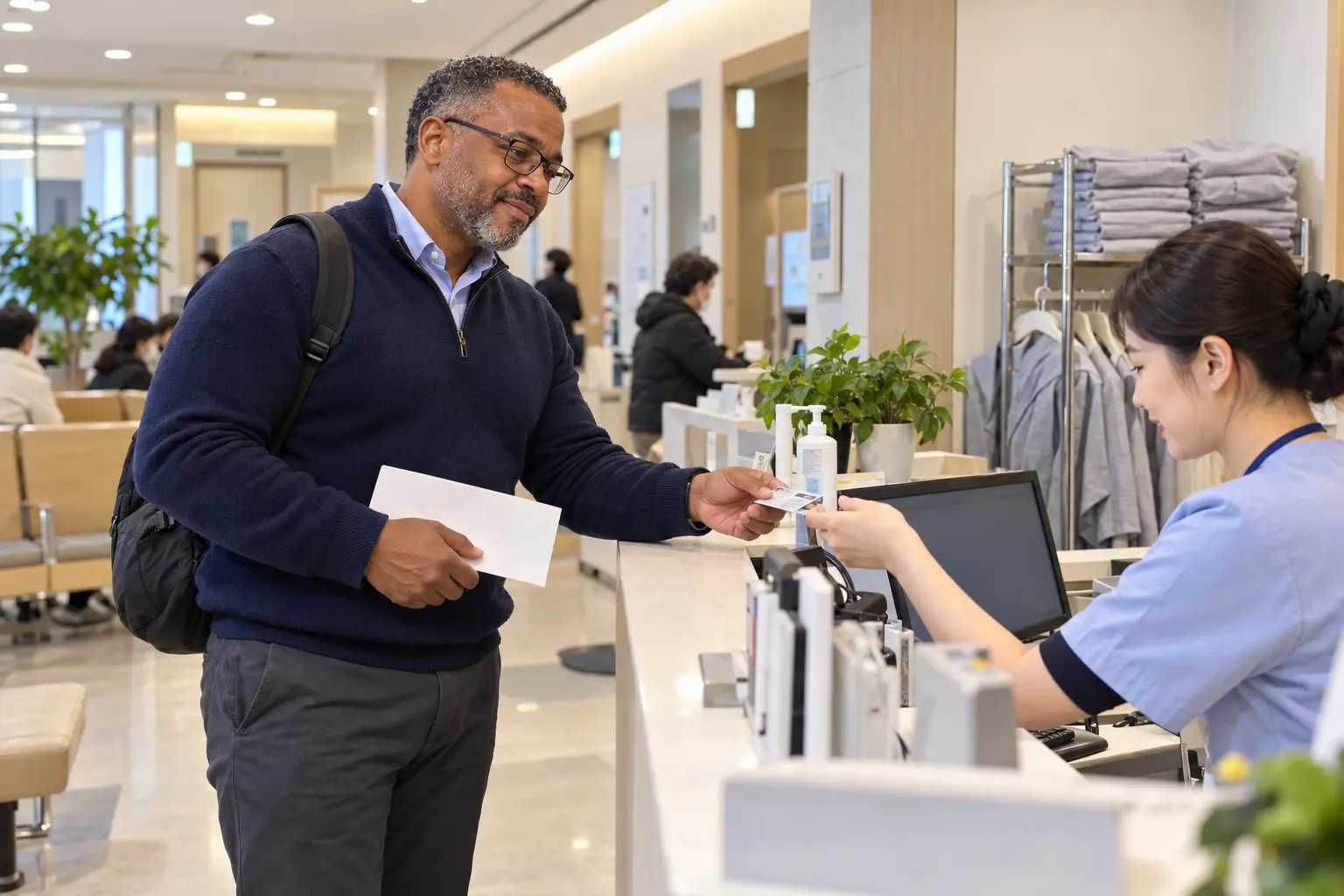
The good news is that the letter itself isn’t the key. Your eligibility lives in the NHIS system, and you can look it up in three ways:
- The NHIS app (The건강보험) or the NHIS website, under the checkup eligibility menu. Both need Korean identity verification, which can be its own hurdle if your phone is registered in a different name.
- Gov24 (정부24), which offers the same lookup after verification.
- The NHIS call center at 1577-1000. Pressing 7 connects you to the foreign-language line, which has offered English, Chinese, and Vietnamese support.
The phone route tends to be the least painful for newcomers. Have your ARC number ready and ask one simple question: am I a checkup target this year, and which screenings are included?
If you’re a student, it’s also worth asking your international office. Some schools forward NHIS notices or post a reminder each autumn, though that’s far from universal.
October to December: Booking a Free Health Checkup in Korea Before It Closes
This is the stretch where most people finally act, and that’s precisely the problem. Clinics that had open slots in June can be booked out by early December, and the last two weeks of the year are usually the hardest to get.
Not every clinic can do it, either. The checkup has to happen at an NHIS-designated screening facility. You can find one through the NHIS website or app, or simply call a nearby clinic and ask whether they do the national health screening (국가건강검진, gukga geongang geomjin). Our list of Korean phrases for hospitals and pharmacies helps with that call.
The free health checkup in Korea covers body measurements, blood pressure, vision and hearing, blood and urine tests, a chest X-ray, and an oral exam, with no out-of-pocket cost. Some ages add more. People aged 20 to 34, for example, get a mental health screening questionnaire every two years. Depending on age and sex, cancer screenings may also be part of your list:
| Screening | Who | How often | Your share |
|---|---|---|---|
| Stomach | Ages 40+ | Every 2 years | Up to 10% |
| Colorectal (stool test) | Ages 50+ | Every year | Free |
| Breast | Women 40+ | Every 2 years | Up to 10% |
| Cervical | Women 20+ | Every 2 years | Free |
| Liver | Ages 40+ in high-risk groups | Every 6 months | Up to 10% |
| Lung (low-dose CT) | Ages 54–74 with heavy smoking history | Every 2 years | Up to 10% |
The 10% applies to members in the upper half of insurance premium payers. Those in the lower half pay nothing for any of these. Exact eligibility follows NHIS records, so treat this table as a guide rather than a promise.
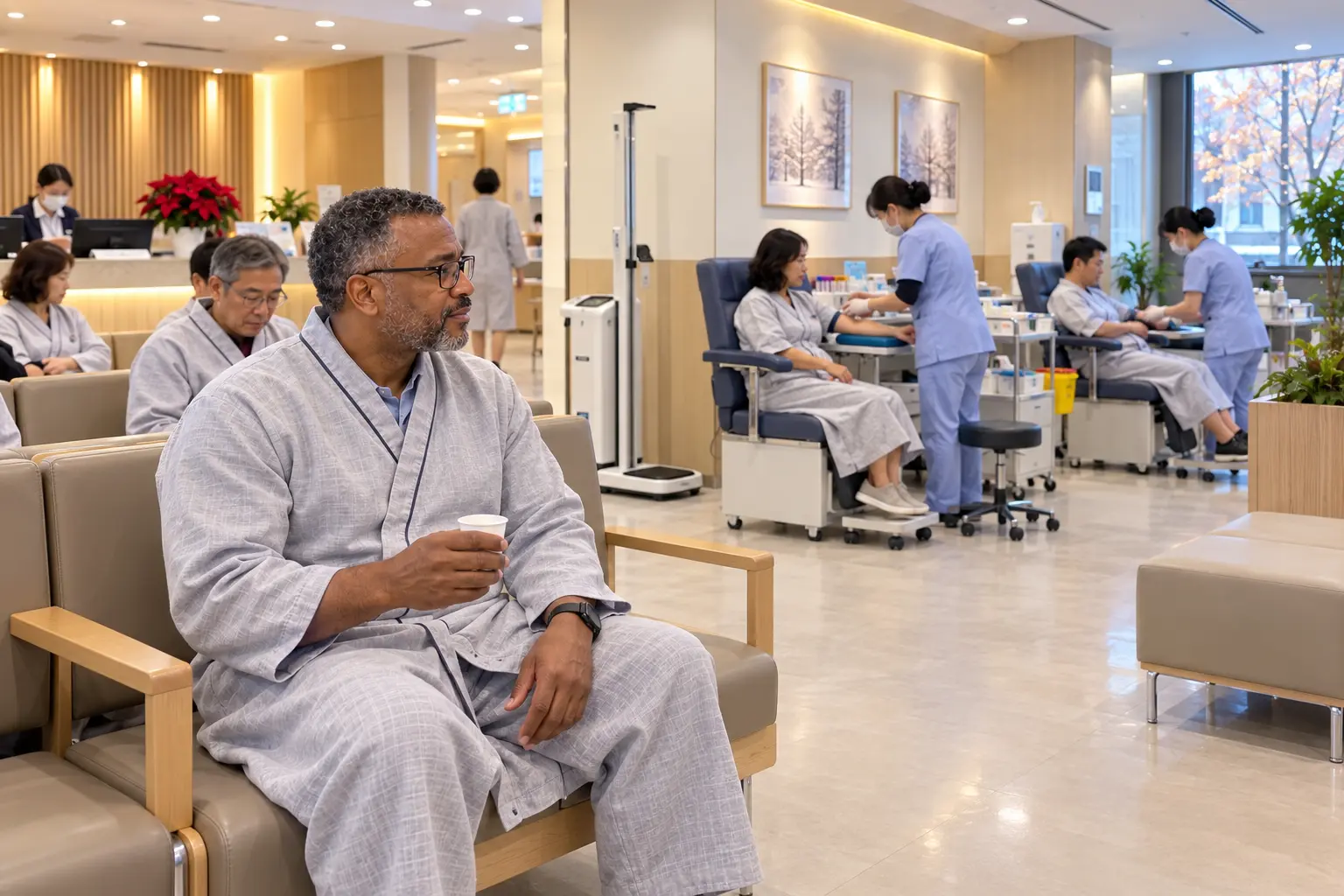
You may be offered add-ons at the front desk. Sedation for an endoscopy, extra ultrasounds, and premium blood panels are all optional and paid separately. Some are worth it for some people. None are required to complete the free part, so it helps to decide before you walk in.
Most clinics ask you to fast from the night before. Bring your ARC. Results usually go up in the NHIS app about two weeks later, with a text alert. If a result suggests diabetes, the follow-up HbA1c confirmation test is free in 2026 as long as you bring the results sheet. For anything else that needs a second look, our guide to a hospital visit in Korea covers how referrals and payment work.
After December 31: What Changes If You Miss It
Missing the deadline for a free health checkup in Korea isn’t the end of it. From January, NHIS accepts what it calls additional registration for the previous year’s non-attendees. That lets you take the skipped checkup the following year instead of waiting for your next cycle.
How you apply depends on your coverage. Employees go through their workplace, which registers them with NHIS. Regional members, students, and dependents can use the NHIS app or call 1577-1000. Two screenings drop out of the carryover: the yearly colorectal test and the six-monthly liver test, since a fresh round of each starts in the new year anyway. NHIS sets the deadline for a carried-over checkup, so confirm it when you register.
Then there’s the question of fines, which causes more worry than it should. Penalties come from Korea’s Occupational Safety and Health Act, and they apply only to people covered as workplace employees. Labor ministry guidance spares an employer who can show at least two written or email reminders. In one case the Maeil Shinmun reported, the company avoided a penalty, while the employee who skipped received a ₩50,000 first-offense fine. Regional members and dependents, including most students, face no fine at all.
For everyone else, the cost of missing out is quieter. You lose a free baseline of your blood pressure, blood sugar, and liver numbers. Those numbers are useful to have the first time you need a doctor here.
A Few Things Worth Clarifying
My coworker got a checkup notice this year. Why didn’t I?
The usual reasons are birth year and job type. If you were born in an odd year and work in an office, your turn is 2027. If you enrolled recently, changed coverage type, or moved without updating your address, the notice may simply not have reached you. Ask NHIS directly rather than assuming you’re excluded.
Can I use a big hospital’s English-speaking health center instead?
Only if that center is NHIS-designated, and some premium international screening centers aren’t. Samsung Medical Center’s English health screening page, for instance, states that its center doesn’t handle NHIS checkups. A designated neighborhood clinic plus a translation app often works fine. Ask when you book, and be clear that you want the national checkup, not a paid package.
What to Have Ready at Each Stage
The free health checkup in Korea itself takes about an hour. Almost all the friction happens around it. Here’s what helps at each point in the year:
- When you enroll or change coverage: confirm that your address on file with NHIS is current, and note your coverage type (employee, regional, or dependent).
- Early in the year: check whether you’re a target this year through the app, Gov24, or 1577-1000, option 7.
- By October: pick a designated clinic and book. Ask whether your cancer screenings can be done in the same visit.
- The day before: fast from the evening, and set aside your ARC and any notice you received.
- After the visit: watch for results in the NHIS app, and keep the results sheet for any follow-up test.
- If you missed it: from January, register as a previous-year non-attendee, through your employer or through NHIS directly.
If dental work came up during the oral exam, our guide to the Korean dentist system explains which treatments insurance actually covers. Screenings are easy to postpone because nothing breaks the day you skip one, and the rest of a first-year settling-in list tends to slip the same way.
Where to Go From Here
A free health checkup in Korea is one of the few benefits that comes straight out of the insurance premiums you’re already paying. The only real cost is the hour it takes and a bit of planning before December.
Check whether you’re on this year’s list, book while slots are still open, and don’t panic if the year runs out first. There’s a way to carry it over. For eligibility questions, the NHIS English site and the 1577-1000 foreign-language line have the final word on your situation. Rules and screening items can change from year to year, so confirm the details for your own case before you go.