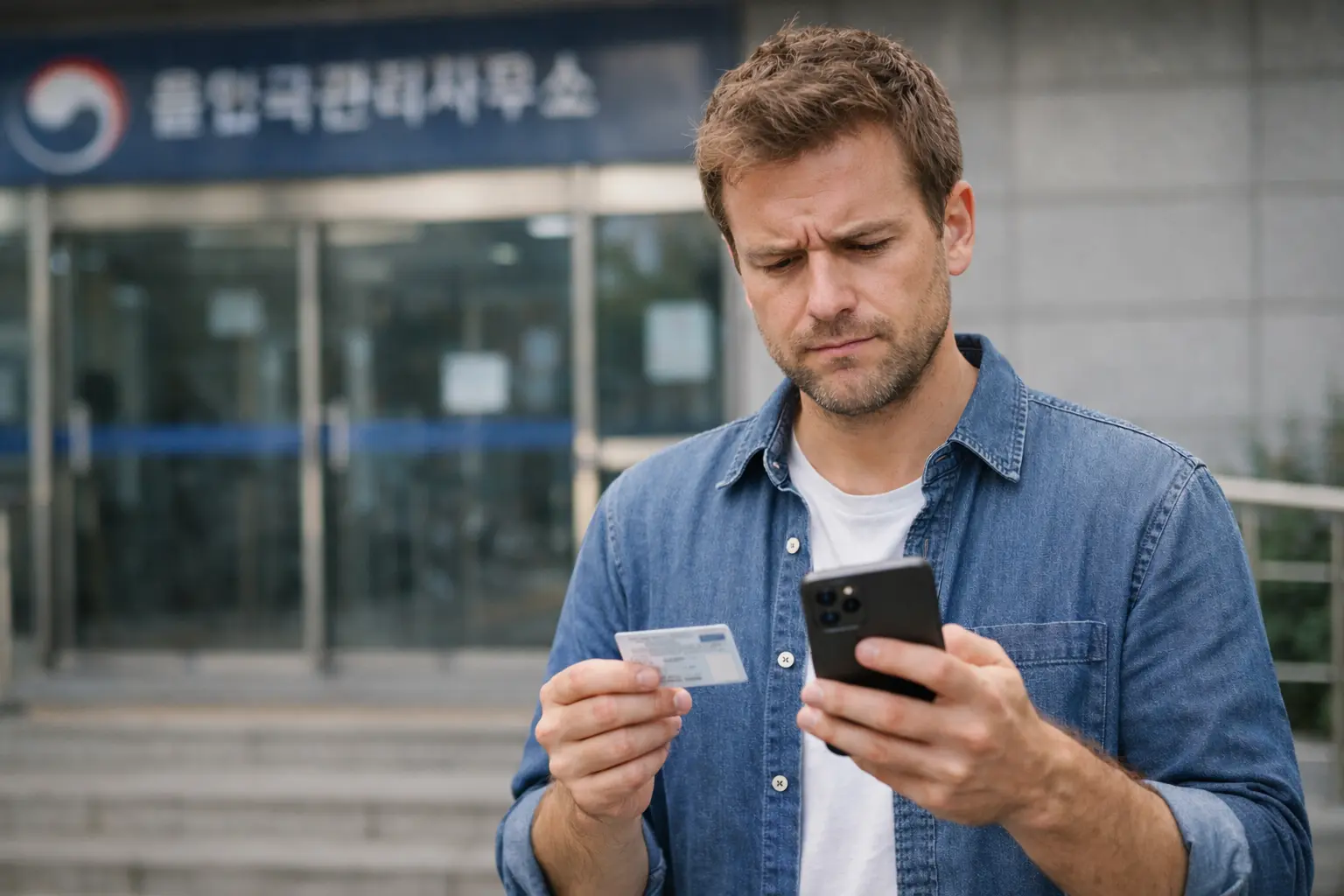
Well over a million foreigners in Korea hold an Alien Registration Card. Government immigration offices describe it as the key document for daily life — and technically, they’re right. But after ARC card Korea foreigners receive the physical card, at least three major digital services still reject verification for days or weeks afterward. The card is real. The systems behind it haven’t caught up yet.
That gap surprises almost everyone. Most ARC card Korea foreigners wait weeks for the card to be issued, pick it up at immigration, and assume the hard part is over. Then PASS rejects your identity check. The bank says your number isn’t in the system. KakaoTalk verification loops without a clear error message. Each rejection feels like a separate problem, but they all trace back to one structural mismatch: the physical card and the digital infrastructure operate on completely different timelines.
This article pulls apart the failure points that persist after ARC approval — not the application, not the waiting period, but the specific walls between the card in your hand and the systems that still don’t see it. If your ARC is approved or already picked up, this is where the second round of troubleshooting begins.
When the ARC Card Arrives — And Nothing Changes
The day you pick up your ARC at the immigration office (출입국관리사무소), the card works immediately for one thing: in-person identification. Hand it to a bank teller, show it at a government counter, present it during a police check — the physical card is valid from day zero.
Everything digital is a different story.
Korean banking apps, telecom verification systems, identity authentication platforms like PASS (패스) and KakaoTalk (카카오톡), and even online shopping registration — all of these query your ARC number against government databases before allowing access. The problem is that these databases don’t all update at the same time. Some sync daily. Others batch-update weekly. A few require a manual trigger that nobody mentions at the immigration counter.
The result is a window — typically 3 to 14 days — where your ARC is physically valid but digitally invisible. You’re holding a card that Korea’s infrastructure doesn’t fully recognize yet. This shows up every week in expat forums: someone picks up their ARC, tries to register for an app the same afternoon, and gets rejected without explanation.
If you’ve already been through the delays that build up while waiting for ARC approval, the post-pickup phase can feel like a second round of the same frustration — except now you’re holding the card that was supposed to fix everything.
What Keeps the System From Recognizing Your Card
Understanding why this happens makes the waiting period less maddening. Korea’s digital identity infrastructure wasn’t built for gradual rollout — it was designed for Korean nationals whose resident registration number (주민등록번호) is embedded in every system from birth. The foreigner registration number on your ARC gets added to these systems later, through a chain of database updates that moves at its own pace.
Here’s what the chain looks like after ARC issuance:
The Hi Korea immigration portal updates first, usually within 1–3 days. This is the source database. You can check your status there to confirm the system has your information.
Telecom databases come next. Korea’s three major carriers — SKT, KT, and LG U+ — pull from the immigration database on their own schedule. Until your ARC number appears in the telecom system, any phone verification tied to your number won’t pass identity checks. This typically takes 3–7 days, though some carriers move faster than others.
Banking databases follow a similar timeline. Major Korean banks sync with the immigration system, but the update frequency varies by institution. Some check daily. Others run weekly batch processes. If you visit the bank on day two after ARC pickup and the teller says your number isn’t in the system, that’s database timing — not a problem with your card or documents.
Identity verification services — PASS, KakaoTalk certificate, Naver certificate — sit at the end of the chain. These services verify your identity by cross-referencing your ARC number through the telecom database and then confirming it against the immigration database. Both upstream systems need to recognize you before these apps will work. That’s why identity apps are usually the last thing to start working for ARC card Korea foreigners — often 7 to 14 days after pickup, once the full chain completes.
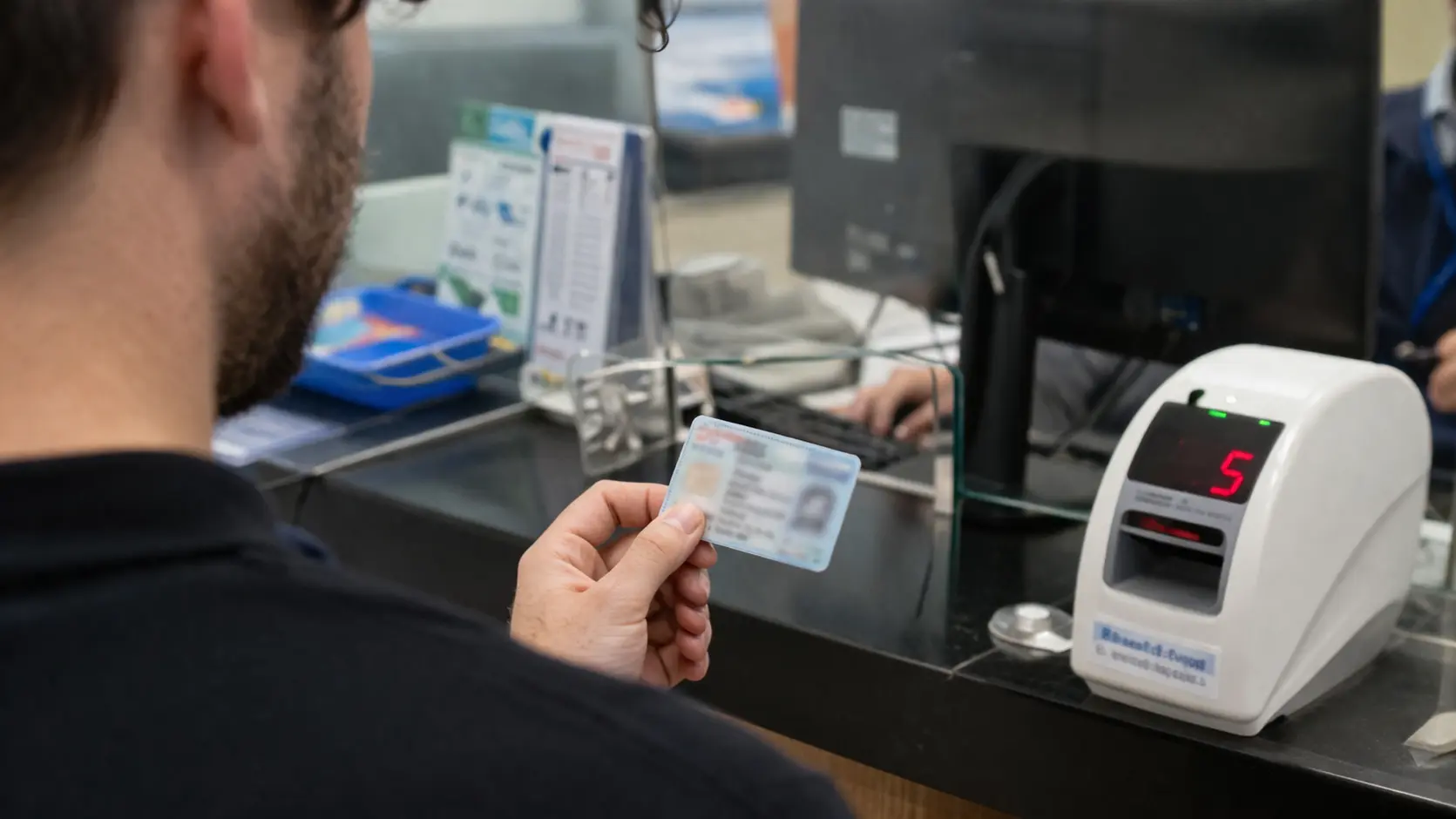
3 Patterns That Trap ARC Card Korea Foreigners After Pickup
The rejections people hit after ARC pickup aren’t random. They cluster into three patterns, and each one has a different root cause.
Pattern 1: The Same-Day Rush
You pick up the card at immigration, head straight to the bank, then try registering for PASS on the bus home. Every step fails. The bank can’t find your ARC number. PASS says identity verification isn’t available. KakaoTalk loops at the authentication screen.
Nothing is broken. The databases just haven’t received your information yet. Attempting registration too early is the single most common mistake ARC card Korea foreigners make after pickup, and it sometimes triggers cooldown periods — meaning the service locks you out for 24–72 hours before you can try again. One premature attempt on day zero can cost you an extra three days of waiting.
Pattern 2: The Missing Telecom Link
This one catches people who waited the right amount of time but skipped a critical step. Your ARC exists in the immigration database. Your phone number is active. But nobody connected them at the telecom level.
The ARC and your phone number need to be explicitly linked through your telecom provider. This doesn’t happen automatically. You need to visit the carrier’s store (SKT, KT, or LG U+ 대리점) with your ARC and passport, and ask them to register the ARC number on your account. Without this step, every app that checks the ARC-phone connection — which is nearly all of them — returns a rejection.
If you’re still using a tourist SIM (여행자 유심) from arrival, the problem is more fundamental. Tourist SIMs aren’t tied to identity records at all. No amount of waiting will make verification pass on a SIM that was never designed for it. The SIM card selection guide explains which types support full verification.
Pattern 3: The Name Format Mismatch
Korean systems store names in a specific format. Your passport may list your name as LASTNAME FIRSTNAME MIDDLENAME. Your ARC might format it differently. The bank entered it another way. When these don’t match exactly across systems, verification fails even though every individual record is correct.
This shows up most often at banks. The teller entered your name during account opening, and the characters don’t match what the immigration database has. The systems compare strings character by character — a reality that frustrates ARC card Korea foreigners who assumed their documents were consistent. A single space difference, a missing middle name, or a hyphen that appears in one record but not the other is enough to trigger rejection. The only fix is visiting the institution where the mismatch occurred and asking them to correct it to match your ARC exactly.
The Fix Sequence That Actually Clears the Blocks
Order matters here. Doing these steps out of sequence is what creates the rejection loops that ARC card Korea foreigners get trapped in after pickup. The Korea Immigration Service’s official portal confirms ARC issuance status, but the downstream systems that matter for daily life follow their own update schedules.
Step 1 (Days 1–3): Visit your telecom provider. Bring your ARC card and passport. Ask the staff to confirm your ARC number is registered on your phone account. This is the foundation — every verification service downstream depends on this link being active. If you need to switch from a tourist SIM to a full plan, this is when to do it. The mobile plan comparison covers what to look for.
Step 2, between days 3 and 7, is visiting your bank. Bring the ARC, passport, and your account information. Ask the bank to update your records with the ARC number. Some banks detect the ARC automatically from the immigration database. Others require an in-person request. Don’t assume yours is the automatic type — verify. If you haven’t opened a bank account yet, the bank account setup guide covers what typically delays the process.
Step 3 (Day 7 or later): Test PASS app first. PASS is the cleanest test of whether your ARC-phone-telecom chain is working. If PASS verification succeeds, your credentials are confirmed across the system and other services should follow. If it fails, go back to step 1 — the telecom link is the most likely point of failure. For the specific blocks that hit foreigners in PASS, see the PASS app troubleshooting guide.
Step 4 is registering for remaining services one at a time. KakaoTalk verification, Coupang, Kakao T, Naver — try them sequentially, not simultaneously. If one fails, you’ll know exactly where the chain breaks. Attempting everything at once makes it impossible to isolate the problem.
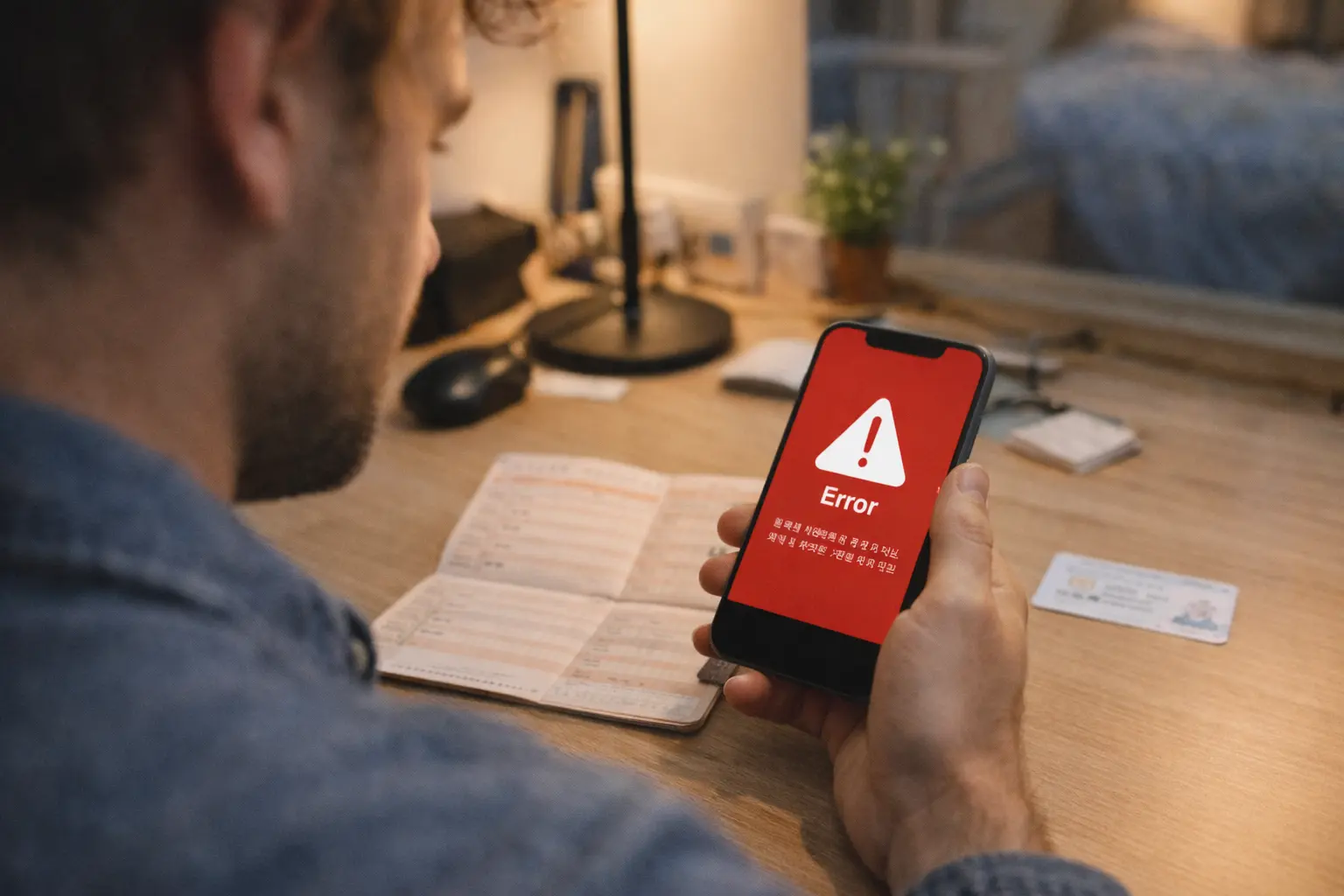
What Still Needs Attention After the Blocks Clear
Once PASS works and your bank recognizes the ARC, most people assume the infrastructure problem is solved. Mostly, it is. But a few residual issues surface weeks or even months later that still catch ARC card Korea foreigners off guard.
ARC renewal resets parts of the chain. When your ARC expires and you receive a new one, the number stays the same — but some systems treat the renewal as a new registration event. Banking apps may ask you to re-verify. PASS occasionally requires re-authentication. The telecom provider usually handles renewals automatically, but confirming after renewal saves you from discovering the break at the worst possible moment.
Address changes create similar disruptions. If you move to a new apartment and update your address at the community center (주민센터), the immigration database updates your record. Some downstream systems interpret this as a change event that requires re-verification. The address registration process explains what documentation the community center requires.
Some online platforms maintain their own internal verification databases that update slower than the government systems. A platform might reject your ARC-based verification even after PASS works, simply because that platform’s own database hasn’t synced yet. In these cases, contacting the platform’s customer service (usually only available in Korean) and providing your ARC details directly is often the fastest resolution.
One thing worth knowing: keep your physical ARC card accessible for the first three months. Several services ask for the card number, issue date, and expiry date during registration or re-verification. Having the card nearby saves you from needing to recall details that are easy to mistype.
One addition since this guide was first written: the mobile ARC. Since January 2025, registered foreigners aged 14 and over can carry their ARC in the government’s Mobile ID app, with the same legal effect as the card, and six banks began accepting it for account opening in March 2025. It doesn’t repair a telecom link that was never made, though — the sequence above still applies. With the card recognized, the remaining first-month steps — banking, housing, transport — usually move in a predictable order.
Korea Setup Dependency Chain — Where ARC Fits
The ARC doesn’t exist in isolation. It sits in the middle of a seven-step dependency chain that governs how Korea’s administrative systems connect for foreigners. Understanding where the ARC fits — and what it depends on — explains why some services fail even after the card is active.
The chain works like this:
Entry Status → Phone/SIM → ARC Application (address declared here) → ARC Issued → Telecom Link → Bank Account → App Verification
Each step depends on the one before it. Skipping steps doesn’t save time — it creates rejection loops that send you back to the beginning. Someone who opens a bank account on a passport alone, before the ARC is issued, often ends up with a limited account (한도계좌) with low daily transfer caps. Someone who attempts app verification before linking their ARC at the telecom office gets rejected without a useful error message.
For ARC card Korea foreigners navigating the settlement process, the card sits at the midpoint of this chain. Everything before it — entry status, phone setup, and a verifiable address on the application — needs to be in place for the ARC to function properly. Everything after it — banking, app verification, digital access — depends on the ARC being not just issued, but actively recognized across systems.
Setup Guides by Step
Phone/SIM: Korean SIM Card for Foreigners · Mobile Plan Comparison
Address (ARC Application): Address Registration Guide
ARC Process: ARC Card Delay Explained · Online Verification After ARC
Banking: Bank Account Setup · Payment Methods for Foreigners · Foreign Card Payment Issues
App Verification: PASS App Guide · KakaoTalk Verification · Phone Number Verification
Daily Services: Coupang Checkout · Kakao T Registration · KTX Booking
Before You Go: What to Verify
Before ARC Pickup
☐ Lease, dorm confirmation, or accommodation letter matches the address on your ARC application
☐ ARC application submitted at immigration with all required documents
☐ Phone setup functioning — ideally a full plan, not tourist SIM
☐ Bank account inquiry made to confirm what your branch requires with ARC
After ARC Pickup
☐ Telecom office visited — ARC number linked to phone account (days 1–3)
☐ Bank visited — ARC number registered and name format confirmed (days 3–7)
☐ Waited minimum 7 days before identity verification attempts
☐ PASS app tested first as chain verification
☐ ARC card number, issue date, and expiry date noted somewhere accessible
☐ One additional service tested (KakaoTalk or Coupang) to confirm system recognition
A Few Things Worth Clarifying
Does the ARC card number change when the card is renewed?
No. The 13-digit foreigner registration number stays the same through renewals. What changes is the issue date and expiry date on the new card. Most systems recognize the same number without interruption, but some — particularly banking apps used by ARC card Korea foreigners — may require you to update the card’s validity dates in their system. A quick visit or phone call to your bank after renewal prevents unexpected verification failures weeks later.
Why does PASS reject me even though my ARC and phone are both valid?
PASS doesn’t check the ARC and phone independently. It verifies them as a connected pair through the telecom database. If your telecom provider hasn’t linked your ARC number to your phone account — or if the link was made but the telecom database hasn’t synced with the immigration database yet — PASS sees a broken chain and rejects the attempt. The fix is always the same: visit the telecom store, confirm the ARC-phone linkage, wait 2–3 days, then try again. Detailed troubleshooting for each failure type is in the PASS app guide.
Where to Go From Here
The ARC card doesn’t flip a switch. It starts a sequence that runs on its own schedule, through systems that update independently of each other.
What makes the post-approval period manageable for ARC card Korea foreigners is knowing the order: telecom linkage first, banking confirmation second, identity verification last. Follow that sequence, respect the timing gaps, and the rejections that feel random start falling into a pattern you can plan around.
Each service that blocks you after ARC pickup has its own mechanics, and the guides linked throughout this article cover them individually. Start with the step that matches where you are right now, and work forward from there.