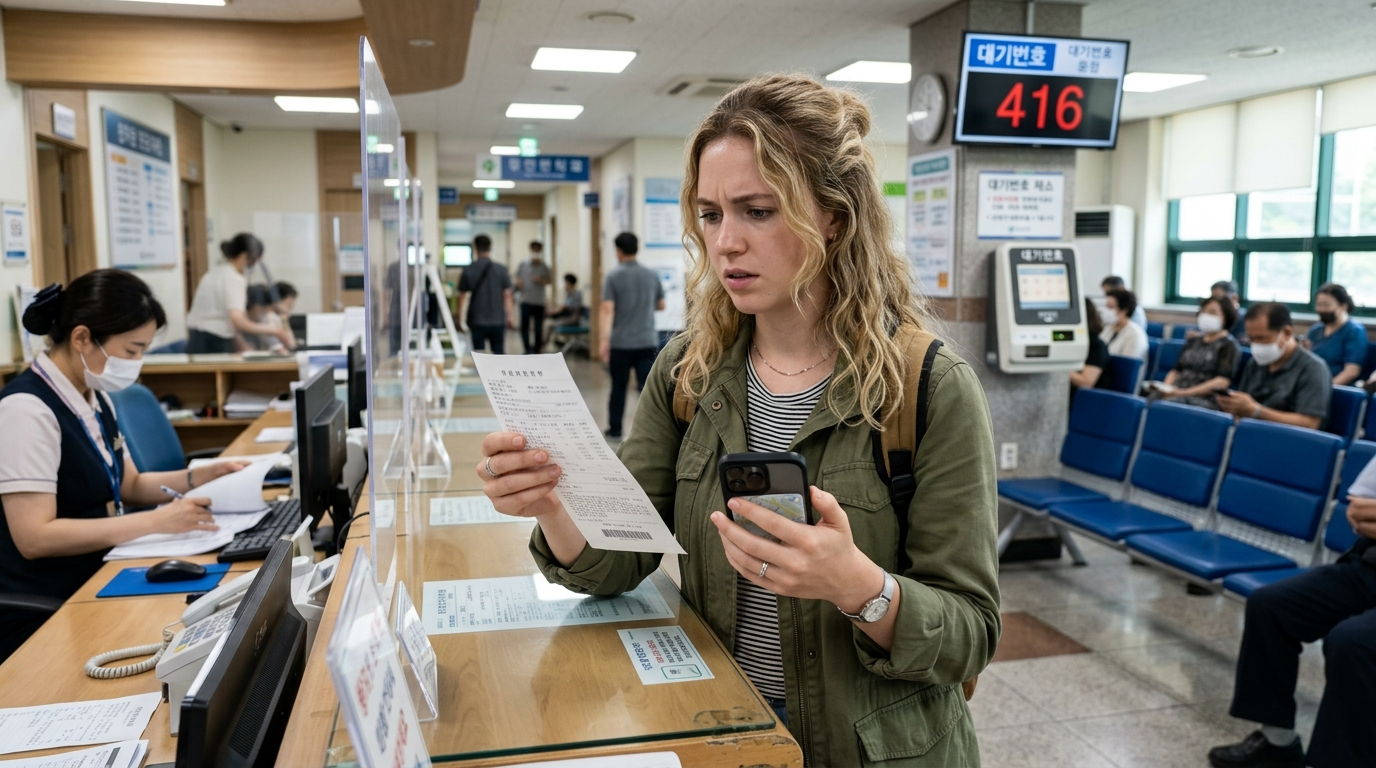
What happens when you twist your ankle or catch a bad cold in Korea — and you don’t have an ARC yet? For most new arrivals, health insurance Korea foreigners expect to have simply doesn’t exist at that point. The hospital receptionist asks one question — “Do you have National Health Insurance?” — and the answer reshapes the entire bill.
A routine clinic visit that costs a Korean citizen around ₩15,000 can turn into a ₩300,000 to ₩500,000 invoice for someone without active NHIS coverage. Same doctor, same room, same treatment. The difference is timing — where you are in Korea’s residency and enrollment process when you walk through that clinic door.
This article follows that timeline from arrival to settled status, stage by stage. Rather than listing policy summaries, it maps the specific moments where coverage gaps appear and bills escalate — so you can see the risks coming before they hit. If you’ve already read about hospital visits in Korea for foreigners, this fills in the insurance layer underneath it.
What Happens When You Need a Doctor Before Your ARC Arrives
Korean hospitals don’t turn uninsured patients away. They charge them differently. The same consultation, the same blood draw, the same prescription — the final number on the receipt depends almost entirely on whether the National Health Insurance Service (국민건강보험, NHIS) recognizes you as a covered patient at the time of service.
With active NHIS coverage, a patient’s out-of-pocket share typically runs between 30% and 60% of the total, depending on the type of care and facility. Without coverage, you pay the full price. And “full price” in Korea frequently includes a surcharge hospitals set on their own — sometimes 1.5 to 2 times the insured rate for the identical procedure.
This isn’t a foreigner-specific penalty. Any patient without active NHIS coverage at the moment of treatment pays uninsured rates. Most Korean citizens carry continuous coverage from birth, so they never encounter this. Foreigners enter a system where eligibility depends on residency status, visa category, and enrollment timing — none of which align automatically.
The gap shows up most painfully in the first few months. You’re still waiting for your ARC card, your employer hasn’t completed the paperwork, or you didn’t know enrollment was a separate step. Meanwhile, a minor illness sends you to the clinic and the bill arrives without any insurance offset.
Week 1 to 8 — The Uninsured Window Nobody Warns You About
Before ARC approval, most foreigners fall into one of three insurance situations. None of them work the way people assume.
Travel insurance from your home country. This covers emergencies, usually with a reimbursement model. You pay the hospital upfront in full, file a claim later, and wait weeks to months for repayment. Korean hospitals generally don’t bill foreign insurers directly — they treat you as uninsured, charge uninsured rates, and the reimbursement depends entirely on your policy terms. Some plans cap reimbursement well below what Korean hospitals actually charge.
No insurance at all is more common than most people expect. Tourists on short visits, people between visa transitions, anyone who planned to “figure it out after arriving.” Every hospital visit is full price.
Private international health insurance — plans from companies like Cigna Global or Allianz — tends to offer broader coverage than travel insurance. But the same reimbursement friction applies at Korean hospitals. You pay first, then claim.
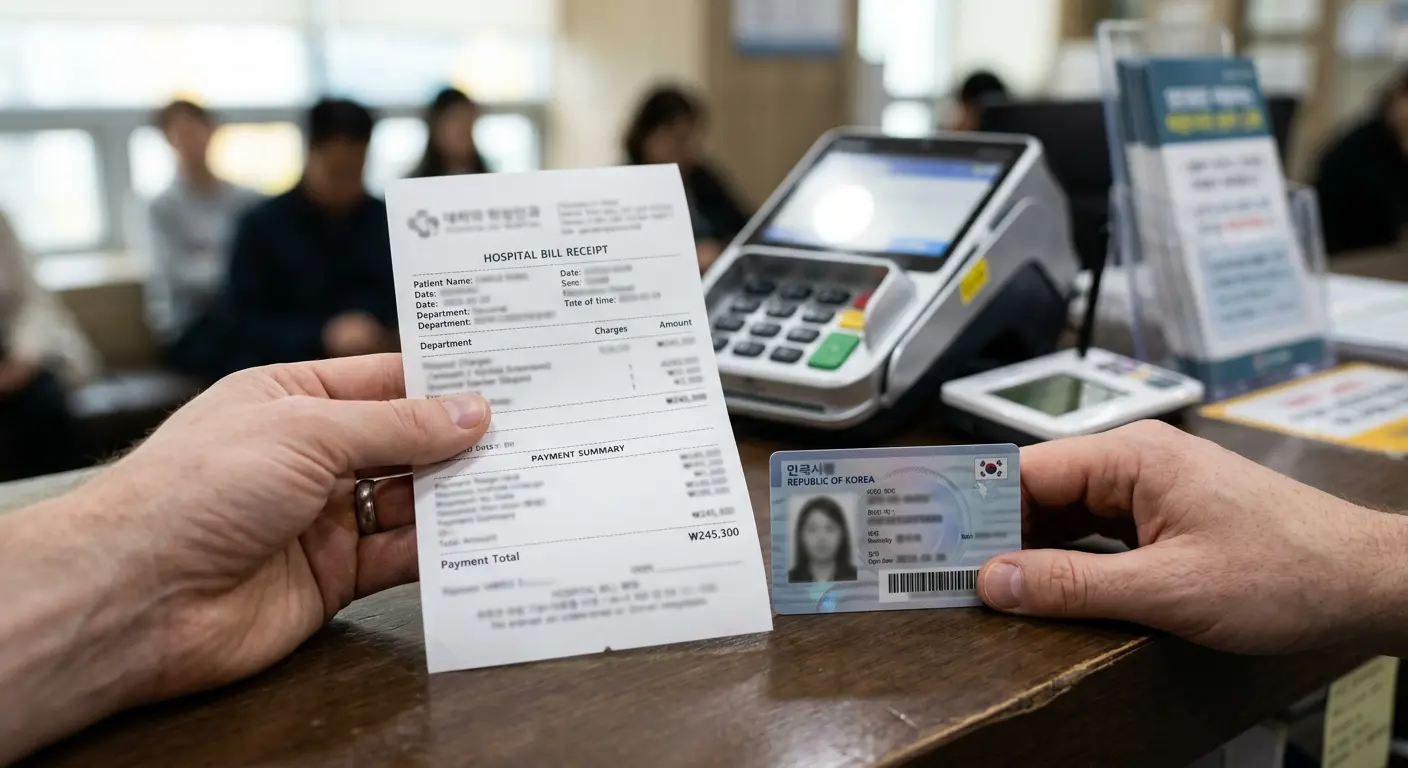
One detail catches people off guard during this stage. Even if you’ve applied for your ARC and it’s “in progress,” NHIS coverage doesn’t exist yet. The system activates based on actual ARC issuance — not application submission. That processing gap of 2 to 8 weeks is entirely uncovered unless you’ve arranged separate insurance.
Anyone arriving in Korea with a work visa should verify three things before assuming they’re covered: whether their current insurance covers Korea specifically, whether it operates on a reimbursement or direct-pay model, and what the per-visit payout cap is. If none of those answers are clear, you’re effectively uninsured at any Korean hospital.
Questions That Come Up During the Insurance Gap
Can I use travel insurance at Korean hospitals?
You can, but the process works differently than most people expect. Korean hospitals treat travel-insured patients as uninsured — you pay the full bill at the counter, then file a claim afterward. Reimbursement timelines range from weeks to months, and some plans cap payouts below what Korean hospitals charge. Having travel insurance is better than nothing during the pre-ARC stage, but understanding the reimbursement model prevents a budget shock at the payment window. For more on what to expect at the hospital itself, see the hospital visit guide for foreigners.
Does NHIS enrollment happen automatically after I get my ARC?
It depends on your situation. If you’re employed by a Korean company, your employer is responsible for enrolling you — but this doesn’t always happen promptly. For regional subscribers (self-employed, certain visa types), the system may process enrollment after a qualifying period, though delays are common. In both cases, “automatic” doesn’t mean “instant.” Confirming your status through the NHIS app, hotline (1577-1000), or a branch visit is the only way to know for certain. The ARC complete guide covers related steps.
What if my employer hasn’t registered me for health insurance?
You remain uninsured even with a valid ARC and work visa. Every hospital visit gets billed at full uninsured rates. The fix: ask your employer for the NHIS enrollment confirmation within your first month. If they haven’t filed, escalate immediately. You can also contact NHIS directly to report the situation. Employers who fail to enroll eligible employees can face penalties, so most act once the issue is raised. Adding this to your first-week checklist prevents the problem entirely.
Is it worth paying NHIS premiums if I’m young and healthy?
Premiums feel like an unnecessary cost when you haven’t seen a doctor in years. Then a food poisoning episode, a sports injury, or a dental emergency arrives without warning. One uninsured ER visit can cost more than six months of NHIS premiums. For most foreigners in this situation, comparing a few months of premiums against a single uninsured emergency visit reveals a significant cost gap — though individual circumstances vary.
After ARC Approval — Why Coverage Still Doesn’t Start Immediately
ARC approval opens the door to NHIS enrollment — but it doesn’t push you through it. What happens next depends on employment status and visa type, and the difference between the two paths creates most of the confusion around health insurance Korea foreigners encounter in online forums.
If you’re employed by a Korean company, your employer is legally required to register you for NHIS workplace insurance (직장가입자). In theory, this happens shortly after your employment begins and your ARC is issued. In practice, some employers delay — especially smaller companies, language academies, or businesses unfamiliar with hiring foreign workers. Until the employer completes registration, you remain uninsured even with a valid ARC.
You’ll know enrollment is active when NHIS premiums start appearing as a payroll deduction. If your first few pay stubs show no NHIS line item, that’s a signal worth investigating immediately.
If you’re self-employed or not tied to a Korean employer, you fall under regional insurance (지역가입자). Foreigners staying six months or longer on qualifying visas may be enrolled, but “automatically” doesn’t mean “immediately.” Processing delays, address registration gaps, or missing documentation can push the actual coverage start date weeks past what you expected.
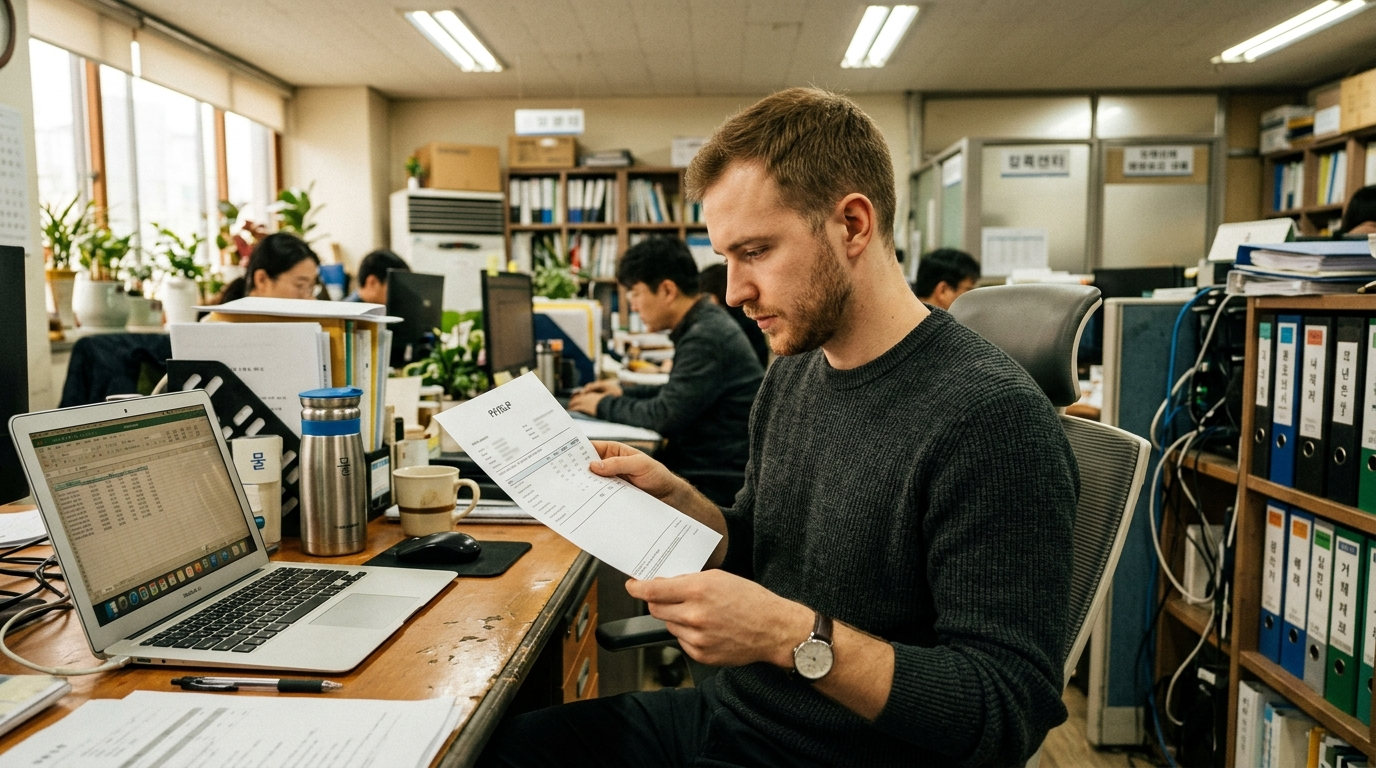
There’s one more wrinkle. NHIS premiums for regional subscribers are calculated based on factors like income, property, and vehicle ownership. For foreigners who’ve just arrived and have limited documented income in Korea, the initial premium can seem surprisingly high. Some foreigners receive their first NHIS bill and assume it’s a mistake.
Policies and eligibility thresholds can change. The NHIS English portal provides the most current enrollment criteria. Checking there before assuming your status is the safest move.
Six Months In — When the System Finally Works for You
By the six-month mark, most foreigners with active ARC cards and current NHIS enrollment reach the point where Korean healthcare becomes what everyone told them it would be: affordable, accessible, and fast. A doctor’s visit at a local clinic costs ₩5,000 to ₩15,000 out of pocket. Prescriptions run a few thousand won. Specialists are available without the weeks-long wait times common in many Western countries.
But even at this stage, two things still trip people up.
Missing premium payments can suspend coverage silently. NHIS sends billing notices — sometimes in Korean only — to your registered address. If you’ve moved and didn’t update your address registration, those notices go to an old address. You discover the suspension at the hospital counter when the system flags you as inactive. Reinstating coverage requires paying all overdue premiums, and the visit that triggered the discovery? Still billed at uninsured rates.
The other issue is confusion between clinics (의원) and general hospitals (종합병원). Korea’s healthcare system is designed to flow from smaller clinics upward. Going directly to a large hospital for non-emergency care means higher copayments — even with active insurance. Starting at a neighborhood clinic for non-urgent issues saves money and often gets you seen faster.
One thing worth knowing if you’re at this stage: the Ministry of Health and Welfare occasionally updates copayment rates and coverage categories. What was covered last year may have shifted slightly. Checking before a major procedure — dental work, MRI, specialist referral — prevents mid-treatment surprises.
What to Have Ready at Each Stage
Health insurance Korea foreigners navigate shifts as your residency status changes. Here’s what matters at each point in the timeline:
Before ARC (weeks 1–8):
✔ Confirm your travel or international insurance covers Korea specifically
✔ Know whether your plan operates on reimbursement or direct-pay
✔ Check your per-visit payout cap — if it’s below ₩500,000, budget for the difference
✔ Carry your insurance policy number and claims phone number to every hospital visit
ARC issued, enrollment pending (weeks 4–12):
✔ If employed: check your first pay stub for an NHIS deduction line within 30 days
✔ If self-employed/regional: confirm enrollment status via NHIS app, 1577-1000, or branch visit
✔ Bring your ARC card to every hospital visit — the hospital verifies insurance in real time
✔ Don’t assume enrollment happened just because your employer or university said so
NHIS active (month 3+):
✔ Keep premium payments current — missed payments suspend coverage without obvious warning
✔ Update your address registration if you move — billing notices go to the registered address
✔ Start at clinics (의원) for non-emergency care before going to hospitals (종합병원)
✔ Ask about costs before treatment when possible — Korean clinics are generally transparent if you ask upfront
If you’re still sorting out your phone setup or bank account, those steps also affect how easily you can manage NHIS payments and receive notices — the systems are interconnected.
⚠️ Disclaimer: This article provides general information about how health insurance typically works for foreigners in Korea. Insurance policies, eligibility criteria, premium calculations, and coverage details can change. This content does not constitute medical, legal, or financial advice. For decisions about your specific situation, consult the NHIS directly or a qualified professional. Information reflects conditions as of early 2026 and may not capture recent policy updates.
The Bottom Line
Health insurance Korea foreigners deal with isn’t hostile — it follows a residency timeline that most new arrivals don’t see coming. The expensive surprises live in the gap between landing and having active NHIS coverage.
Bridging that gap means carrying travel or international insurance until your ARC arrives, confirming employer enrollment within the first month of work, and checking your NHIS status before your first hospital visit — not during it. Regional subscribers need to watch for billing notices and keep payments current.
Once NHIS is active and premiums are current, Korean healthcare is remarkably accessible and affordable compared to what many foreigners are used to back home. The friction lives in the transition period. Knowing where the gaps are — and when to check — keeps the bills predictable.