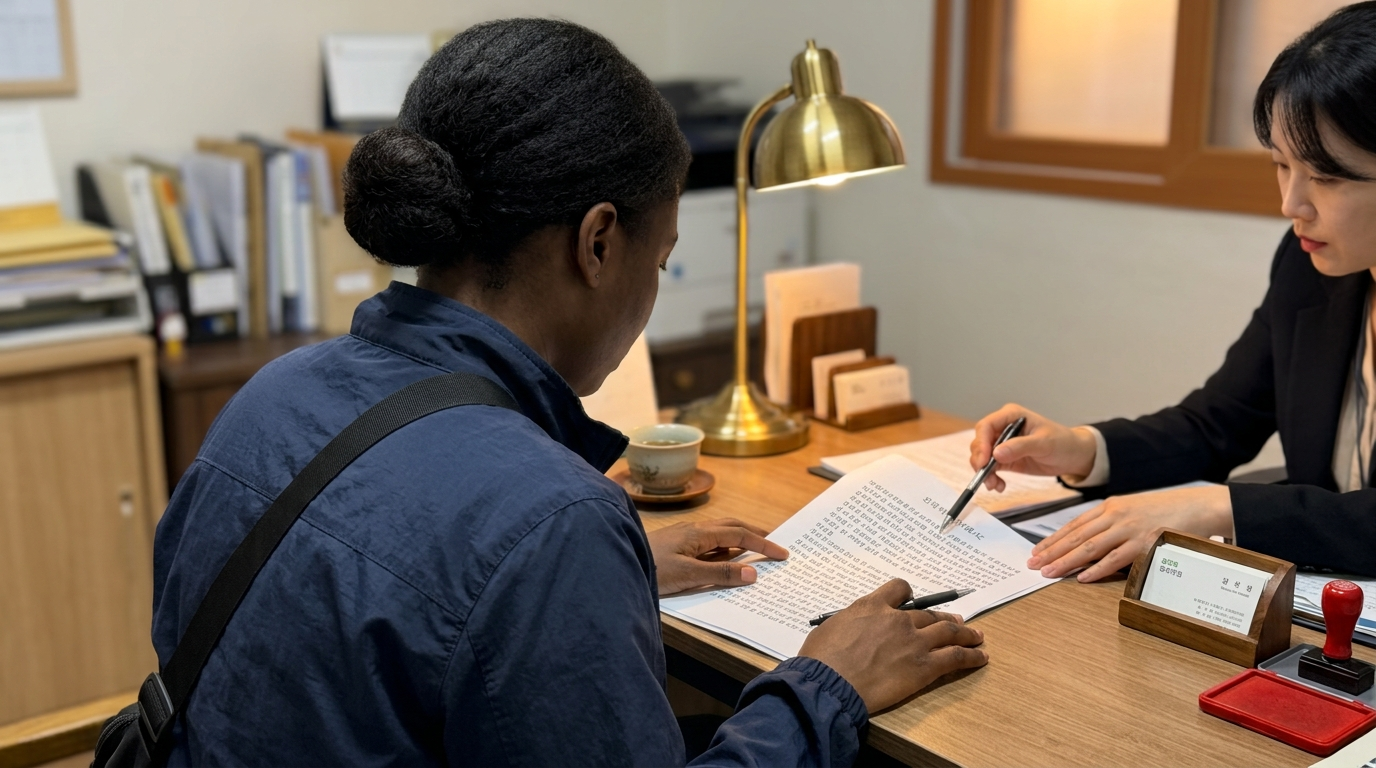
Signing a housing contract in Korea looks like a formality — until the agent starts reading clauses out loud in Korean, the landlord nods along, and you realize you’re agreeing to things you can’t actually follow. Most foreigners who’ve been through this describe it the same way: the contract was in Korean, someone translated the big numbers, and the rest got skipped. Korean phrases housing contract signings require aren’t the ones you’ll find in a beginner textbook. They sit in the gap between survival Korean and the specific vocabulary that determines whether your deposit comes back, whether repairs are the landlord’s problem, and whether you can actually leave when you need to.
That gap is where money gets lost. Not because landlords are dishonest — most aren’t — but because the contract says one thing, the tenant understood another, and six months later there’s no shared language to sort it out.
This article breaks the signing process into the moments where specific Korean expressions actually matter — deposit negotiation, move-in terms, repair clauses, and the exit conversation. Each section pairs the Korean with what it means in practice, not just in translation.
Why Textbook Korean Falls Short at a Contract Signing
Standard Korean courses teach you how to ask for directions, order food, and introduce yourself. A housing contract doesn’t use any of that. The vocabulary is legal-adjacent, situation-specific, and loaded with terms that sound similar but carry very different financial consequences.
Take 보증금 (bojeunggeum) and 계약금 (gyeyakgeum). Both get translated as “deposit” in English. But 보증금 is the full security deposit — the total amount you’re putting up. 계약금 is just the initial portion you pay at signing, typically 10% of the total. Confuse these during a negotiation and you might transfer the wrong amount on the wrong day.
Then there’s 잔금 (jangeum), which means the remaining balance — the other 90% of the deposit you pay on move-in day. Three terms, all related to the deposit, each pointing to a different number and a different deadline. No phrasebook covers this.
The real issue isn’t vocabulary in isolation. It’s that korean phrases housing contract signings use are structured around assumed knowledge. The agent doesn’t explain what 특약사항 (teuk-yak-sahang, special conditions) means because every Korean tenant already knows. Foreigners are expected to keep up at the same pace — and most don’t realize they’re behind until something goes wrong months later.
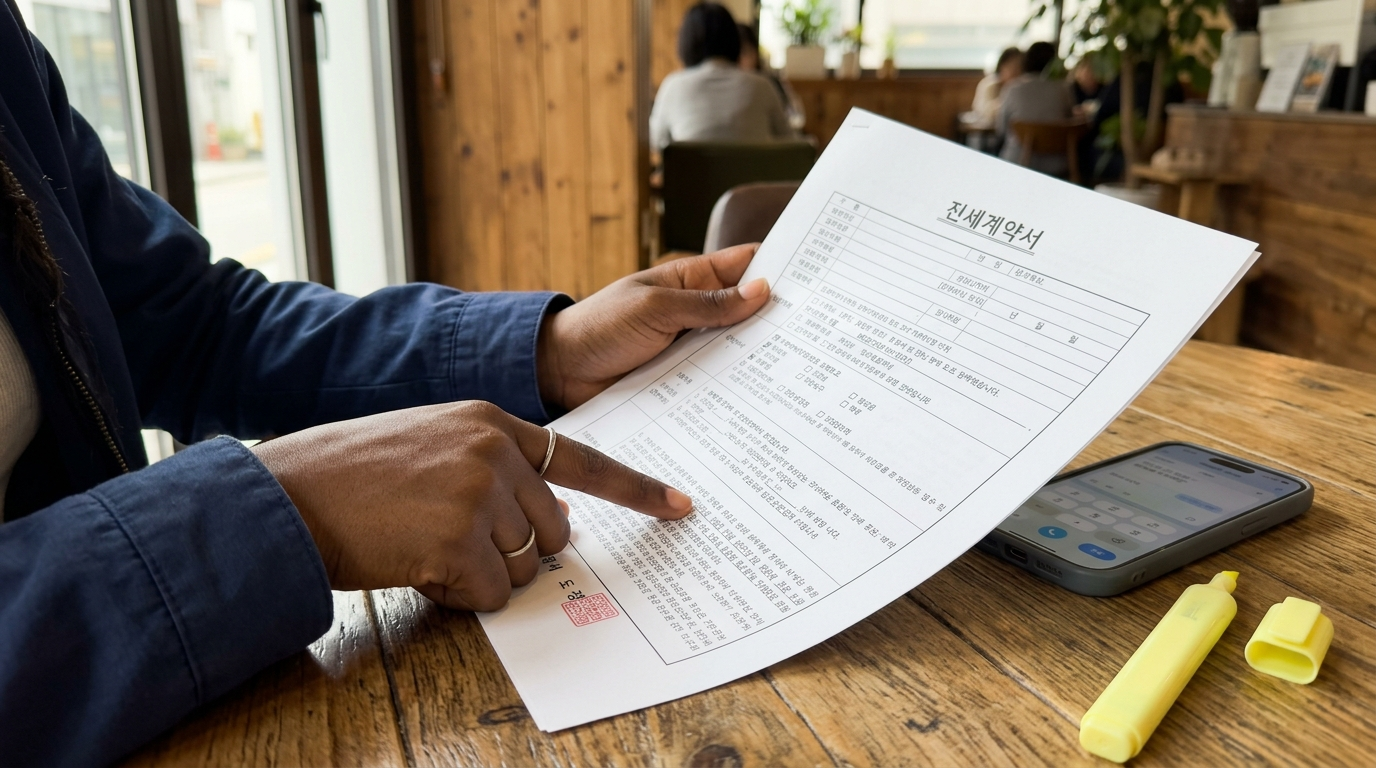
Korean Phrases Housing Contract Signings Need for Deposits and Payments
This is where money gets decided. The korean phrases housing contract negotiations rely on directly affect whether the listed price moves or stays fixed — and most foreigners walk into this conversation without the vocabulary to push back.
보증금이 얼마예요? (bojeunggeum-i eolmayeyo?) — “How much is the deposit?” Simple, but it opens the door. In Korea’s wolse (월세, monthly rent) system, the deposit and the rent are connected on a sliding scale. A higher deposit often means lower monthly rent. So the follow-up matters more than the first question.
보증금을 올리면 월세를 낮출 수 있나요? (bojeunggeum-eul ollimyeon wolse-reul natchul su innayo?) — “If I raise the deposit, can the monthly rent go down?” This is the deposit-rent seesaw that makes Korean rental pricing different from most countries. Agents expect this question. Not asking it means you accept the listed price as fixed — and it usually isn’t.
When you’re at the payment stage, knowing the difference between these terms prevents timing errors:
계약금 (gyeyakgeum) — Contract deposit. The initial 10% paid at signing.
잔금 (jangeum) — Remaining balance. The other 90%, paid on move-in day.
관리비 (gwanlibi) — Maintenance fee. Monthly building management cost, separate from rent.
관리비 포함인가요? (gwanlibi poham-ingayo?) — “Is the maintenance fee included?” If the answer is no, ask how much it is. It can add ₩50,000 to ₩150,000 per month on top of stated rent.
One phrase that signals you know how the system works: 중개 수수료가 얼마예요? (junggae susuryo-ga eolmayeyo?) — “How much is the brokerage fee?” The real estate agent’s commission is legally capped — typically 0.4% to 0.5% of the transaction value for standard wolse contracts. For a studio with a ₩10,000,000 deposit, that’s roughly ₩200,000 to ₩400,000. Asking this upfront shows the agent you’re paying attention to the full cost structure, not just rent.
Move-In Date and Condition Expressions
The move-in date isn’t just a calendar item. In Korean contracts, it triggers financial and legal deadlines. Among the korean phrases housing contract documents contain, these are the ones tied directly to your moving timeline.
입주일이 언제예요? (ipjuil-i eonjeye-yo?) — “When is the move-in date?” This is the day you pay the 잔금 (remaining balance), receive the keys, and start your 14-day countdown for address registration at the community center (주민센터, juminsenteo).
입주 전에 집을 볼 수 있나요? (ipju jeone jib-eul bol su innayo?) — “Can I see the place before move-in?” This seems obvious, but it matters legally. Taking photos and video of the apartment’s condition on or before move-in day creates your evidence if there’s a deposit dispute later. Korean contracts don’t always include a formal condition report, so documenting it yourself is your protection.
A phrase that avoids ambiguity: 임대차 기간이 어떻게 되나요? (imdaecha gigani eotteoke doenayo?) — “What is the lease period?” Korean housing law generally treats any lease shorter than two years as a two-year contract unless the tenant explicitly agrees otherwise. If you need a shorter lease, this conversation needs to happen before signing — not after.
For foreigners checking the apartment’s included items, this one saves confusion later: 옵션이 뭐가 포함되어 있나요? (opsyeon-i mwoga pohamdoeeo innayo?) — “What options are included?” In Korean housing listings, “options” refers to furniture and appliances — air conditioning, fridge, washing machine, stove. Officetels usually come furnished. Villas and apartments often come empty. Knowing this before signing changes your moving budget significantly.
Repair and Maintenance Clauses — Who Pays for What
This is the section of the contract that creates the most disputes between foreigners and landlords. The korean phrases housing contract repair clauses use sound harmless in conversation but carry real financial weight when something breaks six months into your lease.
The general principle in Korean rental law: landlords cover structural repairs and major systems (boiler, plumbing, water leaks), while tenants handle consumables (light bulbs, batteries, minor fixtures). But the line between these gets blurry fast.
수리는 누가 부담하나요? (surineun nuga budamhanayo?) — “Who is responsible for repairs?” Ask this before signing. The answer should be in the contract — specifically in the 특약사항 (special conditions) section. If it’s not written, it defaults to general housing law, which tenants rarely know well enough to cite later.
When something actually breaks after you’ve moved in:
보일러가 안 돼요. (boilleo-ga an dwaeyo.) — “The boiler isn’t working.” Boiler repairs are almost always the landlord’s responsibility. This is the most common winter emergency for foreigners in Korea.
싱크대에서 물이 새요. (sinkeudae-eseo muri saeyo.) — “The sink is leaking.” Water damage escalates fast and typically falls under the landlord’s repair obligation.
에어컨이 고장 났어요. (eeokeoni gojang nasseoyo.) — “The air conditioner broke.” If the AC was listed as an included “option” in the contract, the landlord usually covers it. If you installed it yourself, it’s yours.
곰팡이가 생겼어요. (gompangi-ga saenggyeosseoyo.) — “Mold has appeared.” Mold disputes are complicated. Landlords often claim it’s a ventilation issue (tenant’s fault). Tenants say it’s a structural issue. Having photos from move-in day matters here.
The Special Conditions Section Nobody Explains
Every Korean housing contract has a section called 특약사항 (teuk-yak-sahang) — special conditions. It’s the free-text area at the bottom of the standardized form, and it’s where the real rules live. For the housing-specific expressions that shape your contract outcome, the ones in this section matter the most.
This is not a formality. Anything the landlord verbally promises but doesn’t put in this section is legally unenforceable. “The landlord said I could have a cat” means nothing if the 특약사항 says 반려동물 금지 (pet prohibition). “They agreed to fix the wallpaper” doesn’t hold unless it’s written here.
특약사항을 확인해도 될까요? (teuk-yak-sahang-eul hwaginhae-do doelkkayo?) — “Can I check the special conditions?” This is the single most important sentence at a signing. Agents often read through the standard fields quickly and gloss over this section. Asking to review it signals that you understand what you’re signing.
Common clauses foreigners encounter in this section:
반려동물 금지 (ballyeo-dongmul geumji) — No pets allowed. Violation can trigger contract cancellation and penalty fees.
실내 흡연 금지 (silnae heubyeon geumji) — No indoor smoking. Violation may result in wallpaper replacement charges deducted from your deposit.
전대 금지 (jeondae geumji) — No subletting. Common, and strictly enforced.
원상복구 (wonsang-bokgu) — Restoration to original condition. This means you’re expected to return the unit in the same state you received it. Any modifications — even hanging shelves — could be grounds for deposit deductions.
If there’s something you want added to this section — say, the landlord’s promise to replace the boiler before you move in — ask: 이 내용을 특약사항에 넣어주실 수 있나요? (i naeyong-eul teuk-yak-sahang-e neoeojusil su innayo?) — “Can this be added to the special conditions?” If they agree verbally but won’t write it, that should tell you something.
Phrases for Leaving — Early Termination and Deposit Return
The exit is where most foreigner-landlord conflicts happen. The korean phrases housing contract exits require aren’t ones you learn casually — but knowing them before you need them changes the dynamic entirely.
계약 만료일이 언제예요? (gyeyak manryoil-i eonje-yeyo?) — “When does the contract expire?” You’d think this would be obvious. It’s not always. Some foreigners sign without fully understanding the dates — especially when the contract uses the Korean calendar format.
중도 해지가 가능한가요? (jungdo haeji-ga ganeunghan-gayo?) — “Is early termination possible?” Korean leases typically require the tenant to find a replacement tenant if leaving before the contract ends. If you leave without doing this, you usually forfeit the deposit or owe remaining rent. Ask this question explicitly before signing.
보증금 반환은 언제 해주시나요? (bojeunggeum banhwan-eun eonje haejusinayo?) — “When will the deposit be returned?” Legally, the landlord must return the deposit on the day the contract ends — but in practice, delays happen. Having this conversation in advance, and getting a written confirmation, protects you.
If the deposit return gets delayed or disputed, these escalation phrases matter:
보증금을 돌려받지 못하고 있어요. (bojeunggeum-eul dollyeobatji motago isseoyo.) — “I haven’t been able to get my deposit back.” This is what you’d say at a consultation center or to a legal advisor. The Seoul Global Center’s housing counseling division and the 120 Dasan Call Center (press 9 for foreign languages) both handle these inquiries.
After Signing — What to Say at the Community Center
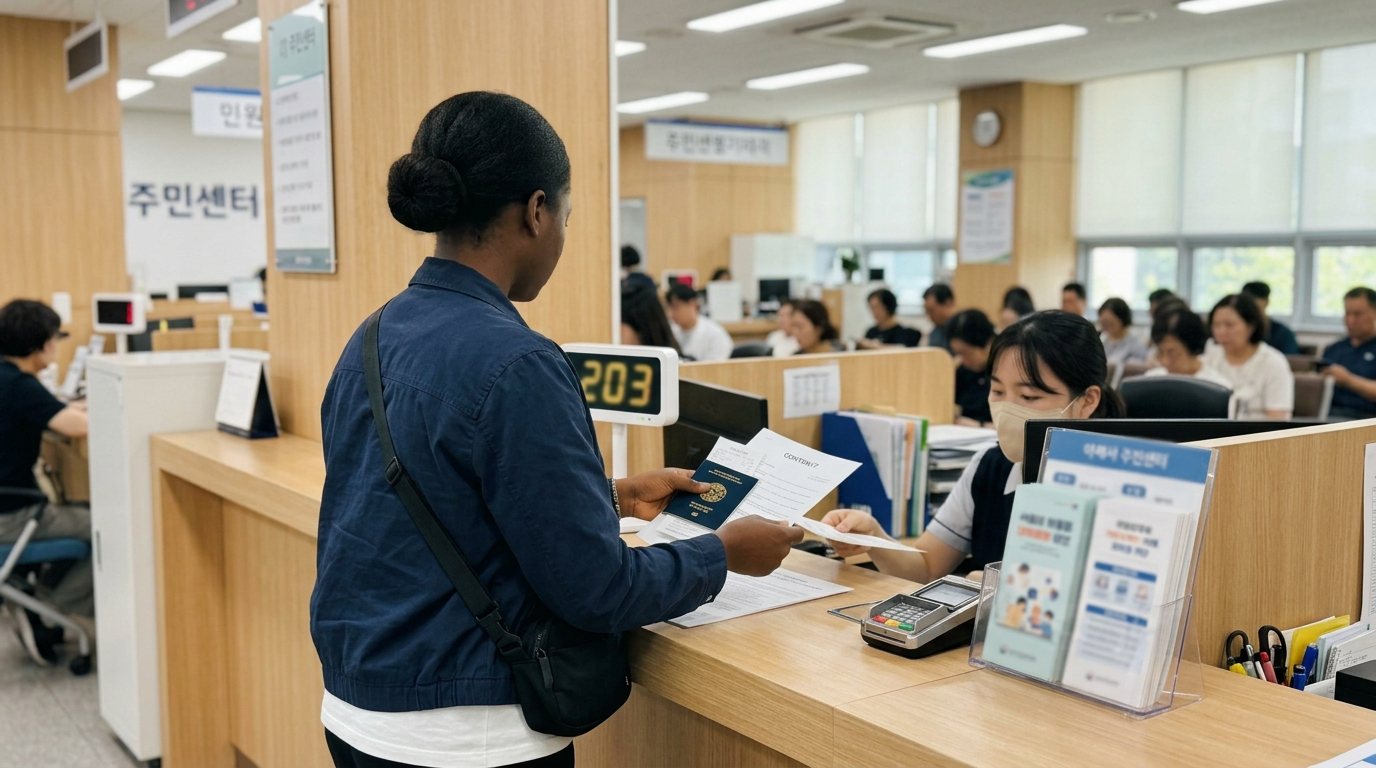
The contract signing isn’t the last step. Two critical tasks happen at the local community center (주민센터), and both use specific korean phrases housing contract guides rarely mention — phrases that protect your deposit legally.
전입신고 하러 왔어요. (jeonipsin-go hareo wasseoyo.) — “I’m here to register my move-in.” You have 14 days after moving in to complete this at your local 주민센터. Bring your contract, passport, and ARC. This registration establishes your legal occupancy — without it, you have significantly weaker protection if the landlord defaults.
확정일자를 받고 싶어요. (hwakjeong-ilja-reul batgo sipeoyo.) — “I’d like to get the confirmed date stamp.” This is done at the same visit, same office, and costs ₩600. The 확정일자 (confirmed date stamp) gives your deposit legal priority over subsequent creditors. If the landlord takes loans against the property after you’ve registered, your deposit claim ranks above theirs. Skipping this step is the single biggest legal mistake foreign tenants make.
These two steps — 전입신고 and 확정일자 — work together. Neither alone gives you full protection. Both should be completed on the day you move in or as close to it as possible. Among all the korean phrases housing contract processes involve, these two carry the most legal weight. For more on how the address registration process works, the address registration guide covers what to bring and what typically causes delays.
Important: Korean housing contracts involve significant financial commitments and legal terms. The phrases in this article help you participate more effectively in the process, but they are not a substitute for professional legal review. For contracts involving large deposits (전세 or high-보증금 월세), consulting with a legal professional or the Seoul Global Center housing division is strongly recommended. The Korea Legal Aid Corporation (대한법률구조공단) also provides free or low-cost legal consultations for foreigners under certain conditions.
Questions That Come Up Most
Can I request a bilingual contract or an English translation?
You can ask, but most real estate agents use the standardized Korean-language form (주택임대차표준계약서) issued by the Ministry of Justice. Some agencies in foreigner-heavy neighborhoods provide English summaries, but these don’t replace the legal Korean document. Your best option is to get a copy of the contract in advance and run it through Papago or Google Translate before signing day — or bring a Korean-speaking friend who can read the 특약사항 section with you.
What should I do if my landlord won’t return the deposit on time?
Start by sending a written request (text message or KakaoTalk works — keep screenshots). If the landlord still delays, contact the 120 Dasan Call Center (press 9 for English) or the Seoul Global Center housing division. For larger deposits, you may need to apply for a leasehold right registration order (임차권등기명령) if you need to move out before the deposit is returned — this preserves your legal priority even after leaving. The Korea Legal Aid Corporation provides free consultations for qualifying cases.
Is it normal for the landlord to deduct repair costs from the deposit?
For damage beyond normal wear and tear, yes. But “normal wear and tear” is subjective, which is why move-in photos matter so much. Minor scuffs on walls, faded wallpaper, and small marks from furniture are generally considered normal. Holes in walls, broken fixtures, or smoke damage from indoor smoking are valid deductions. If you documented the unit’s condition at move-in, you have evidence to dispute unfair charges. For more on deposit structures and refund traps, the apartment deposit guide covers the financial side in detail.
Do I need to know all these phrases perfectly before signing?
No. Having them on your phone screen is enough. Most agents and landlords are patient if you show them the Korean text and point. The contract-specific phrases you’ll need don’t require perfect pronunciation — what matters is knowing which questions to ask and when. Showing the phrase 특약사항을 확인해도 될까요? on your screen carries the same weight as saying it aloud. The point is that the question gets asked at all.
Final Thought
A housing contract in Korea isn’t a language test. It’s a negotiation where knowing 15 to 20 specific korean phrases housing contract situations demand changes whether the process works in your favor or against it. The phrases in official document terminology overlap with some of these, but housing contracts add financial vocabulary — deposit splits, maintenance fees, special conditions — that shows up nowhere else in daily life.
Print or screenshot the key korean phrases housing contract signings need. Ask about 특약사항. Get 확정일자 on move-in day. Take photos of everything.
The contract will be in Korean either way. Whether you have the right korean phrases housing contract terms ready is what determines if you understand it before it matters — or after.